

354
G. Chuiko et al.
IoT-device
IoT-device
Perception
layer
Edge layer
Gateway device
Persistence
layer
RDF-Storage
Semantic
engine layer
Expert access
layer
Ontologies
Rules
Control interface
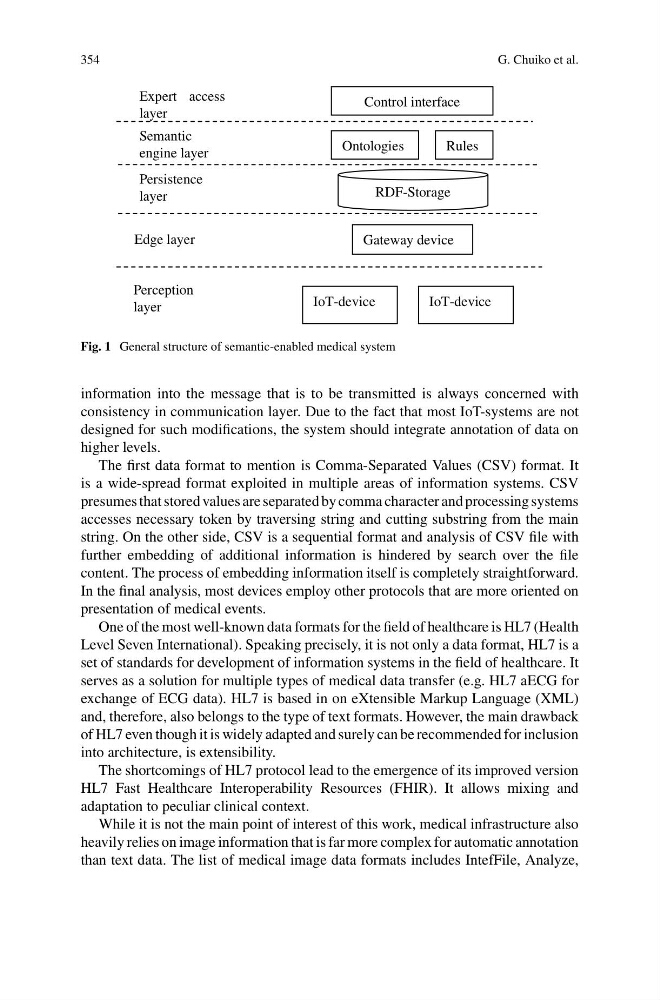
Fig. 1 General structure of semantic-enabled medical system
information into the message that is to be transmitted is always concerned with
consistency in communication layer. Due to the fact that most IoT-systems are not
designed for such modifications, the system should integrate annotation of data on
higher levels.
The first data format to mention is Comma-Separated Values (CSV) format. It
is a wide-spread format exploited in multiple areas of information systems. CSV
presumes that stored values are separated by comma character and processing systems
accesses necessary token by traversing string and cutting substring from the main
string. On the other side, CSV is a sequential format and analysis of CSV file with
further embedding of additional information is hindered by search over the file
content. The process of embedding information itself is completely straightforward.
In the final analysis, most devices employ other protocols that are more oriented on
presentation of medical events.
One of the most well-known data formats for the field of healthcare is HL7 (Health
Level Seven International). Speaking precisely, it is not only a data format, HL7 is a
set of standards for development of information systems in the field of healthcare. It
serves as a solution for multiple types of medical data transfer (e.g. HL7 aECG for
exchange of ECG data). HL7 is based in on eXtensible Markup Language (XML)
and, therefore, also belongs to the type of text formats. However, the main drawback
of HL7 even though it is widely adapted and surely can be recommended for inclusion
into architecture, is extensibility.
The shortcomings of HL7 protocol lead to the emergence of its improved version
HL7 Fast Healthcare Interoperability Resources (FHIR). It allows mixing and
adaptation to peculiar clinical context.
While it is not the main point of interest of this work, medical infrastructure also
heavily relies on image information that is far more complex for automatic annotation
than text data. The list of medical image data formats includes IntefFile, Analyze,
G. Chuiko et al.
IoT-device
IoT-device
Perception
layer
Edge layer
Gateway device
Persistence
layer
RDF-Storage
Semantic
engine layer
Expert access
layer
Ontologies
Rules
Control interface
Fig. 1 General structure of semantic-enabled medical system
information into the message that is to be transmitted is always concerned with
consistency in communication layer. Due to the fact that most IoT-systems are not
designed for such modifications, the system should integrate annotation of data on
higher levels.
The first data format to mention is Comma-Separated Values (CSV) format. It
is a wide-spread format exploited in multiple areas of information systems. CSV
presumes that stored values are separated by comma character and processing systems
accesses necessary token by traversing string and cutting substring from the main
string. On the other side, CSV is a sequential format and analysis of CSV file with
further embedding of additional information is hindered by search over the file
content. The process of embedding information itself is completely straightforward.
In the final analysis, most devices employ other protocols that are more oriented on
presentation of medical events.
One of the most well-known data formats for the field of healthcare is HL7 (Health
Level Seven International). Speaking precisely, it is not only a data format, HL7 is a
set of standards for development of information systems in the field of healthcare. It
serves as a solution for multiple types of medical data transfer (e.g. HL7 aECG for
exchange of ECG data). HL7 is based in on eXtensible Markup Language (XML)
and, therefore, also belongs to the type of text formats. However, the main drawback
of HL7 even though it is widely adapted and surely can be recommended for inclusion
into architecture, is extensibility.
The shortcomings of HL7 protocol lead to the emergence of its improved version
HL7 Fast Healthcare Interoperability Resources (FHIR). It allows mixing and
adaptation to peculiar clinical context.
While it is not the main point of interest of this work, medical infrastructure also
heavily relies on image information that is far more complex for automatic annotation
than text data. The list of medical image data formats includes IntefFile, Analyze,