

250
P. Guleria and M. Sood
Interoperability
In IoT
SEMANTIC IoT INTEROPERABILITY
RDF (Resource
Description
Framework)
Medical
Specialist
Domain Area
Symptoms
Clinical
Record
Patient Past
History
Medical
Prescription
Knowledge Base
(Enables uniformity
in syntax, semantics)
OWL Web
Unified Data
Model
Information
Ontology
Language
Semantic
Format
Frame Structure, XML
Predicate Logic,
UML Modeling
Technique, Logic
Rules
Check the
Vocabulary,
Symptoms
having
similarity
Standardized Web Based Patient Diagnostic Results
(JSON/XML/CSV/ARFF) file formats
Lab
Tests
Doctor
interact
with patient remotely using IoT
devices
Patient Query
IoT
Device
Interoperability
+
Schema
Format
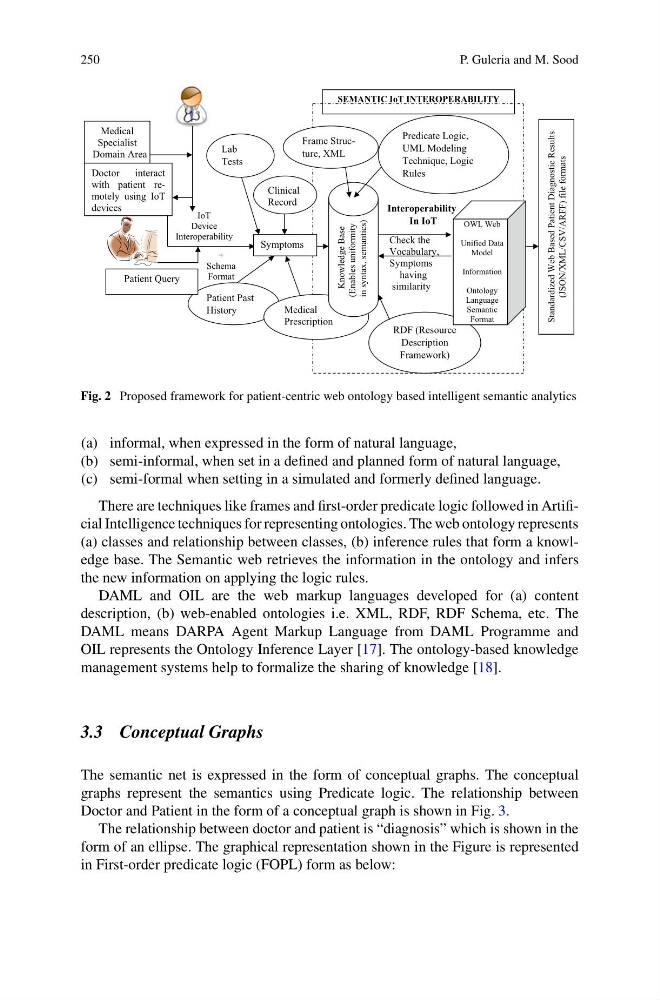
Fig. 2 Proposed framework for patient-centric web ontology based intelligent semantic analytics
(a) informal, when expressed in the form of natural language,
(b) semi-informal, when set in a defined and planned form of natural language,
(c) semi-formal when setting in a simulated and formerly defined language.
There are techniques like frames and first-order predicate logic followed in Artificial Intelligence techniques for representing ontologies. The web ontology represents
(a) classes and relationship between classes, (b) inference rules that form a knowledge base. The Semantic web retrieves the information in the ontology and infers
the new information on applying the logic rules.
DAML and OIL are the web markup languages developed for (a) content
description, (b) web-enabled ontologies i.e. XML, RDF, RDF Schema, etc. The
DAML means DARPA Agent Markup Language from DAML Programme and
OIL represents the Ontology Inference Layer [17]. The ontology-based knowledge
management systems help to formalize the sharing of knowledge [18].
3.3 Conceptual Graphs
The semantic net is expressed in the form of conceptual graphs. The conceptual
graphs represent the semantics using Predicate logic. The relationship between
Doctor and Patient in the form of a conceptual graph is shown in Fig. 3.
The relationship between doctor and patient is “diagnosis” which is shown in the
form of an ellipse. The graphical representation shown in the Figure is represented
in First-order predicate logic (FOPL) form as below:
P. Guleria and M. Sood
Interoperability
In IoT
SEMANTIC IoT INTEROPERABILITY
RDF (Resource
Description
Framework)
Medical
Specialist
Domain Area
Symptoms
Clinical
Record
Patient Past
History
Medical
Prescription
Knowledge Base
(Enables uniformity
in syntax, semantics)
OWL Web
Unified Data
Model
Information
Ontology
Language
Semantic
Format
Frame Structure, XML
Predicate Logic,
UML Modeling
Technique, Logic
Rules
Check the
Vocabulary,
Symptoms
having
similarity
Standardized Web Based Patient Diagnostic Results
(JSON/XML/CSV/ARFF) file formats
Lab
Tests
Doctor
interact
with patient remotely using IoT
devices
Patient Query
IoT
Device
Interoperability
+
Schema
Format
Fig. 2 Proposed framework for patient-centric web ontology based intelligent semantic analytics
(a) informal, when expressed in the form of natural language,
(b) semi-informal, when set in a defined and planned form of natural language,
(c) semi-formal when setting in a simulated and formerly defined language.
There are techniques like frames and first-order predicate logic followed in Artificial Intelligence techniques for representing ontologies. The web ontology represents
(a) classes and relationship between classes, (b) inference rules that form a knowledge base. The Semantic web retrieves the information in the ontology and infers
the new information on applying the logic rules.
DAML and OIL are the web markup languages developed for (a) content
description, (b) web-enabled ontologies i.e. XML, RDF, RDF Schema, etc. The
DAML means DARPA Agent Markup Language from DAML Programme and
OIL represents the Ontology Inference Layer [17]. The ontology-based knowledge
management systems help to formalize the sharing of knowledge [18].
3.3 Conceptual Graphs
The semantic net is expressed in the form of conceptual graphs. The conceptual
graphs represent the semantics using Predicate logic. The relationship between
Doctor and Patient in the form of a conceptual graph is shown in Fig. 3.
The relationship between doctor and patient is “diagnosis” which is shown in the
form of an ellipse. The graphical representation shown in the Figure is represented
in First-order predicate logic (FOPL) form as below: