

1.2 How to Use
Genetically Encoded
Fluorescent
Biosensors
1.2.1 Selection of
Genetic Background
A challenge that has been observed is that many sensor constructs,
when introduced into plants, are subject to posttranscriptional gene
silencing (PTGS). The PTGS machinery requires RNA-dependent
RNA polymerase 6 (RDR6) activity. Use of the rdr6–11 mutant
background for transformation overcame the silencing problem
and enabled monitoring of the FLIPglu biosensor responses in
Arabidopsis plants [62]. Interestingly, silencing is more or less
severe for different sensors. To obtain transgenic lines which stably
express biosensor genes, it appears to be necessary to carefully
screen plants that retain proper fluorescence without negative
growth or phenotypic impact over several generations.
1.2.2 Selection of
Promoter
The strong Cauliflower Mosaic Virus (CaMV) 35S promoter has
been widely used to drive constitutive expression of transgenes
[58]. However, gene expression driven by the CaMV 35S promoter
often declines in later transformant generations due to gene silencing [59]. The AtUBQ10 promoter is now widely used instead to
drive fluorescent biosensors, because it appears to be less sensitive
to gene silencing, although silencing has still been observed
[64, 65]. Rizza et al. reported that the use of p16 promoter derived
from the zinc-binding ribosomal protein family protein
AT3G60245 lead to ubiquitous and strong gene expression of
GPS1 in planta [30]. The sequence similarity of the two FPs used
in FRET sensors was suspected to also play a role in silencing,
although codon diversification of the two FPs relative to each
other did not solve the issue [66]. Tissue-specific promoters can
LSSmOrange
CaM
Ca
2+
M13
cpsfGFP
Linker
Emission
Emission
Wavelength
Wavelength
LSSmOrange
cpsfGFP
LSSmOrange
cpsfGFP
A
B
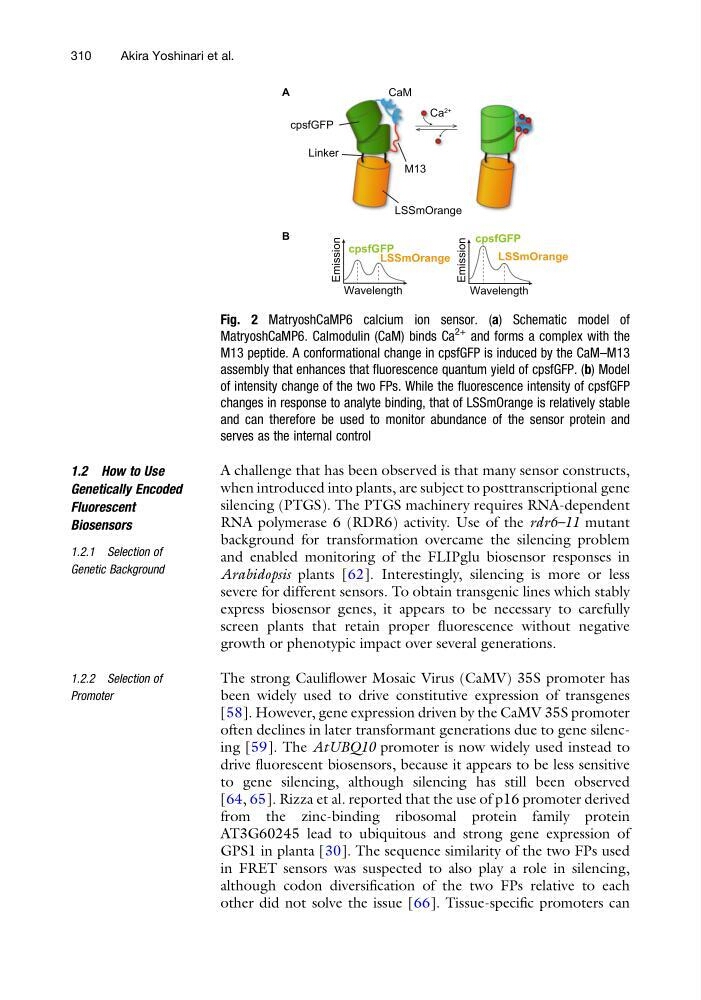
Fig. 2 MatryoshCaMP6 calcium ion sensor. (a) Schematic model of
MatryoshCaMP6. Calmodulin (CaM) binds Ca
2+
and forms a complex with the
M13 peptide. A conformational change in cpsfGFP is induced by the CaM–M13
assembly that enhances that fluorescence quantum yield of cpsfGFP. (b) Model
of intensity change of the two FPs. While the fluorescence intensity of cpsfGFP
changes in response to analyte binding, that of LSSmOrange is relatively stable
and can therefore be used to monitor abundance of the sensor protein and
serves as the internal control
310
Akira Yoshinari et al.
Genetically Encoded
Fluorescent
Biosensors
1.2.1 Selection of
Genetic Background
A challenge that has been observed is that many sensor constructs,
when introduced into plants, are subject to posttranscriptional gene
silencing (PTGS). The PTGS machinery requires RNA-dependent
RNA polymerase 6 (RDR6) activity. Use of the rdr6–11 mutant
background for transformation overcame the silencing problem
and enabled monitoring of the FLIPglu biosensor responses in
Arabidopsis plants [62]. Interestingly, silencing is more or less
severe for different sensors. To obtain transgenic lines which stably
express biosensor genes, it appears to be necessary to carefully
screen plants that retain proper fluorescence without negative
growth or phenotypic impact over several generations.
1.2.2 Selection of
Promoter
The strong Cauliflower Mosaic Virus (CaMV) 35S promoter has
been widely used to drive constitutive expression of transgenes
[58]. However, gene expression driven by the CaMV 35S promoter
often declines in later transformant generations due to gene silencing [59]. The AtUBQ10 promoter is now widely used instead to
drive fluorescent biosensors, because it appears to be less sensitive
to gene silencing, although silencing has still been observed
[64, 65]. Rizza et al. reported that the use of p16 promoter derived
from the zinc-binding ribosomal protein family protein
AT3G60245 lead to ubiquitous and strong gene expression of
GPS1 in planta [30]. The sequence similarity of the two FPs used
in FRET sensors was suspected to also play a role in silencing,
although codon diversification of the two FPs relative to each
other did not solve the issue [66]. Tissue-specific promoters can
LSSmOrange
CaM
Ca
2+
M13
cpsfGFP
Linker
Emission
Emission
Wavelength
Wavelength
LSSmOrange
cpsfGFP
LSSmOrange
cpsfGFP
A
B
Fig. 2 MatryoshCaMP6 calcium ion sensor. (a) Schematic model of
MatryoshCaMP6. Calmodulin (CaM) binds Ca
2+
and forms a complex with the
M13 peptide. A conformational change in cpsfGFP is induced by the CaM–M13
assembly that enhances that fluorescence quantum yield of cpsfGFP. (b) Model
of intensity change of the two FPs. While the fluorescence intensity of cpsfGFP
changes in response to analyte binding, that of LSSmOrange is relatively stable
and can therefore be used to monitor abundance of the sensor protein and
serves as the internal control
310
Akira Yoshinari et al.