

172
D. Hurley-Smith and J. Hernandez-Castro
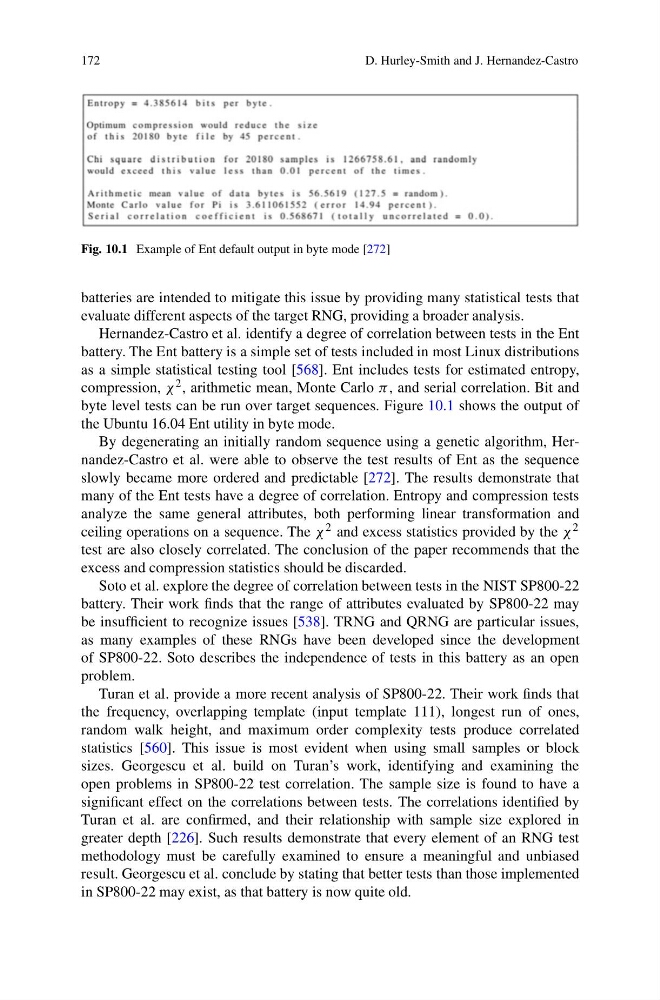
Fig. 10.1 Example of Ent default output in byte mode [272]
batteries are intended to mitigate this issue by providing many statistical tests that
evaluate different aspects of the target RNG, providing a broader analysis.
Hernandez-Castro et al. identify a degree of correlation between tests in the Ent
battery. The Ent battery is a simple set of tests included in most Linux distributions
as a simple statistical testing tool [568]. Ent includes tests for estimated entropy,
compression, χ 2 , arithmetic mean, Monte Carlo π, and serial correlation. Bit and
byte level tests can be run over target sequences. Figure 10.1 shows the output of
the Ubuntu 16.04 Ent utility in byte mode.
By degenerating an initially random sequence using a genetic algorithm, Hernandez-Castro et al. were able to observe the test results of Ent as the sequence
slowly became more ordered and predictable [272]. The results demonstrate that
many of the Ent tests have a degree of correlation. Entropy and compression tests
analyze the same general attributes, both performing linear transformation and
ceiling operations on a sequence. The χ 2 and excess statistics provided by the χ 2
test are also closely correlated. The conclusion of the paper recommends that the
excess and compression statistics should be discarded.
Soto et al. explore the degree of correlation between tests in the NIST SP800-22
battery. Their work finds that the range of attributes evaluated by SP800-22 may
be insufficient to recognize issues [538]. TRNG and QRNG are particular issues,
as many examples of these RNGs have been developed since the development
of SP800-22. Soto describes the independence of tests in this battery as an open
problem.
Turan et al. provide a more recent analysis of SP800-22. Their work finds that
the frequency, overlapping template (input template 111), longest run of ones,
random walk height, and maximum order complexity tests produce correlated
statistics [560]. This issue is most evident when using small samples or block
sizes. Georgescu et al. build on Turan’s work, identifying and examining the
open problems in SP800-22 test correlation. The sample size is found to have a
significant effect on the correlations between tests. The correlations identified by
Turan et al. are confirmed, and their relationship with sample size explored in
greater depth [226]. Such results demonstrate that every element of an RNG test
methodology must be carefully examined to ensure a meaningful and unbiased
result. Georgescu et al. conclude by stating that better tests than those implemented
in SP800-22 may exist, as that battery is now quite old.
D. Hurley-Smith and J. Hernandez-Castro
Fig. 10.1 Example of Ent default output in byte mode [272]
batteries are intended to mitigate this issue by providing many statistical tests that
evaluate different aspects of the target RNG, providing a broader analysis.
Hernandez-Castro et al. identify a degree of correlation between tests in the Ent
battery. The Ent battery is a simple set of tests included in most Linux distributions
as a simple statistical testing tool [568]. Ent includes tests for estimated entropy,
compression, χ 2 , arithmetic mean, Monte Carlo π, and serial correlation. Bit and
byte level tests can be run over target sequences. Figure 10.1 shows the output of
the Ubuntu 16.04 Ent utility in byte mode.
By degenerating an initially random sequence using a genetic algorithm, Hernandez-Castro et al. were able to observe the test results of Ent as the sequence
slowly became more ordered and predictable [272]. The results demonstrate that
many of the Ent tests have a degree of correlation. Entropy and compression tests
analyze the same general attributes, both performing linear transformation and
ceiling operations on a sequence. The χ 2 and excess statistics provided by the χ 2
test are also closely correlated. The conclusion of the paper recommends that the
excess and compression statistics should be discarded.
Soto et al. explore the degree of correlation between tests in the NIST SP800-22
battery. Their work finds that the range of attributes evaluated by SP800-22 may
be insufficient to recognize issues [538]. TRNG and QRNG are particular issues,
as many examples of these RNGs have been developed since the development
of SP800-22. Soto describes the independence of tests in this battery as an open
problem.
Turan et al. provide a more recent analysis of SP800-22. Their work finds that
the frequency, overlapping template (input template 111), longest run of ones,
random walk height, and maximum order complexity tests produce correlated
statistics [560]. This issue is most evident when using small samples or block
sizes. Georgescu et al. build on Turan’s work, identifying and examining the
open problems in SP800-22 test correlation. The sample size is found to have a
significant effect on the correlations between tests. The correlations identified by
Turan et al. are confirmed, and their relationship with sample size explored in
greater depth [226]. Such results demonstrate that every element of an RNG test
methodology must be carefully examined to ensure a meaningful and unbiased
result. Georgescu et al. conclude by stating that better tests than those implemented
in SP800-22 may exist, as that battery is now quite old.