

9 Side Channel Assessment Platforms and Tools for Ubiquitous Systems
161
30.0
20.0
10.0
–10.0
–20.0
–30.0
0.0
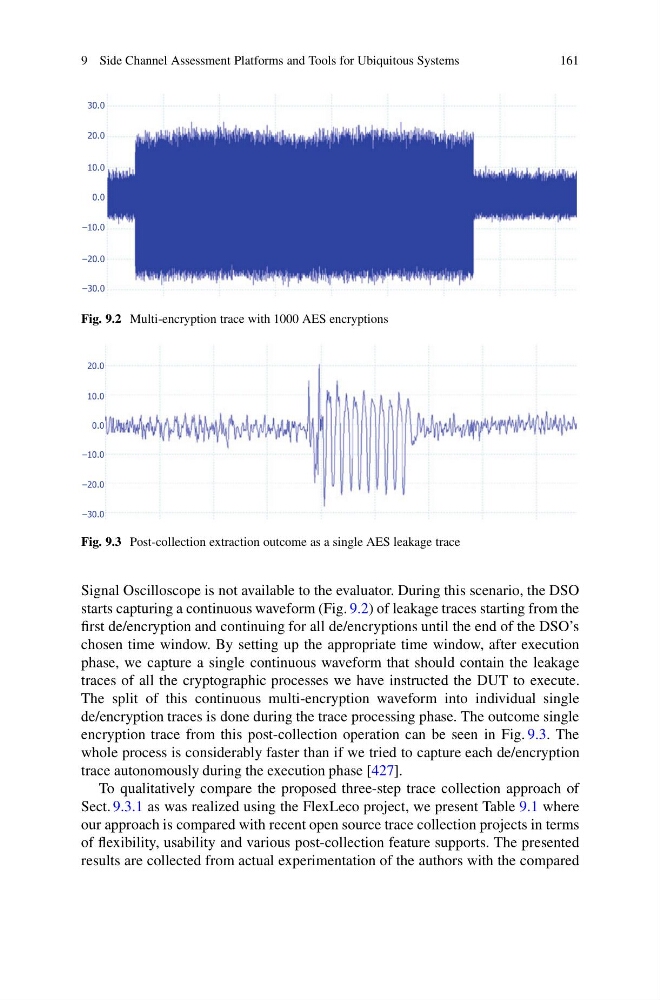
Fig. 9.2 Multi-encryption trace with 1000 AES encryptions
20.0
10.0
0.0
–10.0
–20.0
–30.0
Fig. 9.3 Post-collection extraction outcome as a single AES leakage trace
Signal Oscilloscope is not available to the evaluator. During this scenario, the DSO
starts capturing a continuous waveform (Fig. 9.2) of leakage traces starting from the
first de/encryption and continuing for all de/encryptions until the end of the DSO’s
chosen time window. By setting up the appropriate time window, after execution
phase, we capture a single continuous waveform that should contain the leakage
traces of all the cryptographic processes we have instructed the DUT to execute.
The split of this continuous multi-encryption waveform into individual single
de/encryption traces is done during the trace processing phase. The outcome single
encryption trace from this post-collection operation can be seen in Fig. 9.3. The
whole process is considerably faster than if we tried to capture each de/encryption
trace autonomously during the execution phase [427].
To qualitatively compare the proposed three-step trace collection approach of
Sect. 9.3.1 as was realized using the FlexLeco project, we present Table 9.1 where
our approach is compared with recent open source trace collection projects in terms
of flexibility, usability and various post-collection feature supports. The presented
results are collected from actual experimentation of the authors with the compared
161
30.0
20.0
10.0
–10.0
–20.0
–30.0
0.0
Fig. 9.2 Multi-encryption trace with 1000 AES encryptions
20.0
10.0
0.0
–10.0
–20.0
–30.0
Fig. 9.3 Post-collection extraction outcome as a single AES leakage trace
Signal Oscilloscope is not available to the evaluator. During this scenario, the DSO
starts capturing a continuous waveform (Fig. 9.2) of leakage traces starting from the
first de/encryption and continuing for all de/encryptions until the end of the DSO’s
chosen time window. By setting up the appropriate time window, after execution
phase, we capture a single continuous waveform that should contain the leakage
traces of all the cryptographic processes we have instructed the DUT to execute.
The split of this continuous multi-encryption waveform into individual single
de/encryption traces is done during the trace processing phase. The outcome single
encryption trace from this post-collection operation can be seen in Fig. 9.3. The
whole process is considerably faster than if we tried to capture each de/encryption
trace autonomously during the execution phase [427].
To qualitatively compare the proposed three-step trace collection approach of
Sect. 9.3.1 as was realized using the FlexLeco project, we present Table 9.1 where
our approach is compared with recent open source trace collection projects in terms
of flexibility, usability and various post-collection feature supports. The presented
results are collected from actual experimentation of the authors with the compared