

72
4 International Bioeconomy Governance …
0
5
10
15
20
25
30
2006
2008
2009
2011
2015
2019
EU biofuel supply in billion liters
Imports
Stocks
EU producƟon in that year
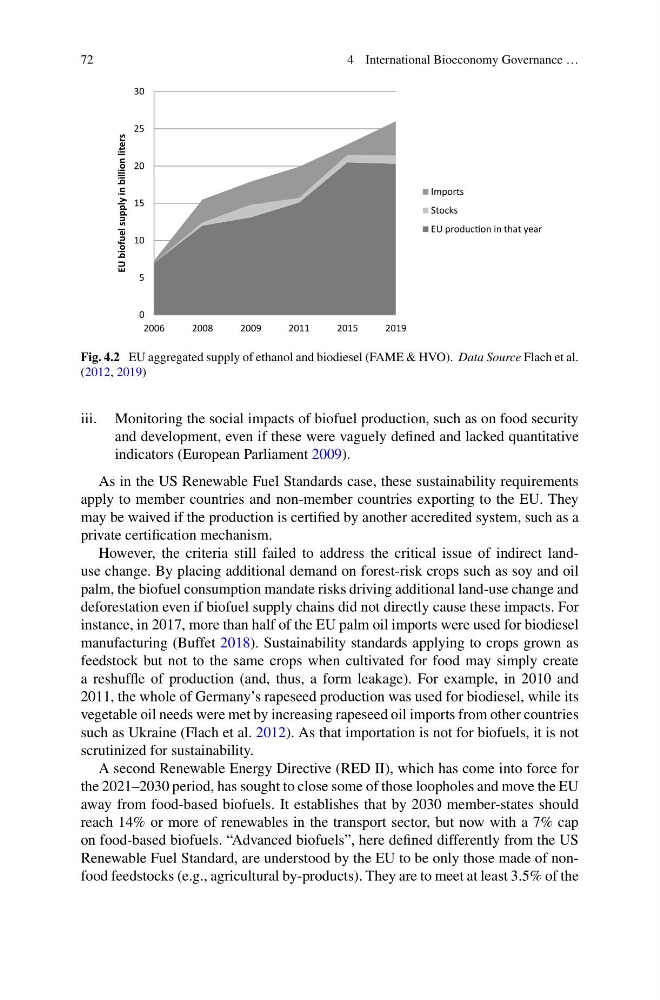
Fig. 4.2 EU aggregated supply of ethanol and biodiesel (FAME & HVO). Data Source Flach et al.
(2012, 2019)
iii. Monitoring the social impacts of biofuel production, such as on food security
and development, even if these were vaguely defined and lacked quantitative
indicators (European Parliament 2009).
As in the US Renewable Fuel Standards case, these sustainability requirements
apply to member countries and non-member countries exporting to the EU. They
may be waived if the production is certified by another accredited system, such as a
private certification mechanism.
However, the criteria still failed to address the critical issue of indirect landuse change. By placing additional demand on forest-risk crops such as soy and oil
palm, the biofuel consumption mandate risks driving additional land-use change and
deforestation even if biofuel supply chains did not directly cause these impacts. For
instance, in 2017, more than half of the EU palm oil imports were used for biodiesel
manufacturing (Buffet 2018). Sustainability standards applying to crops grown as
feedstock but not to the same crops when cultivated for food may simply create
a reshuffle of production (and, thus, a form leakage). For example, in 2010 and
2011, the whole of Germany’s rapeseed production was used for biodiesel, while its
vegetable oil needs were met by increasing rapeseed oil imports from other countries
such as Ukraine (Flach et al. 2012). As that importation is not for biofuels, it is not
scrutinized for sustainability.
A second Renewable Energy Directive (RED II), which has come into force for
the 2021–2030 period, has sought to close some of those loopholes and move the EU
away from food-based biofuels. It establishes that by 2030 member-states should
reach 14% or more of renewables in the transport sector, but now with a 7% cap
on food-based biofuels. “Advanced biofuels”, here defined differently from the US
Renewable Fuel Standard, are understood by the EU to be only those made of nonfood feedstocks (e.g., agricultural by-products). They are to meet at least 3.5% of the
4 International Bioeconomy Governance …
0
5
10
15
20
25
30
2006
2008
2009
2011
2015
2019
EU biofuel supply in billion liters
Imports
Stocks
EU producƟon in that year
Fig. 4.2 EU aggregated supply of ethanol and biodiesel (FAME & HVO). Data Source Flach et al.
(2012, 2019)
iii. Monitoring the social impacts of biofuel production, such as on food security
and development, even if these were vaguely defined and lacked quantitative
indicators (European Parliament 2009).
As in the US Renewable Fuel Standards case, these sustainability requirements
apply to member countries and non-member countries exporting to the EU. They
may be waived if the production is certified by another accredited system, such as a
private certification mechanism.
However, the criteria still failed to address the critical issue of indirect landuse change. By placing additional demand on forest-risk crops such as soy and oil
palm, the biofuel consumption mandate risks driving additional land-use change and
deforestation even if biofuel supply chains did not directly cause these impacts. For
instance, in 2017, more than half of the EU palm oil imports were used for biodiesel
manufacturing (Buffet 2018). Sustainability standards applying to crops grown as
feedstock but not to the same crops when cultivated for food may simply create
a reshuffle of production (and, thus, a form leakage). For example, in 2010 and
2011, the whole of Germany’s rapeseed production was used for biodiesel, while its
vegetable oil needs were met by increasing rapeseed oil imports from other countries
such as Ukraine (Flach et al. 2012). As that importation is not for biofuels, it is not
scrutinized for sustainability.
A second Renewable Energy Directive (RED II), which has come into force for
the 2021–2030 period, has sought to close some of those loopholes and move the EU
away from food-based biofuels. It establishes that by 2030 member-states should
reach 14% or more of renewables in the transport sector, but now with a 7% cap
on food-based biofuels. “Advanced biofuels”, here defined differently from the US
Renewable Fuel Standard, are understood by the EU to be only those made of nonfood feedstocks (e.g., agricultural by-products). They are to meet at least 3.5% of the