

152
7 Bioeconomy in the Oil Palm Republic of Indonesia
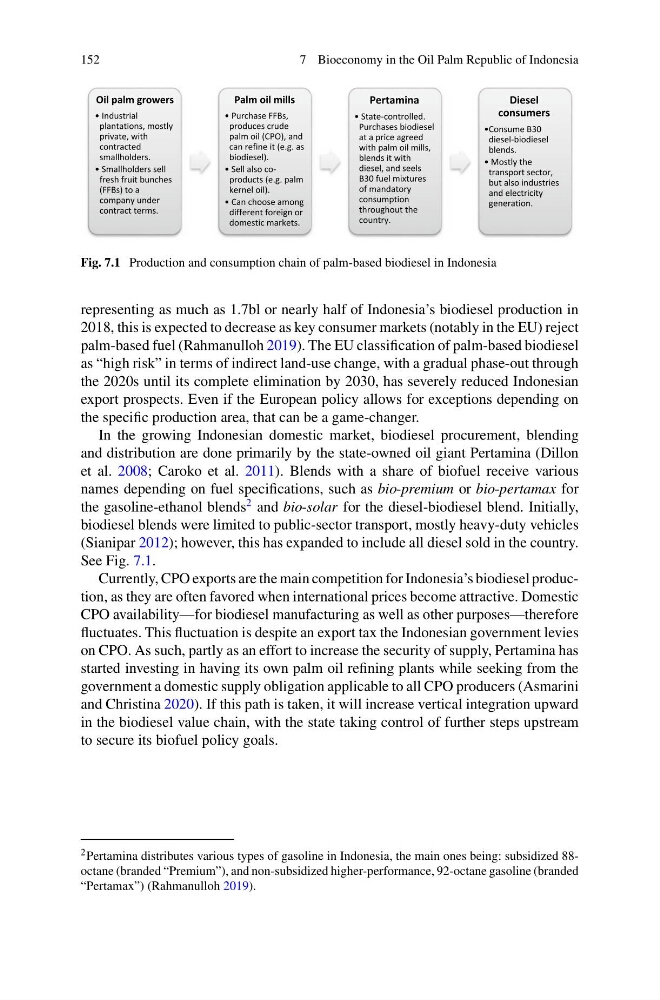
Fig. 7.1 Production and consumption chain of palm-based biodiesel in Indonesia
representing as much as 1.7bl or nearly half of Indonesia’s biodiesel production in
2018, this is expected to decrease as key consumer markets (notably in the EU) reject
palm-based fuel (Rahmanulloh 2019). The EU classification of palm-based biodiesel
as “high risk” in terms of indirect land-use change, with a gradual phase-out through
the 2020s until its complete elimination by 2030, has severely reduced Indonesian
export prospects. Even if the European policy allows for exceptions depending on
the specific production area, that can be a game-changer.
In the growing Indonesian domestic market, biodiesel procurement, blending
and distribution are done primarily by the state-owned oil giant Pertamina (Dillon
et al. 2008; Caroko et al. 2011). Blends with a share of biofuel receive various
names depending on fuel specifications, such as bio-premium or bio-pertamax for
the gasoline-ethanol blends
2 and bio-solar for the diesel-biodiesel blend. Initially,
biodiesel blends were limited to public-sector transport, mostly heavy-duty vehicles
(Sianipar 2012); however, this has expanded to include all diesel sold in the country.
See Fig. 7.1.
Currently, CPO exports are the main competition for Indonesia’s biodiesel production, as they are often favored when international prices become attractive. Domestic
CPO availability—for biodiesel manufacturing as well as other purposes—therefore
fluctuates. This fluctuation is despite an export tax the Indonesian government levies
on CPO. As such, partly as an effort to increase the security of supply, Pertamina has
started investing in having its own palm oil refining plants while seeking from the
government a domestic supply obligation applicable to all CPO producers (Asmarini
and Christina 2020). If this path is taken, it will increase vertical integration upward
in the biodiesel value chain, with the state taking control of further steps upstream
to secure its biofuel policy goals.
2 Pertamina distributes various types of gasoline in Indonesia, the main ones being: subsidized 88octane (branded “Premium”), and non-subsidized higher-performance, 92-octane gasoline (branded
“Pertamax”) (Rahmanulloh 2019).
7 Bioeconomy in the Oil Palm Republic of Indonesia
Fig. 7.1 Production and consumption chain of palm-based biodiesel in Indonesia
representing as much as 1.7bl or nearly half of Indonesia’s biodiesel production in
2018, this is expected to decrease as key consumer markets (notably in the EU) reject
palm-based fuel (Rahmanulloh 2019). The EU classification of palm-based biodiesel
as “high risk” in terms of indirect land-use change, with a gradual phase-out through
the 2020s until its complete elimination by 2030, has severely reduced Indonesian
export prospects. Even if the European policy allows for exceptions depending on
the specific production area, that can be a game-changer.
In the growing Indonesian domestic market, biodiesel procurement, blending
and distribution are done primarily by the state-owned oil giant Pertamina (Dillon
et al. 2008; Caroko et al. 2011). Blends with a share of biofuel receive various
names depending on fuel specifications, such as bio-premium or bio-pertamax for
the gasoline-ethanol blends
2 and bio-solar for the diesel-biodiesel blend. Initially,
biodiesel blends were limited to public-sector transport, mostly heavy-duty vehicles
(Sianipar 2012); however, this has expanded to include all diesel sold in the country.
See Fig. 7.1.
Currently, CPO exports are the main competition for Indonesia’s biodiesel production, as they are often favored when international prices become attractive. Domestic
CPO availability—for biodiesel manufacturing as well as other purposes—therefore
fluctuates. This fluctuation is despite an export tax the Indonesian government levies
on CPO. As such, partly as an effort to increase the security of supply, Pertamina has
started investing in having its own palm oil refining plants while seeking from the
government a domestic supply obligation applicable to all CPO producers (Asmarini
and Christina 2020). If this path is taken, it will increase vertical integration upward
in the biodiesel value chain, with the state taking control of further steps upstream
to secure its biofuel policy goals.
2 Pertamina distributes various types of gasoline in Indonesia, the main ones being: subsidized 88octane (branded “Premium”), and non-subsidized higher-performance, 92-octane gasoline (branded
“Pertamax”) (Rahmanulloh 2019).