

126
6 India’s Bioeconomy and the Ambition over “Wastelands”
working as suppliers to the industry, particularly in the states of Uttar Pradesh, Maharashtra, and Karnataka. These farmers count on a government-set minimum price—
termed the Fair and Remunerative Price—that is annually updated, and which sugar
mills have to pay. The government set it at 2,750 Indian rupees (INR)—or about
USD 36—per ton in the 2019/2020 season, increasing it both in nominal and real
terms over time. For comparison, this remuneration was INR 1700 (about USD 30)
per sugarcane ton in 2012/2013 (The Hindu 2012). Moreover, for each 0.1% in total
recoverable sugar rate (i.e., the sugar content) above the Indian average of 10%, the
grower receives a bonus (Landry 2019). State-level governments are free to indicate
higher values, and sugar mills free to negotiate it with suppliers, but these cannot be
below that legal minimum set by the Union. The fear that (neo)liberalization bills
proposed by the Modi administration for India’s agricultural sector would remove
such legal support was at the center of the 2021 farmer protests in the country.
Sugarcane mills produce sugarcane juice and molasses, the former being used
primarily for sugar production and the latter for various grades of ethanol and for
animal feed. Therefore, unlike in Brazil, ethanol production has not significantly
competed with sugar production in India. The utilization of sugarcane juice for fuelethanol manufacturing is allowed in years of surplus production, and after some
initial years of stagnation it took off in the late 2010s. The Indian sugarcane industry
has therefore been able to switch an amount of its production between downstream
markets depending on sugar price fluctuations. Similarly, fuel-ethanol production
from molasses has competed with other, non-fuel ethanol grades and the export of
these sugarcane by-products as animal feed to Europe (Aradhey 2012).
The tasks of purchasing ethanol, blending it, and distributing it with gasoline
are undertaken by India’s three state-controlled oil marketing companies (OMCs):
Hindustan Petroleum, Bharat Petroleum, and the Indian Oil Corporation. They make
supply contracts with the (private) sugar mills but are dependent on the actual production of fuel-ethanol by the latter. OMCs, too, must pay a government-set Minimum
Purchase Price (MPP). These fuel distributors then blend ethanol with gasoline and
market it to end-consumers—primarily automobile drivers. As of 2019, the actual
blending rate was at 5.8% and expected to reach 10% by 2022 (Aradhey 2019a).
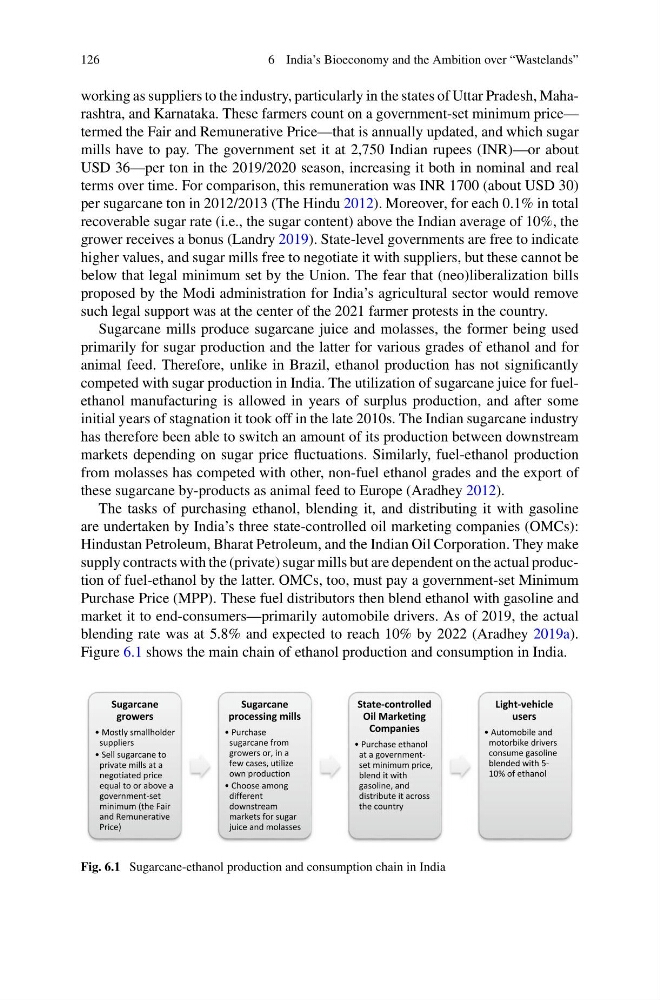
Figure 6.1 shows the main chain of ethanol production and consumption in India.
Fig. 6.1 Sugarcane-ethanol production and consumption chain in India
6 India’s Bioeconomy and the Ambition over “Wastelands”
working as suppliers to the industry, particularly in the states of Uttar Pradesh, Maharashtra, and Karnataka. These farmers count on a government-set minimum price—
termed the Fair and Remunerative Price—that is annually updated, and which sugar
mills have to pay. The government set it at 2,750 Indian rupees (INR)—or about
USD 36—per ton in the 2019/2020 season, increasing it both in nominal and real
terms over time. For comparison, this remuneration was INR 1700 (about USD 30)
per sugarcane ton in 2012/2013 (The Hindu 2012). Moreover, for each 0.1% in total
recoverable sugar rate (i.e., the sugar content) above the Indian average of 10%, the
grower receives a bonus (Landry 2019). State-level governments are free to indicate
higher values, and sugar mills free to negotiate it with suppliers, but these cannot be
below that legal minimum set by the Union. The fear that (neo)liberalization bills
proposed by the Modi administration for India’s agricultural sector would remove
such legal support was at the center of the 2021 farmer protests in the country.
Sugarcane mills produce sugarcane juice and molasses, the former being used
primarily for sugar production and the latter for various grades of ethanol and for
animal feed. Therefore, unlike in Brazil, ethanol production has not significantly
competed with sugar production in India. The utilization of sugarcane juice for fuelethanol manufacturing is allowed in years of surplus production, and after some
initial years of stagnation it took off in the late 2010s. The Indian sugarcane industry
has therefore been able to switch an amount of its production between downstream
markets depending on sugar price fluctuations. Similarly, fuel-ethanol production
from molasses has competed with other, non-fuel ethanol grades and the export of
these sugarcane by-products as animal feed to Europe (Aradhey 2012).
The tasks of purchasing ethanol, blending it, and distributing it with gasoline
are undertaken by India’s three state-controlled oil marketing companies (OMCs):
Hindustan Petroleum, Bharat Petroleum, and the Indian Oil Corporation. They make
supply contracts with the (private) sugar mills but are dependent on the actual production of fuel-ethanol by the latter. OMCs, too, must pay a government-set Minimum
Purchase Price (MPP). These fuel distributors then blend ethanol with gasoline and
market it to end-consumers—primarily automobile drivers. As of 2019, the actual
blending rate was at 5.8% and expected to reach 10% by 2022 (Aradhey 2019a).
Figure 6.1 shows the main chain of ethanol production and consumption in India.
Fig. 6.1 Sugarcane-ethanol production and consumption chain in India