

cell weight. The potential of sunflower oil, olive oil, coconut oil, and palm olein for
PHA production was also investigated by Lee et al. with the supply of 3HV
precursors (Lee et al. 2008). From the study, it was found that around 60–80 wt%
of PHA could be obtained when the wild type of R. eutropha strain is fed with an
almost equal amount of oil and precursors. Biosynthesis of a tetrapolymer poly
(94 mol% 3HB-co-3HV-co-3HHx-co-3HO) was attained in recombinant
R. eutropha strain using canola oil (Valdés et al. 2018). However, in this case,
fructose was also used in the cell growth phase before canola oil was used at PHA
production. Nevertheless, continuous use of edible plant oils as carbon feedstocks
for PHA production is not a wise idea because it will lead to food shortage and
inflation problems in few underdeveloped countries. Therefore, few nonedible plant
oils also were tested for the biosynthesis of PHA. Firstly, palm kernel oil is an
example of oil obtained from palm seeds which are used mainly for nonedible
purposes such as for manufacturing of soap, detergent, and cosmetics. It also has
been demonstrated to have the possibility for PHA production. Recombinant
R. eutropha PHB
- 4 strain was shown to produce P(3HB-co-3HV-co-3HHx) terpolymer from mixtures of palm kernel oil and 3HV precursors for the first time
(Bhubalan et al. 2008). 3HV molar ratio of 34% could be attained when higher
concentrations of sodium valerate were mixed with palm kernel oil as the carbon
source, whereas 29 mol% of 3HV was obtained with sodium propionate. Jatropha oil
is also one of the nonedible plant oils, which holds the potential to be a carbon
feedstock for PHA production. Jatropha oil has shown to be a potential renewable
carbon source for the large-scale production of P(3HB-co-3HV) by recombinant
R. eutropha PHB
- 4 and wild-type strain (Chia et al. 2010). The recombinant strain
2H3MB
2H4MV
2H3PhP
Valine
Leucine
Phenylalanine
Homophenylalanine
3H4MV
3H3PhP
3H4PhB
Amino acid
3HA unit
2HA unit
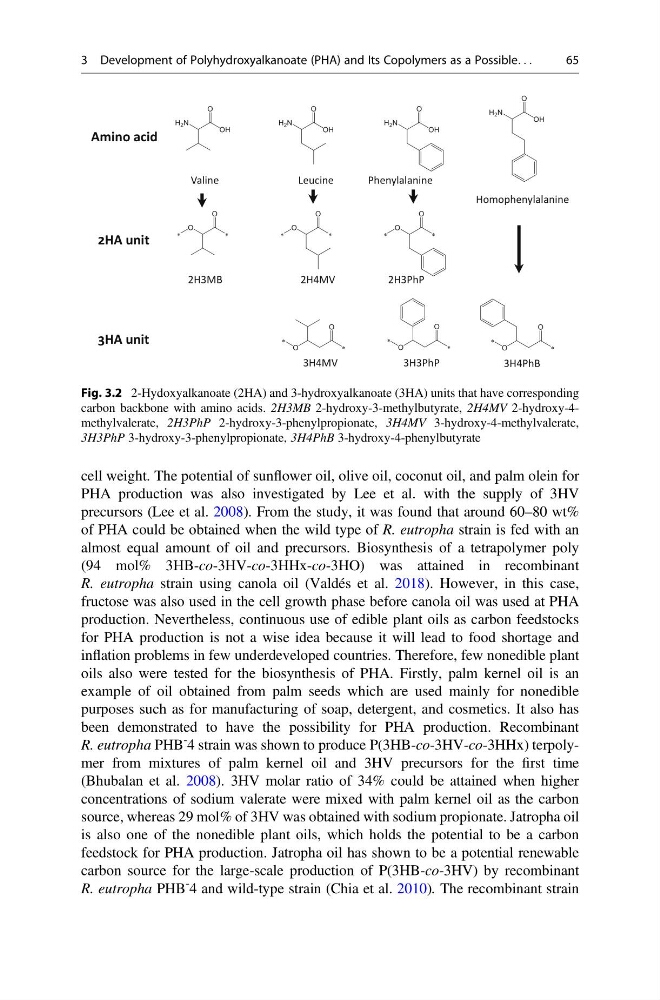
Fig. 3.2 2-Hydoxyalkanoate (2HA) and 3-hydroxyalkanoate (3HA) units that have corresponding
carbon backbone with amino acids. 2H3MB 2-hydroxy-3-methylbutyrate, 2H4MV 2-hydroxy-4methylvalerate, 2H3PhP 2-hydroxy-3-phenylpropionate, 3H4MV 3-hydroxy-4-methylvalerate,
3H3PhP 3-hydroxy-3-phenylpropionate, 3H4PhB 3-hydroxy-4-phenylbutyrate
3 Development of Polyhydroxyalkanoate (PHA) and Its Copolymers as a Possible. . .
65
PHA production was also investigated by Lee et al. with the supply of 3HV
precursors (Lee et al. 2008). From the study, it was found that around 60–80 wt%
of PHA could be obtained when the wild type of R. eutropha strain is fed with an
almost equal amount of oil and precursors. Biosynthesis of a tetrapolymer poly
(94 mol% 3HB-co-3HV-co-3HHx-co-3HO) was attained in recombinant
R. eutropha strain using canola oil (Valdés et al. 2018). However, in this case,
fructose was also used in the cell growth phase before canola oil was used at PHA
production. Nevertheless, continuous use of edible plant oils as carbon feedstocks
for PHA production is not a wise idea because it will lead to food shortage and
inflation problems in few underdeveloped countries. Therefore, few nonedible plant
oils also were tested for the biosynthesis of PHA. Firstly, palm kernel oil is an
example of oil obtained from palm seeds which are used mainly for nonedible
purposes such as for manufacturing of soap, detergent, and cosmetics. It also has
been demonstrated to have the possibility for PHA production. Recombinant
R. eutropha PHB
- 4 strain was shown to produce P(3HB-co-3HV-co-3HHx) terpolymer from mixtures of palm kernel oil and 3HV precursors for the first time
(Bhubalan et al. 2008). 3HV molar ratio of 34% could be attained when higher
concentrations of sodium valerate were mixed with palm kernel oil as the carbon
source, whereas 29 mol% of 3HV was obtained with sodium propionate. Jatropha oil
is also one of the nonedible plant oils, which holds the potential to be a carbon
feedstock for PHA production. Jatropha oil has shown to be a potential renewable
carbon source for the large-scale production of P(3HB-co-3HV) by recombinant
R. eutropha PHB
- 4 and wild-type strain (Chia et al. 2010). The recombinant strain
2H3MB
2H4MV
2H3PhP
Valine
Leucine
Phenylalanine
Homophenylalanine
3H4MV
3H3PhP
3H4PhB
Amino acid
3HA unit
2HA unit
Fig. 3.2 2-Hydoxyalkanoate (2HA) and 3-hydroxyalkanoate (3HA) units that have corresponding
carbon backbone with amino acids. 2H3MB 2-hydroxy-3-methylbutyrate, 2H4MV 2-hydroxy-4methylvalerate, 2H3PhP 2-hydroxy-3-phenylpropionate, 3H4MV 3-hydroxy-4-methylvalerate,
3H3PhP 3-hydroxy-3-phenylpropionate, 3H4PhB 3-hydroxy-4-phenylbutyrate
3 Development of Polyhydroxyalkanoate (PHA) and Its Copolymers as a Possible. . .
65