

Extensive research studies have documented the harmful impacts of POPs on
wildlife including aberration of eggshells to extinction of certain species of birds,
skeletal deformations to deaths of many beluga whales, reproductive failure,
immunotoxicity, and hormone disruption among alligators of Florida’s lake and
other wildlife (Adeola 2004). Similarly, the harmful impacts of POPs on various
species of upper trophic levels such as polar bears, seabirds, sled dogs, and polar fox
are also reported, which include disruption in immune systems, reproduction failure,
changes in tissues, and development process (Letcher et al. 2010).
Pesticides may cause airborne pollution as a result of volatilization after their
application and pesticide drift (Rull and Ritz 2003). In indoor environments, the
cooling, heating, and ventilation practices can also lead to the dispersion of
pesticides being used indoors (Coxall 2014). These volatized POPs often accumulate
on the aerosols and dust particles and eventually inhaled by living organisms.
Inhaling and ingesting these dust particles are considered to be the one of the main
sources of POPs (Walker 2008). Several studies have also reported that pollutant’s
derived climate change has led to the alteration in temperature, weather patterns,
carbon cycle, and precipitation levels resulting in enhanced volatilization and wet
deposition of POPs, thus increasing the contamination of atmosphere and water
bodies (Noyes et al. 2009). Concisely, persistent organic pollutants are significantly
affecting the entire ecosystem (Behera and Prasad 2020).
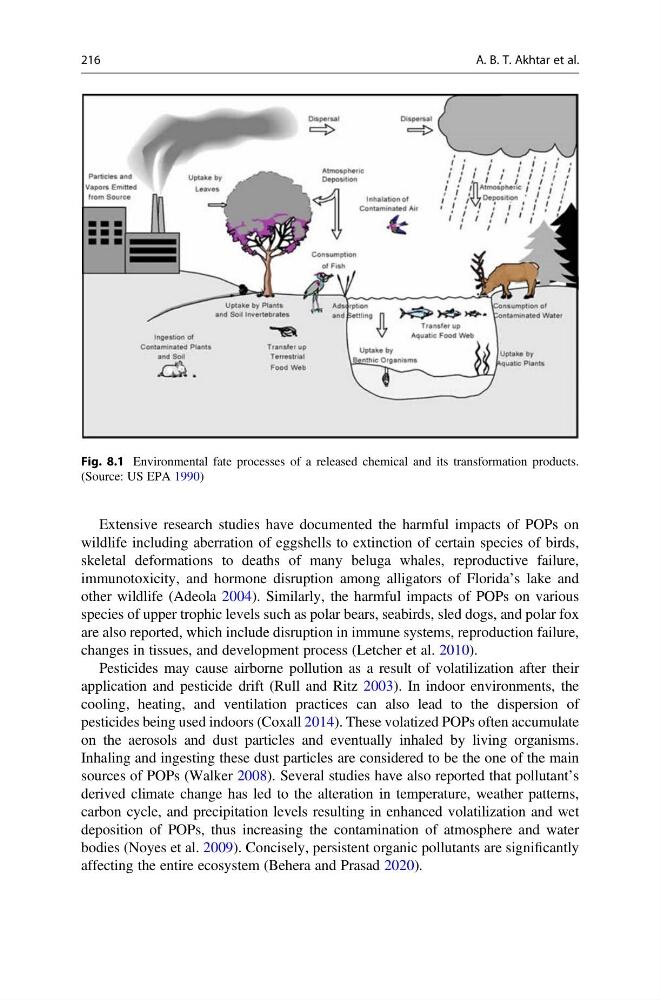
Fig. 8.1 Environmental fate processes of a released chemical and its transformation products.
(Source: US EPA 1990)
216
A. B. T. Akhtar et al.
wildlife including aberration of eggshells to extinction of certain species of birds,
skeletal deformations to deaths of many beluga whales, reproductive failure,
immunotoxicity, and hormone disruption among alligators of Florida’s lake and
other wildlife (Adeola 2004). Similarly, the harmful impacts of POPs on various
species of upper trophic levels such as polar bears, seabirds, sled dogs, and polar fox
are also reported, which include disruption in immune systems, reproduction failure,
changes in tissues, and development process (Letcher et al. 2010).
Pesticides may cause airborne pollution as a result of volatilization after their
application and pesticide drift (Rull and Ritz 2003). In indoor environments, the
cooling, heating, and ventilation practices can also lead to the dispersion of
pesticides being used indoors (Coxall 2014). These volatized POPs often accumulate
on the aerosols and dust particles and eventually inhaled by living organisms.
Inhaling and ingesting these dust particles are considered to be the one of the main
sources of POPs (Walker 2008). Several studies have also reported that pollutant’s
derived climate change has led to the alteration in temperature, weather patterns,
carbon cycle, and precipitation levels resulting in enhanced volatilization and wet
deposition of POPs, thus increasing the contamination of atmosphere and water
bodies (Noyes et al. 2009). Concisely, persistent organic pollutants are significantly
affecting the entire ecosystem (Behera and Prasad 2020).
Fig. 8.1 Environmental fate processes of a released chemical and its transformation products.
(Source: US EPA 1990)
216
A. B. T. Akhtar et al.