

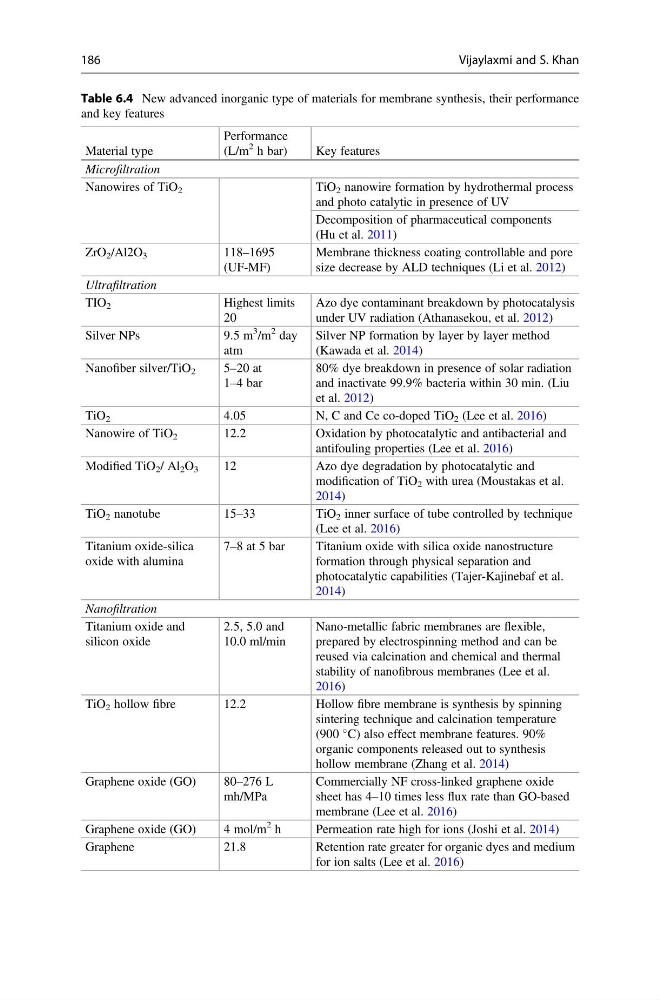
Table 6.4 New advanced inorganic type of materials for membrane synthesis, their performance
and key features
Material type
Performance
(L/m
2 h bar)
Key features
Microfiltration
Nanowires of TiO 2
TiO 2 nanowire formation by hydrothermal process
and photo catalytic in presence of UV
Decomposition of pharmaceutical components
(Hu et al. 2011)
ZrO 2 /Al2O 3
118–1695
(UF-MF)
Membrane thickness coating controllable and pore
size decrease by ALD techniques (Li et al. 2012)
Ultrafiltration
TIO 2
Highest limits
20
Azo dye contaminant breakdown by photocatalysis
under UV radiation (Athanasekou, et al. 2012)
Silver NPs
9.5 m
3
/m
2 day
atm
Silver NP formation by layer by layer method
(Kawada et al. 2014)
Nanofiber silver/TiO 2
5–20 at
1–4 bar
80% dye breakdown in presence of solar radiation
and inactivate 99.9% bacteria within 30 min. (Liu
et al. 2012)
TiO 2
4.05
N, C and Ce co-doped TiO 2 (Lee et al. 2016)
Nanowire of TiO 2
12.2
Oxidation by photocatalytic and antibacterial and
antifouling properties (Lee et al. 2016)
Modified TiO 2 / Al 2 O 3
12
Azo dye degradation by photocatalytic and
modification of TiO 2 with urea (Moustakas et al.
2014)
TiO 2 nanotube
15–33
TiO 2 inner surface of tube controlled by technique
(Lee et al. 2016)
Titanium oxide-silica
oxide with alumina
7–8 at 5 bar
Titanium oxide with silica oxide nanostructure
formation through physical separation and
photocatalytic capabilities (Tajer-Kajinebaf et al.
2014)
Nanofiltration
Titanium oxide and
silicon oxide
2.5, 5.0 and
10.0 ml/min
Nano-metallic fabric membranes are flexible,
prepared by electrospinning method and can be
reused via calcination and chemical and thermal
stability of nanofibrous membranes (Lee et al.
2016)
TiO 2 hollow fibre
12.2
Hollow fibre membrane is synthesis by spinning
sintering technique and calcination temperature
(900
C) also effect membrane features. 90%
organic components released out to synthesis
hollow membrane (Zhang et al. 2014)
Graphene oxide (GO)
80–276 L
mh/MPa
Commercially NF cross-linked graphene oxide
sheet has 4–10 times less flux rate than GO-based
membrane (Lee et al. 2016)
Graphene oxide (GO)
4 mol/m
2 h
Permeation rate high for ions (Joshi et al. 2014)
Graphene
21.8
Retention rate greater for organic dyes and medium
for ion salts (Lee et al. 2016)
186
Vijaylaxmi and S. Khan
and key features
Material type
Performance
(L/m
2 h bar)
Key features
Microfiltration
Nanowires of TiO 2
TiO 2 nanowire formation by hydrothermal process
and photo catalytic in presence of UV
Decomposition of pharmaceutical components
(Hu et al. 2011)
ZrO 2 /Al2O 3
118–1695
(UF-MF)
Membrane thickness coating controllable and pore
size decrease by ALD techniques (Li et al. 2012)
Ultrafiltration
TIO 2
Highest limits
20
Azo dye contaminant breakdown by photocatalysis
under UV radiation (Athanasekou, et al. 2012)
Silver NPs
9.5 m
3
/m
2 day
atm
Silver NP formation by layer by layer method
(Kawada et al. 2014)
Nanofiber silver/TiO 2
5–20 at
1–4 bar
80% dye breakdown in presence of solar radiation
and inactivate 99.9% bacteria within 30 min. (Liu
et al. 2012)
TiO 2
4.05
N, C and Ce co-doped TiO 2 (Lee et al. 2016)
Nanowire of TiO 2
12.2
Oxidation by photocatalytic and antibacterial and
antifouling properties (Lee et al. 2016)
Modified TiO 2 / Al 2 O 3
12
Azo dye degradation by photocatalytic and
modification of TiO 2 with urea (Moustakas et al.
2014)
TiO 2 nanotube
15–33
TiO 2 inner surface of tube controlled by technique
(Lee et al. 2016)
Titanium oxide-silica
oxide with alumina
7–8 at 5 bar
Titanium oxide with silica oxide nanostructure
formation through physical separation and
photocatalytic capabilities (Tajer-Kajinebaf et al.
2014)
Nanofiltration
Titanium oxide and
silicon oxide
2.5, 5.0 and
10.0 ml/min
Nano-metallic fabric membranes are flexible,
prepared by electrospinning method and can be
reused via calcination and chemical and thermal
stability of nanofibrous membranes (Lee et al.
2016)
TiO 2 hollow fibre
12.2
Hollow fibre membrane is synthesis by spinning
sintering technique and calcination temperature
(900
C) also effect membrane features. 90%
organic components released out to synthesis
hollow membrane (Zhang et al. 2014)
Graphene oxide (GO)
80–276 L
mh/MPa
Commercially NF cross-linked graphene oxide
sheet has 4–10 times less flux rate than GO-based
membrane (Lee et al. 2016)
Graphene oxide (GO)
4 mol/m
2 h
Permeation rate high for ions (Joshi et al. 2014)
Graphene
21.8
Retention rate greater for organic dyes and medium
for ion salts (Lee et al. 2016)
186
Vijaylaxmi and S. Khan