

Brominated flame retardants, alkylphenols, and phthalates, are also extremely
toxic to the ecosystem when released into seas, oceans, rivers, and lakes, from
the industrial and municipal wastewater, or from the sewage sludge for agricultural
purposes. Additives leaking from plastics also contribute to the debris addition
in the marine ecosystem and as another major plastic pollution in the oceans
(Hermabessiere et al. 2017).
Brominated Flame Retardants
Brominated flame retardants are used to reduce the plastic flammability.
These include polybrominated diphenyl ethers, hexabromocyclododecane, and
tetrabromobisphenol A. Brominated flame retardants such as 1, 2-bis(2,4,6tribromophenoxy)ethane, dibutyl phthalate, and hexabromobiphenyl have been
found in the ecosystem, organisms, food, and humans. Due to their weak interactions
with the polymer, they can readily leak out. Tetrabromobisphenol A however forms
strong chemical interaction to the polymeric matrix. Penta-brominated diphenyl
ethers, octa-brominated diphenyl ethers, and deca-brominated diphenyl ethers are
extremely toxic, persistent, and can accumulate in the ecosystem and pose serious
threats to the human health (Hermabessiere et al. 2017).
Phthalates
These additives are also known as phthalic acid esters. Added as plasticizers which
can be between 10 and 60% of the plastic content, especially in polyvinyl chloride,
additives such as phthalic acid esters could leach into the ecosystem during the
manufacturing process, usage, and disposal. Phthalic acid esters exist in a variety of
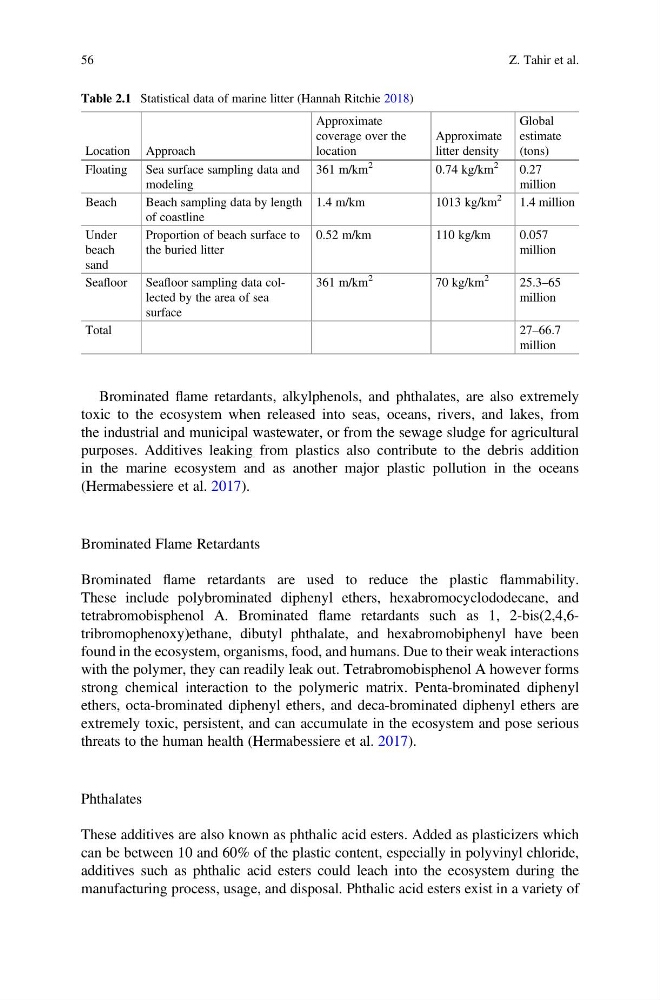
Table 2.1 Statistical data of marine litter (Hannah Ritchie 2018)
Location Approach
Approximate
coverage over the
location
Approximate
litter density
Global
estimate
(tons)
Floating Sea surface sampling data and
modeling
361 m/km
2
0.74 kg/km
2
0.27
million
Beach
Beach sampling data by length
of coastline
1.4 m/km
1013 kg/km
2
1.4 million
Under
beach
sand
Proportion of beach surface to
the buried litter
0.52 m/km
110 kg/km
0.057
million
Seafloor Seafloor sampling data collected by the area of sea
surface
361 m/km
2
70 kg/km
2
25.3–65
million
Total
27–66.7
million
56
Z. Tahir et al.
toxic to the ecosystem when released into seas, oceans, rivers, and lakes, from
the industrial and municipal wastewater, or from the sewage sludge for agricultural
purposes. Additives leaking from plastics also contribute to the debris addition
in the marine ecosystem and as another major plastic pollution in the oceans
(Hermabessiere et al. 2017).
Brominated Flame Retardants
Brominated flame retardants are used to reduce the plastic flammability.
These include polybrominated diphenyl ethers, hexabromocyclododecane, and
tetrabromobisphenol A. Brominated flame retardants such as 1, 2-bis(2,4,6tribromophenoxy)ethane, dibutyl phthalate, and hexabromobiphenyl have been
found in the ecosystem, organisms, food, and humans. Due to their weak interactions
with the polymer, they can readily leak out. Tetrabromobisphenol A however forms
strong chemical interaction to the polymeric matrix. Penta-brominated diphenyl
ethers, octa-brominated diphenyl ethers, and deca-brominated diphenyl ethers are
extremely toxic, persistent, and can accumulate in the ecosystem and pose serious
threats to the human health (Hermabessiere et al. 2017).
Phthalates
These additives are also known as phthalic acid esters. Added as plasticizers which
can be between 10 and 60% of the plastic content, especially in polyvinyl chloride,
additives such as phthalic acid esters could leach into the ecosystem during the
manufacturing process, usage, and disposal. Phthalic acid esters exist in a variety of
Table 2.1 Statistical data of marine litter (Hannah Ritchie 2018)
Location Approach
Approximate
coverage over the
location
Approximate
litter density
Global
estimate
(tons)
Floating Sea surface sampling data and
modeling
361 m/km
2
0.74 kg/km
2
0.27
million
Beach
Beach sampling data by length
of coastline
1.4 m/km
1013 kg/km
2
1.4 million
Under
beach
sand
Proportion of beach surface to
the buried litter
0.52 m/km
110 kg/km
0.057
million
Seafloor Seafloor sampling data collected by the area of sea
surface
361 m/km
2
70 kg/km
2
25.3–65
million
Total
27–66.7
million
56
Z. Tahir et al.