

physical separation, or chemical processes can be used for the dye removal from
wastewater by employing widely used techniques such as membrane filtration,
coagulation-flocculation, adsorption, oxidation, biological, and electrochemical
treatment (Jebapriya and Gnanadoss 2013).
The implementation of a single or combination of techniques for the removal or
degradation of dyes and pigments depends on the composition of wastewater, nature
of dyes, and other impurities. Among anionic, non-ionic, and cationic dyes with
various chromophoric and auxochromic groups, water-soluble anionic dyes are hard
to remove using conventional methods. Similarly, biological treatments are insufficient to remove acidic dyes altogether. The disperse nonionic dyes do not ionize in
an aqueous solution and pose resistance to the degradation owing to fused aromatic
ring structure. However, advanced oxidation and adsorption processes can easily
remove a few cationic dyes such as methyl blue (Robinson et al. 2001). The chapter
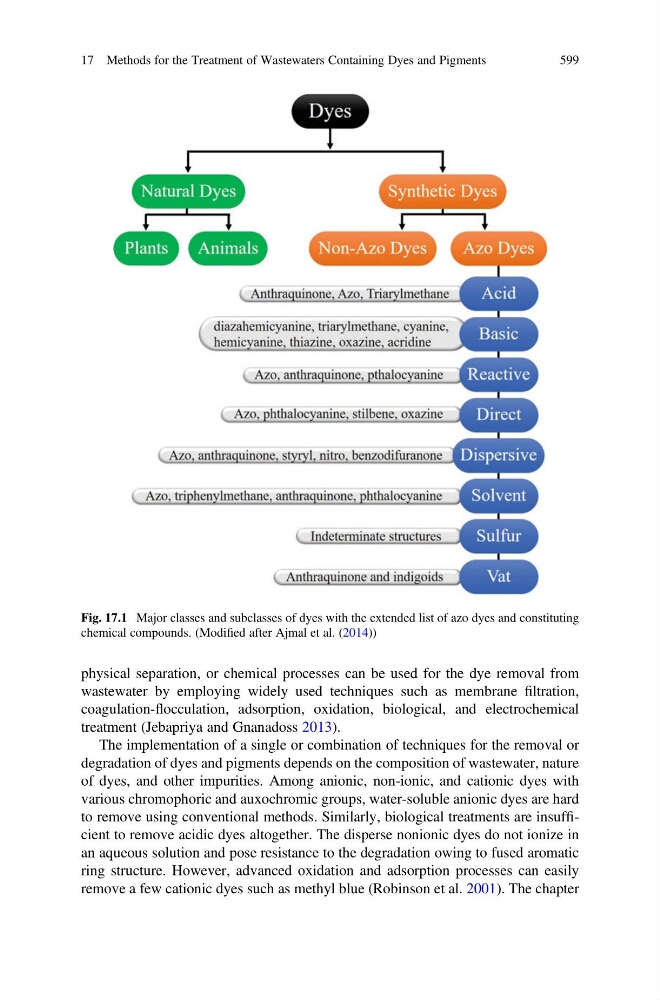
Fig. 17.1 Major classes and subclasses of dyes with the extended list of azo dyes and constituting
chemical compounds. (Modified after Ajmal et al. (2014))
17 Methods for the Treatment of Wastewaters Containing Dyes and Pigments
599
wastewater by employing widely used techniques such as membrane filtration,
coagulation-flocculation, adsorption, oxidation, biological, and electrochemical
treatment (Jebapriya and Gnanadoss 2013).
The implementation of a single or combination of techniques for the removal or
degradation of dyes and pigments depends on the composition of wastewater, nature
of dyes, and other impurities. Among anionic, non-ionic, and cationic dyes with
various chromophoric and auxochromic groups, water-soluble anionic dyes are hard
to remove using conventional methods. Similarly, biological treatments are insufficient to remove acidic dyes altogether. The disperse nonionic dyes do not ionize in
an aqueous solution and pose resistance to the degradation owing to fused aromatic
ring structure. However, advanced oxidation and adsorption processes can easily
remove a few cationic dyes such as methyl blue (Robinson et al. 2001). The chapter
Fig. 17.1 Major classes and subclasses of dyes with the extended list of azo dyes and constituting
chemical compounds. (Modified after Ajmal et al. (2014))
17 Methods for the Treatment of Wastewaters Containing Dyes and Pigments
599