

0.004–0.023 μg/L, and the recoveries were 67.9–87.1%. Amanzadeh et al. (2016)
used graphene/polyvinyl chloride-coated fibers for head-space solid-phase
microextraction of four phthalates in drinking water, and the separation and detection were performed on a gas chromatograph. The limits of detection of the method
were 0.06–0.08 μg/L with the recoveries of 87–112%, and the relative standard
derivations were less than 8.3%.
Magnetic Solid-Phase Extraction
Magnetic solid-phase extraction is a kind of dispersive solid-phase extraction, in
which magnetic adsorbent materials are dispersed in an aqueous sample to adsorb
the target compounds, and then the magnetic adsorbent materials are aggregated on
one side of the glass tube by the external magnetic field to realize the separation of
the adsorbent from the aqueous sample. The target compounds on the adsorbent can
be eluted by using a proper eluent, and the eluent can be injected into the chromatographic system for analysis. Magnetic solid-phase extraction is simple and timesaving and has high extraction efficiency and low organic solvent consumption. So
far, there are few commercial magnetic adsorbents available.
In recent years, magnetic nanomaterials have been extensively used as adsorbents
for the concentration of the analytes from aqueous samples in solid-phase extraction.
There are numerous magnetic materials reported for adsorption of phthalates from
water samples, such as mag-graphene@PDA (Wang et al. 2015a), Fe 3 O 4 @SiO 2 -G
(Wang et al. 2013), magnetic multi-walled carbon nanotubes (Luo et al. 2012),
Py-rGOx-Fe 3 O 4 (Pinsrithong and Bunkoed, 2018), Fe 3 O 4 @PPy magnetic
nanoparticles (Zhao et al. 2016), polypyrrole-coated Fe 3 O 4 magnetic microsphere
(Meng et al. 2011), Fe 3 O 4 @r-GO magnetic nanoparticles (Santana-Mayor et al.
2018), Fe 3 O 4 @void@C–molecularly imprinted polymers (Yang et al. 2016), and
3D N-Co@C/HCF (Wang et al. 2019c). These magnetic nanomaterials have a large
specific surface area and macroporous structure and exhibit high adsorption capacity
and selectivity to the analytes.
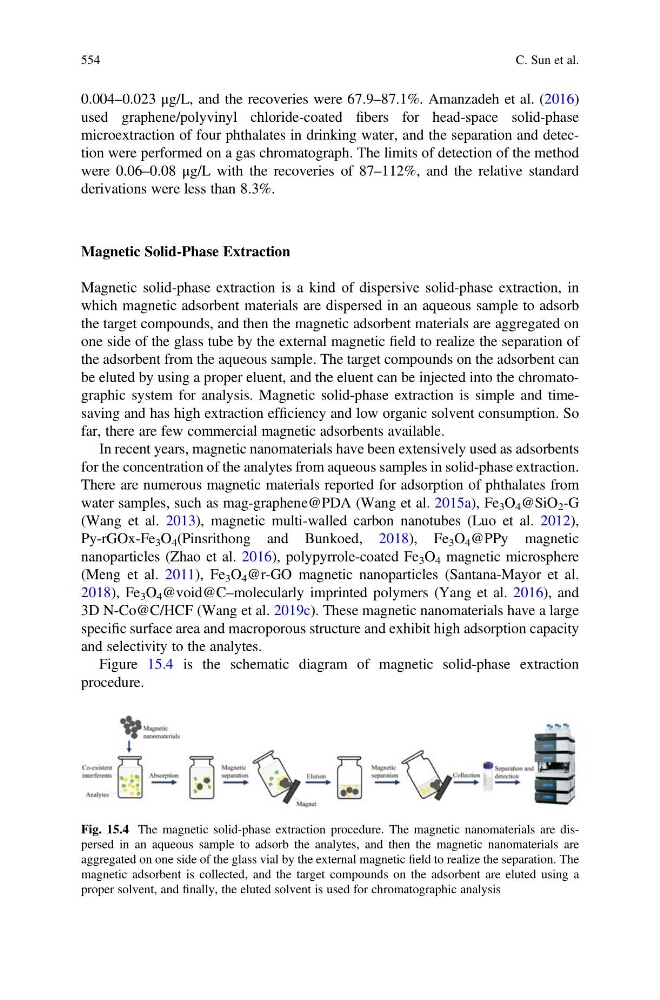
Figure 15.4 is the schematic diagram of magnetic solid-phase extraction
procedure.
Fig. 15.4 The magnetic solid-phase extraction procedure. The magnetic nanomaterials are dispersed in an aqueous sample to adsorb the analytes, and then the magnetic nanomaterials are
aggregated on one side of the glass vial by the external magnetic field to realize the separation. The
magnetic adsorbent is collected, and the target compounds on the adsorbent are eluted using a
proper solvent, and finally, the eluted solvent is used for chromatographic analysis
554
C. Sun et al.
used graphene/polyvinyl chloride-coated fibers for head-space solid-phase
microextraction of four phthalates in drinking water, and the separation and detection were performed on a gas chromatograph. The limits of detection of the method
were 0.06–0.08 μg/L with the recoveries of 87–112%, and the relative standard
derivations were less than 8.3%.
Magnetic Solid-Phase Extraction
Magnetic solid-phase extraction is a kind of dispersive solid-phase extraction, in
which magnetic adsorbent materials are dispersed in an aqueous sample to adsorb
the target compounds, and then the magnetic adsorbent materials are aggregated on
one side of the glass tube by the external magnetic field to realize the separation of
the adsorbent from the aqueous sample. The target compounds on the adsorbent can
be eluted by using a proper eluent, and the eluent can be injected into the chromatographic system for analysis. Magnetic solid-phase extraction is simple and timesaving and has high extraction efficiency and low organic solvent consumption. So
far, there are few commercial magnetic adsorbents available.
In recent years, magnetic nanomaterials have been extensively used as adsorbents
for the concentration of the analytes from aqueous samples in solid-phase extraction.
There are numerous magnetic materials reported for adsorption of phthalates from
water samples, such as mag-graphene@PDA (Wang et al. 2015a), Fe 3 O 4 @SiO 2 -G
(Wang et al. 2013), magnetic multi-walled carbon nanotubes (Luo et al. 2012),
Py-rGOx-Fe 3 O 4 (Pinsrithong and Bunkoed, 2018), Fe 3 O 4 @PPy magnetic
nanoparticles (Zhao et al. 2016), polypyrrole-coated Fe 3 O 4 magnetic microsphere
(Meng et al. 2011), Fe 3 O 4 @r-GO magnetic nanoparticles (Santana-Mayor et al.
2018), Fe 3 O 4 @void@C–molecularly imprinted polymers (Yang et al. 2016), and
3D N-Co@C/HCF (Wang et al. 2019c). These magnetic nanomaterials have a large
specific surface area and macroporous structure and exhibit high adsorption capacity
and selectivity to the analytes.
Figure 15.4 is the schematic diagram of magnetic solid-phase extraction
procedure.
Fig. 15.4 The magnetic solid-phase extraction procedure. The magnetic nanomaterials are dispersed in an aqueous sample to adsorb the analytes, and then the magnetic nanomaterials are
aggregated on one side of the glass vial by the external magnetic field to realize the separation. The
magnetic adsorbent is collected, and the target compounds on the adsorbent are eluted using a
proper solvent, and finally, the eluted solvent is used for chromatographic analysis
554
C. Sun et al.