

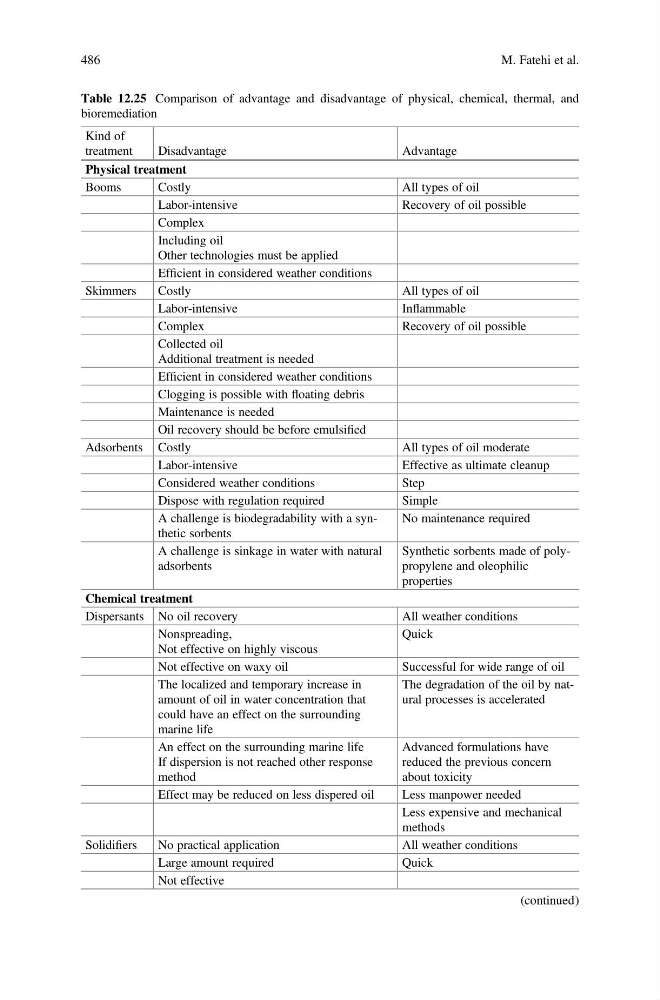
Table 12.25 Comparison of advantage and disadvantage of physical, chemical, thermal, and
bioremediation
Kind of
treatment
Disadvantage
Advantage
Physical treatment
Booms
Costly
All types of oil
Labor-intensive
Recovery of oil possible
Complex
Including oil
Other technologies must be applied
Efficient in considered weather conditions
Skimmers
Costly
All types of oil
Labor-intensive
Inflammable
Complex
Recovery of oil possible
Collected oil
Additional treatment is needed
Efficient in considered weather conditions
Clogging is possible with floating debris
Maintenance is needed
Oil recovery should be before emulsified
Adsorbents Costly
All types of oil moderate
Labor-intensive
Effective as ultimate cleanup
Considered weather conditions
Step
Dispose with regulation required
Simple
A challenge is biodegradability with a synthetic sorbents
No maintenance required
A challenge is sinkage in water with natural
adsorbents
Synthetic sorbents made of polypropylene and oleophilic
properties
Chemical treatment
Dispersants No oil recovery
All weather conditions
Nonspreading,
Not effective on highly viscous
Quick
Not effective on waxy oil
Successful for wide range of oil
The localized and temporary increase in
amount of oil in water concentration that
could have an effect on the surrounding
marine life
The degradation of the oil by natural processes is accelerated
An effect on the surrounding marine life
If dispersion is not reached other response
method
Advanced formulations have
reduced the previous concern
about toxicity
Effect may be reduced on less dispered oil
Less manpower needed
Less expensive and mechanical
methods
Solidifiers
No practical application
All weather conditions
Large amount required
Quick
Not effective
(continued)
486
M. Fatehi et al.
bioremediation
Kind of
treatment
Disadvantage
Advantage
Physical treatment
Booms
Costly
All types of oil
Labor-intensive
Recovery of oil possible
Complex
Including oil
Other technologies must be applied
Efficient in considered weather conditions
Skimmers
Costly
All types of oil
Labor-intensive
Inflammable
Complex
Recovery of oil possible
Collected oil
Additional treatment is needed
Efficient in considered weather conditions
Clogging is possible with floating debris
Maintenance is needed
Oil recovery should be before emulsified
Adsorbents Costly
All types of oil moderate
Labor-intensive
Effective as ultimate cleanup
Considered weather conditions
Step
Dispose with regulation required
Simple
A challenge is biodegradability with a synthetic sorbents
No maintenance required
A challenge is sinkage in water with natural
adsorbents
Synthetic sorbents made of polypropylene and oleophilic
properties
Chemical treatment
Dispersants No oil recovery
All weather conditions
Nonspreading,
Not effective on highly viscous
Quick
Not effective on waxy oil
Successful for wide range of oil
The localized and temporary increase in
amount of oil in water concentration that
could have an effect on the surrounding
marine life
The degradation of the oil by natural processes is accelerated
An effect on the surrounding marine life
If dispersion is not reached other response
method
Advanced formulations have
reduced the previous concern
about toxicity
Effect may be reduced on less dispered oil
Less manpower needed
Less expensive and mechanical
methods
Solidifiers
No practical application
All weather conditions
Large amount required
Quick
Not effective
(continued)
486
M. Fatehi et al.