

Case Studies on Oil Bioremediation
Case 1: North Sea
Oil contamination in the North Sea was investigated by Carpenter (2018) over
several decades. For many decades, high amount of oil contamination was introduced into the North Sea. The sea contaminants were the cause of much pollution
and death of seabirds continuously from the early years of the twentieth century
(Dunnet et al. 1987). Carpenter (2018) reviewed the legislation of oil pollution in the
North Sea from 1954 to 2009 (reader is referred to the Table 12.1 of Carpenter
(2018)). The article presents data on trades in contaminants from ships and oil
illustrations. Many actions and measures have resulted in reduction of oil introduced
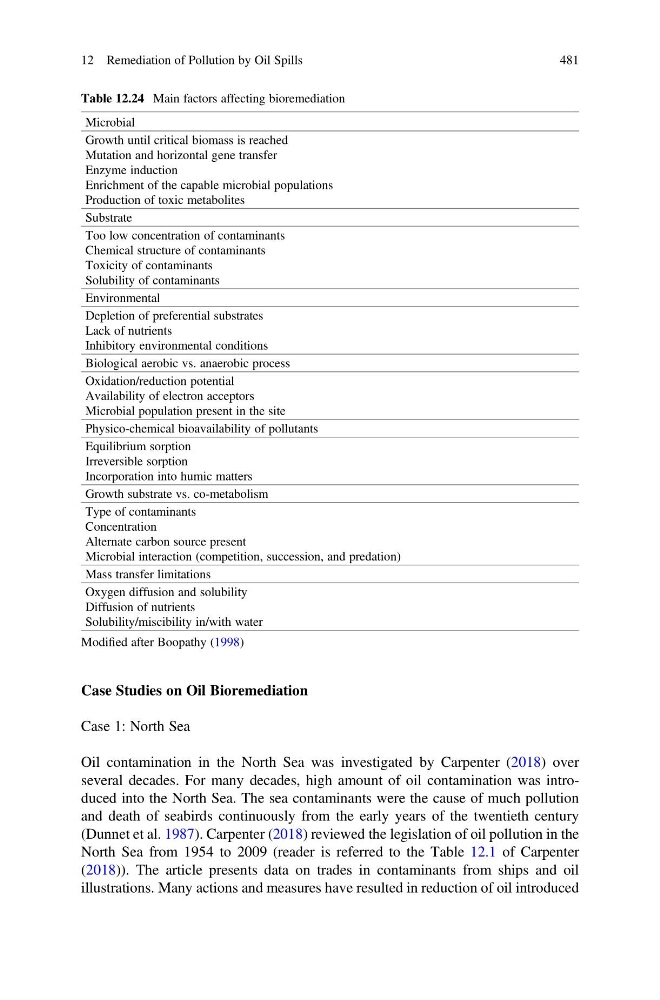
Table 12.24 Main factors affecting bioremediation
Microbial
Growth until critical biomass is reached
Mutation and horizontal gene transfer
Enzyme induction
Enrichment of the capable microbial populations
Production of toxic metabolites
Substrate
Too low concentration of contaminants
Chemical structure of contaminants
Toxicity of contaminants
Solubility of contaminants
Environmental
Depletion of preferential substrates
Lack of nutrients
Inhibitory environmental conditions
Biological aerobic vs. anaerobic process
Oxidation/reduction potential
Availability of electron acceptors
Microbial population present in the site
Physico-chemical bioavailability of pollutants
Equilibrium sorption
Irreversible sorption
Incorporation into humic matters
Growth substrate vs. co-metabolism
Type of contaminants
Concentration
Alternate carbon source present
Microbial interaction (competition, succession, and predation)
Mass transfer limitations
Oxygen diffusion and solubility
Diffusion of nutrients
Solubility/miscibility in/with water
Modified after Boopathy (1998)
12 Remediation of Pollution by Oil Spills
481
Case 1: North Sea
Oil contamination in the North Sea was investigated by Carpenter (2018) over
several decades. For many decades, high amount of oil contamination was introduced into the North Sea. The sea contaminants were the cause of much pollution
and death of seabirds continuously from the early years of the twentieth century
(Dunnet et al. 1987). Carpenter (2018) reviewed the legislation of oil pollution in the
North Sea from 1954 to 2009 (reader is referred to the Table 12.1 of Carpenter
(2018)). The article presents data on trades in contaminants from ships and oil
illustrations. Many actions and measures have resulted in reduction of oil introduced
Table 12.24 Main factors affecting bioremediation
Microbial
Growth until critical biomass is reached
Mutation and horizontal gene transfer
Enzyme induction
Enrichment of the capable microbial populations
Production of toxic metabolites
Substrate
Too low concentration of contaminants
Chemical structure of contaminants
Toxicity of contaminants
Solubility of contaminants
Environmental
Depletion of preferential substrates
Lack of nutrients
Inhibitory environmental conditions
Biological aerobic vs. anaerobic process
Oxidation/reduction potential
Availability of electron acceptors
Microbial population present in the site
Physico-chemical bioavailability of pollutants
Equilibrium sorption
Irreversible sorption
Incorporation into humic matters
Growth substrate vs. co-metabolism
Type of contaminants
Concentration
Alternate carbon source present
Microbial interaction (competition, succession, and predation)
Mass transfer limitations
Oxygen diffusion and solubility
Diffusion of nutrients
Solubility/miscibility in/with water
Modified after Boopathy (1998)
12 Remediation of Pollution by Oil Spills
481