

An analysis at an international level was performed by Quintella et al. (2019) for
bioremediation technology based on strengths, weaknesses, opportunities, and
threats. They reported that the bioremediation is growing for water (53%), soils
(36%), and sludge (11%) yearly and at nearly constant rates. Predominantly, bacteria
(57%), enzymes (19%), fungi (13%), algae (6%), plants (4%), and protozoa are the
bioremediation agents and the oils (38%), metals (21%), organic waste (21%),
polymers (10%), food (5%), cellulose (5%), and biodiesel are the main pollutants.
Basically, the final aim of remediation methods is providing the net benefits for
environment. Selection of each response method depends on conditions of sea and
weather; the kind of oil, biological, physical, and economical characteristics of the
spilled site; depth of water; the season and effectiveness of cleanup; concentration of
oil spilled; and the rate of spillage (Dave and Ghaly 2011). The most effective
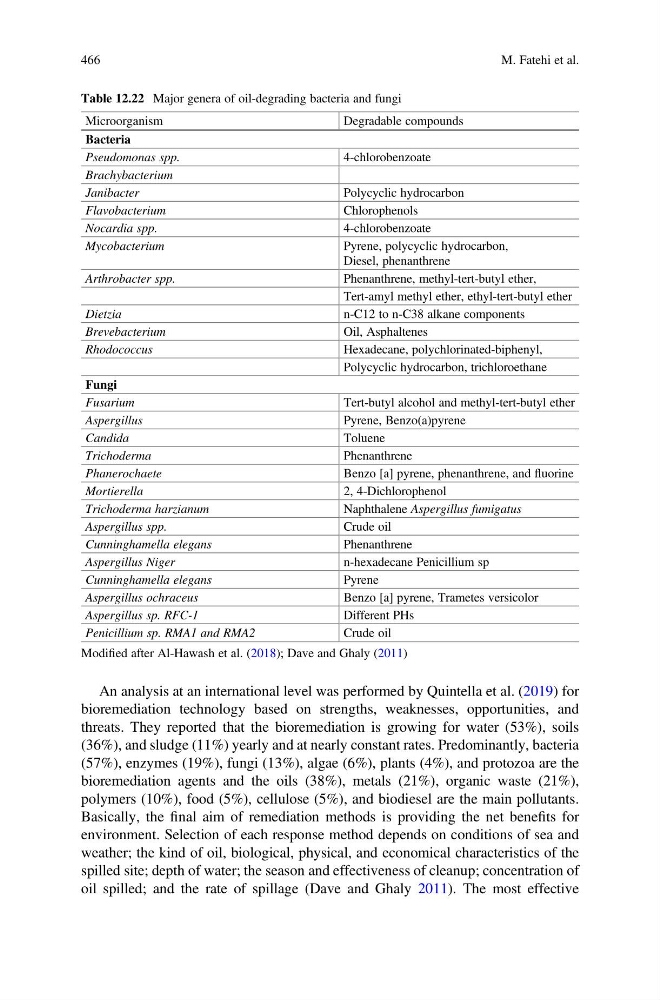
Table 12.22 Major genera of oil-degrading bacteria and fungi
Microorganism
Degradable compounds
Bacteria
Pseudomonas spp.
4-chlorobenzoate
Brachybacterium
Janibacter
Polycyclic hydrocarbon
Flavobacterium
Chlorophenols
Nocardia spp.
4-chlorobenzoate
Mycobacterium
Pyrene, polycyclic hydrocarbon,
Diesel, phenanthrene
Arthrobacter spp.
Phenanthrene, methyl-tert-butyl ether,
Tert-amyl methyl ether, ethyl-tert-butyl ether
Dietzia
n-C12 to n-C38 alkane components
Brevebacterium
Oil, Asphaltenes
Rhodococcus
Hexadecane, polychlorinated-biphenyl,
Polycyclic hydrocarbon, trichloroethane
Fungi
Fusarium
Tert-butyl alcohol and methyl-tert-butyl ether
Aspergillus
Pyrene, Benzo(a)pyrene
Candida
Toluene
Trichoderma
Phenanthrene
Phanerochaete
Benzo [a] pyrene, phenanthrene, and fluorine
Mortierella
2, 4-Dichlorophenol
Trichoderma harzianum
Naphthalene Aspergillus fumigatus
Aspergillus spp.
Crude oil
Cunninghamella elegans
Phenanthrene
Aspergillus Niger
n-hexadecane Penicillium sp
Cunninghamella elegans
Pyrene
Aspergillus ochraceus
Benzo [a] pyrene, Trametes versicolor
Aspergillus sp. RFC-1
Different PHs
Penicillium sp. RMA1 and RMA2
Crude oil
Modified after Al-Hawash et al. (2018); Dave and Ghaly (2011)
466
M. Fatehi et al.
bioremediation technology based on strengths, weaknesses, opportunities, and
threats. They reported that the bioremediation is growing for water (53%), soils
(36%), and sludge (11%) yearly and at nearly constant rates. Predominantly, bacteria
(57%), enzymes (19%), fungi (13%), algae (6%), plants (4%), and protozoa are the
bioremediation agents and the oils (38%), metals (21%), organic waste (21%),
polymers (10%), food (5%), cellulose (5%), and biodiesel are the main pollutants.
Basically, the final aim of remediation methods is providing the net benefits for
environment. Selection of each response method depends on conditions of sea and
weather; the kind of oil, biological, physical, and economical characteristics of the
spilled site; depth of water; the season and effectiveness of cleanup; concentration of
oil spilled; and the rate of spillage (Dave and Ghaly 2011). The most effective
Table 12.22 Major genera of oil-degrading bacteria and fungi
Microorganism
Degradable compounds
Bacteria
Pseudomonas spp.
4-chlorobenzoate
Brachybacterium
Janibacter
Polycyclic hydrocarbon
Flavobacterium
Chlorophenols
Nocardia spp.
4-chlorobenzoate
Mycobacterium
Pyrene, polycyclic hydrocarbon,
Diesel, phenanthrene
Arthrobacter spp.
Phenanthrene, methyl-tert-butyl ether,
Tert-amyl methyl ether, ethyl-tert-butyl ether
Dietzia
n-C12 to n-C38 alkane components
Brevebacterium
Oil, Asphaltenes
Rhodococcus
Hexadecane, polychlorinated-biphenyl,
Polycyclic hydrocarbon, trichloroethane
Fungi
Fusarium
Tert-butyl alcohol and methyl-tert-butyl ether
Aspergillus
Pyrene, Benzo(a)pyrene
Candida
Toluene
Trichoderma
Phenanthrene
Phanerochaete
Benzo [a] pyrene, phenanthrene, and fluorine
Mortierella
2, 4-Dichlorophenol
Trichoderma harzianum
Naphthalene Aspergillus fumigatus
Aspergillus spp.
Crude oil
Cunninghamella elegans
Phenanthrene
Aspergillus Niger
n-hexadecane Penicillium sp
Cunninghamella elegans
Pyrene
Aspergillus ochraceus
Benzo [a] pyrene, Trametes versicolor
Aspergillus sp. RFC-1
Different PHs
Penicillium sp. RMA1 and RMA2
Crude oil
Modified after Al-Hawash et al. (2018); Dave and Ghaly (2011)
466
M. Fatehi et al.