

Therefore, the treatment of the spilled oil on the water surface becomes an essential
and inevitable task.
This work presents an overview of oil removal technologies and their advantages
and limitations. There are two broad categories for oil removal technologies: remediation and bioremediation methods. There are three types of remediation technology: physical methods, chemical methods, and oilsorbents, and will be explained in
Part I.
One of the most important global challenges of the last decades has been
oil-contaminated seawater, groundwater, and wastewater. Municipal runoffs and
liquid release are human activities that generate health hazards directly or indirectly
(Sajna et al. 2015). Industry activities produce wastewater full of fats, oils, and
greases. The components of municipal wastewater are water (99.9%) and a small
amount of organic and inorganic materials in solid and dissolved form. The organic
materials in sewage include proteins and their decomposition materials, lignin,
carbohydrates, fats, soaps, synthetic detergents, different natural and artificial
organic chemicals in industries, a number of potentially toxic elements like copper,
arsenic, chromium, lead, mercury, cadmium, zinc, and so on (Zhang et al. 2008).
Sewage produced by food processing, restaurant trade, and dairy industry
(Cammarota et al. 2001; Wakelin and Forster 1997; Vidal et al. 2000) are some
samples of the potential contaminants in wastewater because of the high oil concentration. Animal and vegetable oils are handled in some industries like oil extraction
BOTTOM
SEDIMENT
FILTER FEEDING
BIODEGRADATION (11)
MONTHS
YEARS
HOURS
EVAPORATION (2)
DAYS
WEEKS
WIND
SPRAY
ATMOSPHERIC
OXIDATION
RAIN
FALL-OUT
SPREADING (1)
SEA
SURFACE
SUBSURFACE
SPILL
CHEMICAL
REACTION
SOLUTION (3)
OIL IN WATER
EMULSION
(4)
MOUSSE LUMPS
WATER-ION
EMULSION (9)
CONVECTION AND
UP WELLING (10)
MICROBTAL
DEGRADION
(5)
TRRY
LUMPS (12)
CONSUMPTION
BY BLANKTON (6)
SINKING AS
FAECAL PELLETS (7)
CONSUMPTION BY
SKINNING ON
PARTICLES (8)
TRABALLS
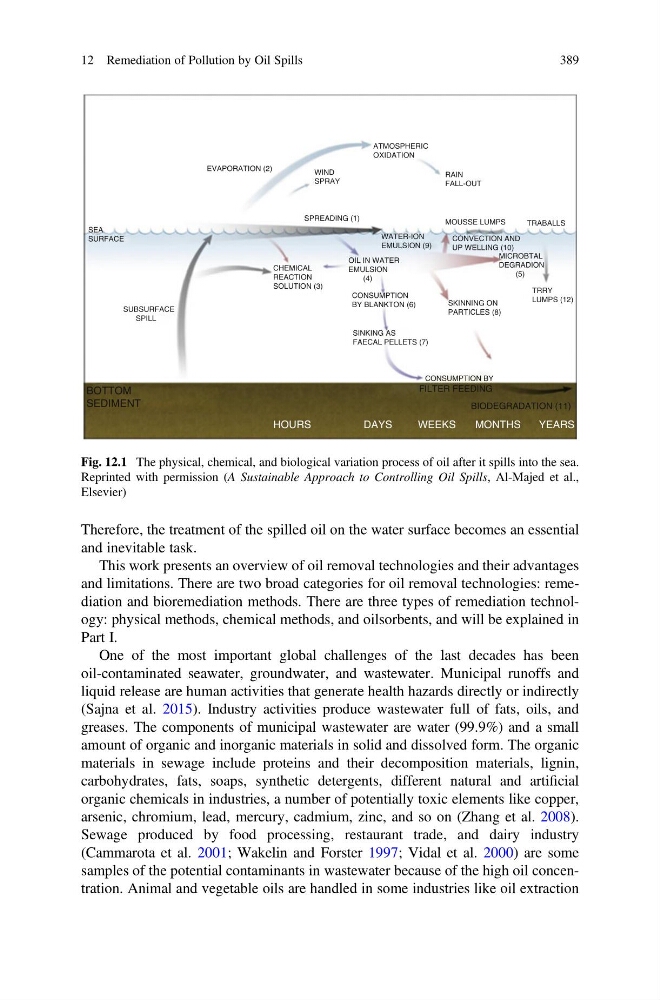
Fig. 12.1 The physical, chemical, and biological variation process of oil after it spills into the sea.
Reprinted with permission (A Sustainable Approach to Controlling Oil Spills, Al-Majed et al.,
Elsevier)
12 Remediation of Pollution by Oil Spills
389
and inevitable task.
This work presents an overview of oil removal technologies and their advantages
and limitations. There are two broad categories for oil removal technologies: remediation and bioremediation methods. There are three types of remediation technology: physical methods, chemical methods, and oilsorbents, and will be explained in
Part I.
One of the most important global challenges of the last decades has been
oil-contaminated seawater, groundwater, and wastewater. Municipal runoffs and
liquid release are human activities that generate health hazards directly or indirectly
(Sajna et al. 2015). Industry activities produce wastewater full of fats, oils, and
greases. The components of municipal wastewater are water (99.9%) and a small
amount of organic and inorganic materials in solid and dissolved form. The organic
materials in sewage include proteins and their decomposition materials, lignin,
carbohydrates, fats, soaps, synthetic detergents, different natural and artificial
organic chemicals in industries, a number of potentially toxic elements like copper,
arsenic, chromium, lead, mercury, cadmium, zinc, and so on (Zhang et al. 2008).
Sewage produced by food processing, restaurant trade, and dairy industry
(Cammarota et al. 2001; Wakelin and Forster 1997; Vidal et al. 2000) are some
samples of the potential contaminants in wastewater because of the high oil concentration. Animal and vegetable oils are handled in some industries like oil extraction
BOTTOM
SEDIMENT
FILTER FEEDING
BIODEGRADATION (11)
MONTHS
YEARS
HOURS
EVAPORATION (2)
DAYS
WEEKS
WIND
SPRAY
ATMOSPHERIC
OXIDATION
RAIN
FALL-OUT
SPREADING (1)
SEA
SURFACE
SUBSURFACE
SPILL
CHEMICAL
REACTION
SOLUTION (3)
OIL IN WATER
EMULSION
(4)
MOUSSE LUMPS
WATER-ION
EMULSION (9)
CONVECTION AND
UP WELLING (10)
MICROBTAL
DEGRADION
(5)
TRRY
LUMPS (12)
CONSUMPTION
BY BLANKTON (6)
SINKING AS
FAECAL PELLETS (7)
CONSUMPTION BY
SKINNING ON
PARTICLES (8)
TRABALLS
Fig. 12.1 The physical, chemical, and biological variation process of oil after it spills into the sea.
Reprinted with permission (A Sustainable Approach to Controlling Oil Spills, Al-Majed et al.,
Elsevier)
12 Remediation of Pollution by Oil Spills
389