

interaction are with regard to nutrients exchange. Nitrogen and phosphorous availability can seriously limit biodegradation processes in marine environment; algae–
bacteria syntrophy in the recycling or mutual provision of organic and inorganic
nutrients can sustain both algal growth and available nutrients for hydrocarbonsdegrading bacteria (Clarens et al. 2010; Müller and Overmann 2011; Lian
et al. 2018). Similarly, iron is a growth-limiting nutrient in marine environment
due to its poor availability both for algae and bacteria (Landry et al. 2000; Amin et al.
2009; Sanchez et al. 2018). Marine bacteria have developed the capability to produce
iron-chelating compounds, siderophores, exhibiting a high affinity for iron. Such
organic small molecules can be excreted to scavenge iron, bind and transport it
within the cells (Butler 2005; Denaro et al. 2014). Bacteria are equipped with
specific receptors and transport systems for different groups of siderophores. On
the contrary, there is no evidence on the production of siderophores by algae.
However, many algae can access iron from siderophores, utilizing ferrireductases
and adjacent Fe (II) transporters on their outer cell membranes, for which there is
genomic evidence in diatoms and green algae (Amin et al. 2009). Algae-associated
bacterial strains can provide both, iron or iron-siderophore complexes to algae,
dealing with their iron demand. For instance, bacterial strains belonging to
Marinobacter genus, associated with dinoflagellates and coccolithophores, have
been shown to produce vibrioferrin, a siderophore that releases iron in the presence
of sunlight, increasing microalgal iron uptake more than 20-fold (Amin et al. 2009).
The phycosphere can also serve as a habitat where a mutual protection may occur.
Algae may protect bacteria from adverse environmental conditions, ensuring stability during grazing events and, in turn, microalgae may benefit from antibiotics
produced by bacteria against algicidal or infective microbes (Amin et al. 2012;
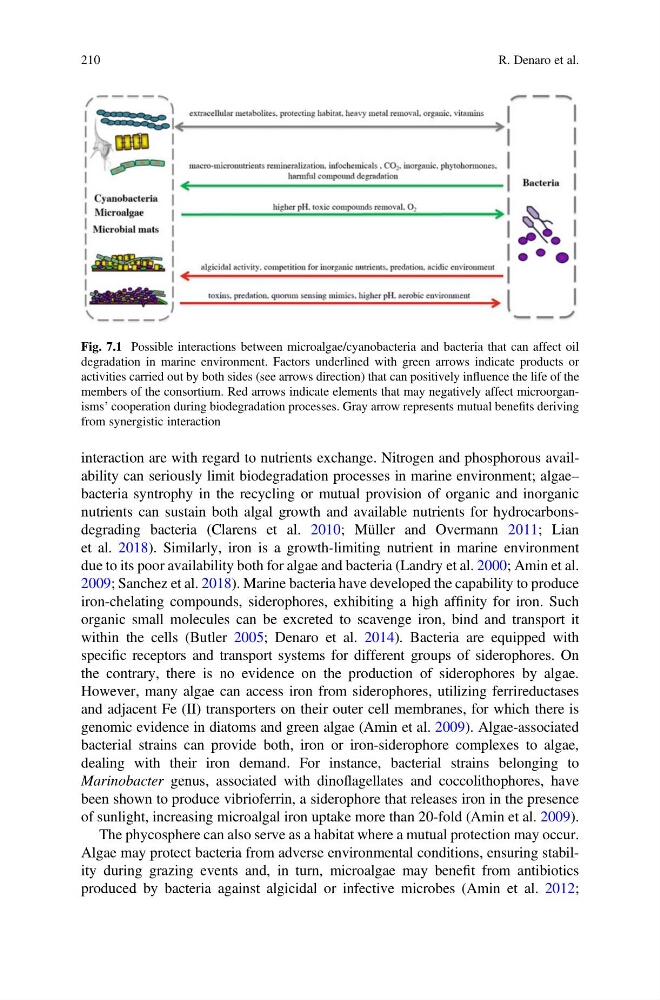
Fig. 7.1 Possible interactions between microalgae/cyanobacteria and bacteria that can affect oil
degradation in marine environment. Factors underlined with green arrows indicate products or
activities carried out by both sides (see arrows direction) that can positively influence the life of the
members of the consortium. Red arrows indicate elements that may negatively affect microorganisms’ cooperation during biodegradation processes. Gray arrow represents mutual benefits deriving
from synergistic interaction
210
R. Denaro et al.
bacteria syntrophy in the recycling or mutual provision of organic and inorganic
nutrients can sustain both algal growth and available nutrients for hydrocarbonsdegrading bacteria (Clarens et al. 2010; Müller and Overmann 2011; Lian
et al. 2018). Similarly, iron is a growth-limiting nutrient in marine environment
due to its poor availability both for algae and bacteria (Landry et al. 2000; Amin et al.
2009; Sanchez et al. 2018). Marine bacteria have developed the capability to produce
iron-chelating compounds, siderophores, exhibiting a high affinity for iron. Such
organic small molecules can be excreted to scavenge iron, bind and transport it
within the cells (Butler 2005; Denaro et al. 2014). Bacteria are equipped with
specific receptors and transport systems for different groups of siderophores. On
the contrary, there is no evidence on the production of siderophores by algae.
However, many algae can access iron from siderophores, utilizing ferrireductases
and adjacent Fe (II) transporters on their outer cell membranes, for which there is
genomic evidence in diatoms and green algae (Amin et al. 2009). Algae-associated
bacterial strains can provide both, iron or iron-siderophore complexes to algae,
dealing with their iron demand. For instance, bacterial strains belonging to
Marinobacter genus, associated with dinoflagellates and coccolithophores, have
been shown to produce vibrioferrin, a siderophore that releases iron in the presence
of sunlight, increasing microalgal iron uptake more than 20-fold (Amin et al. 2009).
The phycosphere can also serve as a habitat where a mutual protection may occur.
Algae may protect bacteria from adverse environmental conditions, ensuring stability during grazing events and, in turn, microalgae may benefit from antibiotics
produced by bacteria against algicidal or infective microbes (Amin et al. 2012;
Fig. 7.1 Possible interactions between microalgae/cyanobacteria and bacteria that can affect oil
degradation in marine environment. Factors underlined with green arrows indicate products or
activities carried out by both sides (see arrows direction) that can positively influence the life of the
members of the consortium. Red arrows indicate elements that may negatively affect microorganisms’ cooperation during biodegradation processes. Gray arrow represents mutual benefits deriving
from synergistic interaction
210
R. Denaro et al.