

commonly used polymers can be ingested by organisms, especially polyethylene and
polystyrene.
Microplastics also have the capacity to adsorb contaminating substances that are
present in the watercourses, i.e., pharmaceuticals, heavy metals, or pesticides (Bakir
et al. 2014; Brennecke et al. 2016; Li et al. 2018). This implies a high risk for marine
fauna and for human health, although the effects are still poorly defined. Some
studies have reported negative effects of these pollutants on feeding behavior,
reproduction, and growth of marine organisms (Anderson et al. 2016; Botterell
et al. 2019; Bouwmeester et al. 2015; De Sá et al. 2018; Schirinzi et al. 2017; Wright
and Kelly 2017; Wright et al. 2013).
The main problems when studying and analyzing microplastics are their small
size, which makes it difficult to choose the right technique to identify them. This
means the absence of a standard method for extracting microplastics from samples
and their quantification. The analysis of microplastics goes through different phases,
in which a different technique must be applied. Collection is the first phase, which
can take place in water or in sediments. Sediment can be dry or wet when
microplastics are going to be removed, whereas in water samples it is common to
use nets, pumps, or sieves (Prata et al. 2019). Microplastics must then be extracted
from water and sediment samples with the objective of being quantified and characterized. This separation usually is based on density, as each polymer has a different
value. Density methods usually used NaCl, NaI, or CaCl 2 solutions in water, in order
to increase the density (Masura et al. 2015; Quinn et al. 2017; Sánchez-Nieva et al.
2017).
Finally, when microplastics have been extracted, numerous techniques can be
employed for their identification. Most studies usually make a first visual
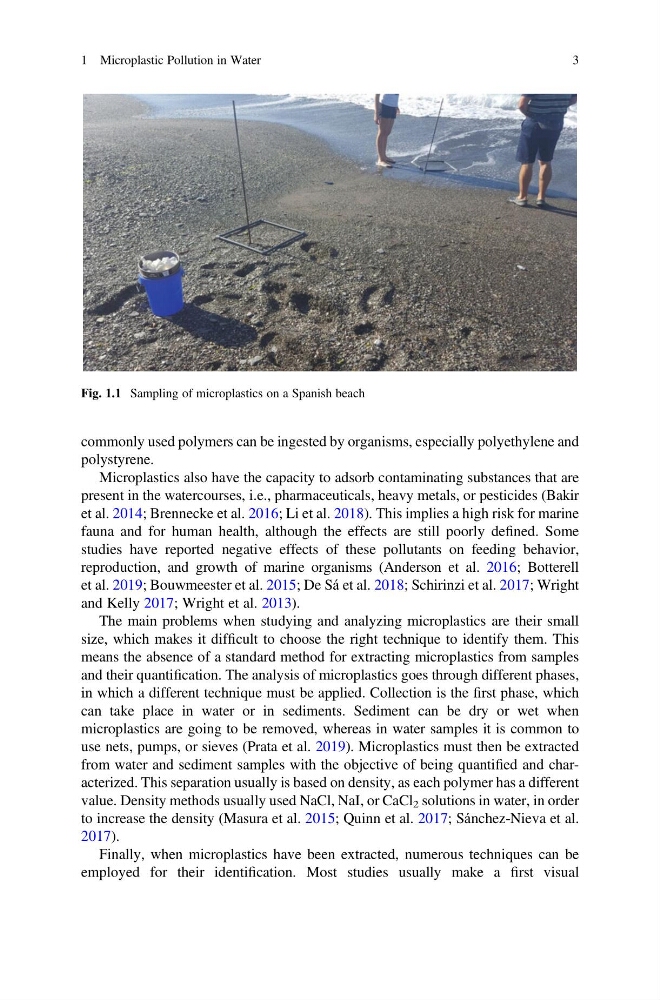
Fig. 1.1 Sampling of microplastics on a Spanish beach
1 Microplastic Pollution in Water
3
polystyrene.
Microplastics also have the capacity to adsorb contaminating substances that are
present in the watercourses, i.e., pharmaceuticals, heavy metals, or pesticides (Bakir
et al. 2014; Brennecke et al. 2016; Li et al. 2018). This implies a high risk for marine
fauna and for human health, although the effects are still poorly defined. Some
studies have reported negative effects of these pollutants on feeding behavior,
reproduction, and growth of marine organisms (Anderson et al. 2016; Botterell
et al. 2019; Bouwmeester et al. 2015; De Sá et al. 2018; Schirinzi et al. 2017; Wright
and Kelly 2017; Wright et al. 2013).
The main problems when studying and analyzing microplastics are their small
size, which makes it difficult to choose the right technique to identify them. This
means the absence of a standard method for extracting microplastics from samples
and their quantification. The analysis of microplastics goes through different phases,
in which a different technique must be applied. Collection is the first phase, which
can take place in water or in sediments. Sediment can be dry or wet when
microplastics are going to be removed, whereas in water samples it is common to
use nets, pumps, or sieves (Prata et al. 2019). Microplastics must then be extracted
from water and sediment samples with the objective of being quantified and characterized. This separation usually is based on density, as each polymer has a different
value. Density methods usually used NaCl, NaI, or CaCl 2 solutions in water, in order
to increase the density (Masura et al. 2015; Quinn et al. 2017; Sánchez-Nieva et al.
2017).
Finally, when microplastics have been extracted, numerous techniques can be
employed for their identification. Most studies usually make a first visual
Fig. 1.1 Sampling of microplastics on a Spanish beach
1 Microplastic Pollution in Water
3