

derivatives under the ultraviolet irradiation (Bai et al. 2017). The complete degradation pathway of the polycyclic aromatic hydrocarbons is shown in Fig. 5.3.
Under sunlight irradiation degradation of phenanthrene was reported using
nanocomposite of graphene oxide coupled with titanium dioxide and strontium
hydroxide and carbonate. The synergistic interaction between the three parent
materials of the nanocomposite facilitated the use of both ultraviolet as well as
visible light energy from the sunlight. The overall degradation mechanism includes
the shifting of absorption toward higher wavelength by the coupling of two semiconductors (titanium dioxide and strontium hydroxide and carbonate) and push the
transfer of photo excited charge carriers (Fu et al. 2018). Graphene oxide/silver
phosphate fabricated through a simple precipitation method was thriving in visible
light induced degradation of two, three, and four ring-membered polycyclic aromatic
Table 5.3 (continued)
Nanomaterial
type
Functionalization Improved properties
Reference
Cobalt ferrite
Guar gum
Bi 2 MO 6 /
graphene
Fe(0)/magnetite
Easilyseparablemagnetic nanocomposite
Adsorbed75.5 Æ 1.21 mg g
À1 of malachite green
Quick adsorption of both cationic dyes
and metal ions
Mesoporous highly surface active
(334.65 m
2 g
À1
) hybrid
0.1 g of adsorbent adsorbed the
11.1 mg g
À1 of Cr(VI)
Shukla et al.
(2018)
Amiri et al.
(2017)
Patra et al.
(2017)
Nguyen et al.
(2018)
Kumari et al.
(2018)
H
H
OH
H
OH
H
O 2
-
OH
H
H
OO
-HO 2
-
OH
OH
OH
HO
H
O 2
-
HO
H
OH
OO
-HO 2
-
OH
OH
OH
OH
OH
OH
H
H
-H 2 O
OH
O
O 2
-
O
OH
OO
-HO 2
-
O
O
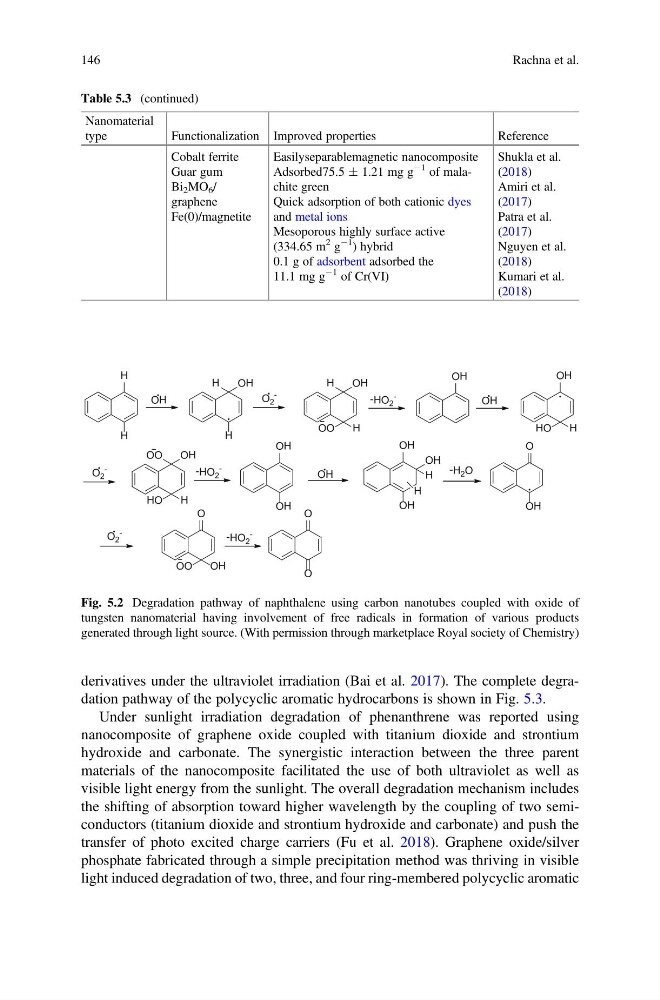
Fig. 5.2 Degradation pathway of naphthalene using carbon nanotubes coupled with oxide of
tungsten nanomaterial having involvement of free radicals in formation of various products
generated through light source. (With permission through marketplace Royal society of Chemistry)
146
Rachna et al.
Under sunlight irradiation degradation of phenanthrene was reported using
nanocomposite of graphene oxide coupled with titanium dioxide and strontium
hydroxide and carbonate. The synergistic interaction between the three parent
materials of the nanocomposite facilitated the use of both ultraviolet as well as
visible light energy from the sunlight. The overall degradation mechanism includes
the shifting of absorption toward higher wavelength by the coupling of two semiconductors (titanium dioxide and strontium hydroxide and carbonate) and push the
transfer of photo excited charge carriers (Fu et al. 2018). Graphene oxide/silver
phosphate fabricated through a simple precipitation method was thriving in visible
light induced degradation of two, three, and four ring-membered polycyclic aromatic
Table 5.3 (continued)
Nanomaterial
type
Functionalization Improved properties
Reference
Cobalt ferrite
Guar gum
Bi 2 MO 6 /
graphene
Fe(0)/magnetite
Easilyseparablemagnetic nanocomposite
Adsorbed75.5 Æ 1.21 mg g
À1 of malachite green
Quick adsorption of both cationic dyes
and metal ions
Mesoporous highly surface active
(334.65 m
2 g
À1
) hybrid
0.1 g of adsorbent adsorbed the
11.1 mg g
À1 of Cr(VI)
Shukla et al.
(2018)
Amiri et al.
(2017)
Patra et al.
(2017)
Nguyen et al.
(2018)
Kumari et al.
(2018)
H
H
OH
H
OH
H
O 2
-
OH
H
H
OO
-HO 2
-
OH
OH
OH
HO
H
O 2
-
HO
H
OH
OO
-HO 2
-
OH
OH
OH
OH
OH
OH
H
H
-H 2 O
OH
O
O 2
-
O
OH
OO
-HO 2
-
O
O
Fig. 5.2 Degradation pathway of naphthalene using carbon nanotubes coupled with oxide of
tungsten nanomaterial having involvement of free radicals in formation of various products
generated through light source. (With permission through marketplace Royal society of Chemistry)
146
Rachna et al.