

hydrocarbons can easily bind the endogenous receptors and are also called as
endocrine disrupting compounds (Wattiau 2002). Other than this, polycyclic aromatic hydrocarbons can cause genetic alterations, effect growth and tissue alterations, and harm the immune system (Delistraty 1997). Polycyclic aromatic
hydrocarbons can create distortions in the chromosomal deoxyribonucleic acid,
and even a 0.002 mg Kg
À1 amount present in mice can cause liver tumors (Jung
et al. 2013; Tongo et al. 2017). Some of the polycyclic aromatic hydrocarbons have
similar structure with that of steroid hormones can induce estrogenic activity (Yin
et al. 2017a, b). Polycyclic aromatic hydrocarbons are activated by the microsomal
cytochrome P450 monooxygenases and can form biologically dynamic products
(Peltonen and Dipple 1995). Daily intake of acenaphthene by humans has been
reported in recent study indicating its presence in the diet (Taiwo et al. 2019). The
ozonated product of some of the polycyclic aromatic hydrocarbons such as phenanthrene has been found to be more hepatotoxic, and nephrotoxicity is one of the
apparent effects (Kasumba and Holmen 2018). Cooking of meat with some of the
style such as grilling, roasting, and frying can lead into the formation of polycyclic
aromatic hydrocarbons. Moreover, it is found in content in meat having higher fat
content, thus directly affecting the humans consuming these (Rogge et al. 1991). A
lot of people, residing near coastal areas, consume seafood as their main daily diet
source. However, regardless of its profits toward human health, daily ingestion of
water species can raise the risk of contaminant exposure (Moon et al. 2010). The
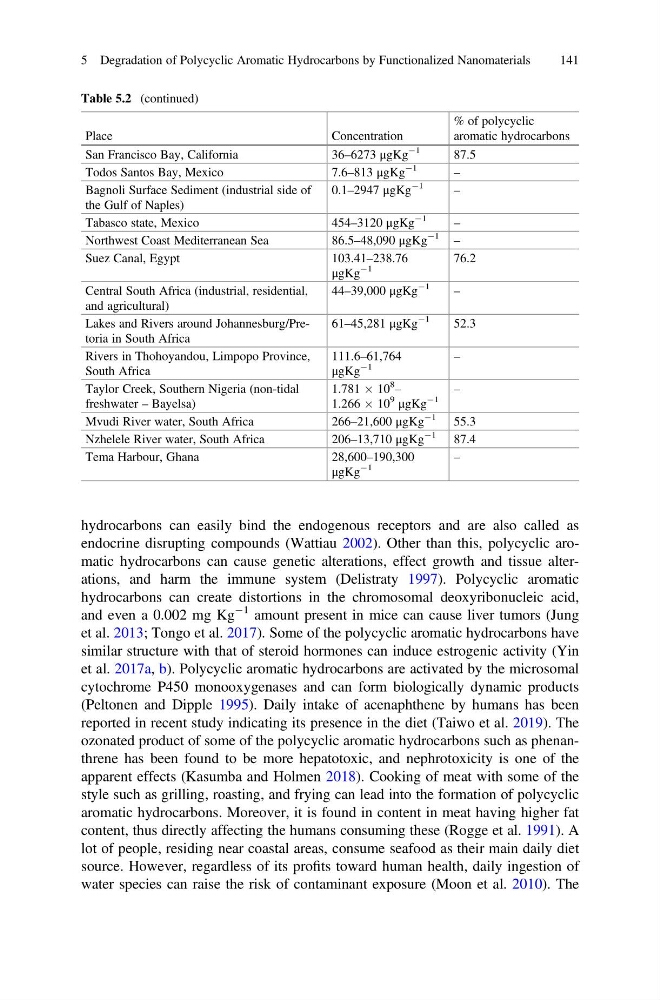
Table 5.2 (continued)
Place
Concentration
% of polycyclic
aromatic hydrocarbons
San Francisco Bay, California
36–6273 μgKg
À1
87.5
Todos Santos Bay, Mexico
7.6–813 μgKg
À1
–
Bagnoli Surface Sediment (industrial side of
the Gulf of Naples)
0.1–2947 μgKg
À1
–
Tabasco state, Mexico
454–3120 μgKg
À1
–
Northwest Coast Mediterranean Sea
86.5–48,090 μgKg
À1
–
Suez Canal, Egypt
103.41–238.76
μgKg
À1
76.2
Central South Africa (industrial, residential,
and agricultural)
44–39,000 μgKg
À1
–
Lakes and Rivers around Johannesburg/Pretoria in South Africa
61–45,281 μgKg
À1
52.3
Rivers in Thohoyandou, Limpopo Province,
South Africa
111.6–61,764
μgKg
À1
–
Taylor Creek, Southern Nigeria (non-tidal
freshwater – Bayelsa)
1.781 Â 10
8
–
1.266 Â 10
9 μgKg
À1
–
Mvudi River water, South Africa
266–21,600 μgKg
À1
55.3
Nzhelele River water, South Africa
206–13,710 μgKg
À1
87.4
Tema Harbour, Ghana
28,600–190,300
μgKg
À1
–
5 Degradation of Polycyclic Aromatic Hydrocarbons by Functionalized Nanomaterials
141
endocrine disrupting compounds (Wattiau 2002). Other than this, polycyclic aromatic hydrocarbons can cause genetic alterations, effect growth and tissue alterations, and harm the immune system (Delistraty 1997). Polycyclic aromatic
hydrocarbons can create distortions in the chromosomal deoxyribonucleic acid,
and even a 0.002 mg Kg
À1 amount present in mice can cause liver tumors (Jung
et al. 2013; Tongo et al. 2017). Some of the polycyclic aromatic hydrocarbons have
similar structure with that of steroid hormones can induce estrogenic activity (Yin
et al. 2017a, b). Polycyclic aromatic hydrocarbons are activated by the microsomal
cytochrome P450 monooxygenases and can form biologically dynamic products
(Peltonen and Dipple 1995). Daily intake of acenaphthene by humans has been
reported in recent study indicating its presence in the diet (Taiwo et al. 2019). The
ozonated product of some of the polycyclic aromatic hydrocarbons such as phenanthrene has been found to be more hepatotoxic, and nephrotoxicity is one of the
apparent effects (Kasumba and Holmen 2018). Cooking of meat with some of the
style such as grilling, roasting, and frying can lead into the formation of polycyclic
aromatic hydrocarbons. Moreover, it is found in content in meat having higher fat
content, thus directly affecting the humans consuming these (Rogge et al. 1991). A
lot of people, residing near coastal areas, consume seafood as their main daily diet
source. However, regardless of its profits toward human health, daily ingestion of
water species can raise the risk of contaminant exposure (Moon et al. 2010). The
Table 5.2 (continued)
Place
Concentration
% of polycyclic
aromatic hydrocarbons
San Francisco Bay, California
36–6273 μgKg
À1
87.5
Todos Santos Bay, Mexico
7.6–813 μgKg
À1
–
Bagnoli Surface Sediment (industrial side of
the Gulf of Naples)
0.1–2947 μgKg
À1
–
Tabasco state, Mexico
454–3120 μgKg
À1
–
Northwest Coast Mediterranean Sea
86.5–48,090 μgKg
À1
–
Suez Canal, Egypt
103.41–238.76
μgKg
À1
76.2
Central South Africa (industrial, residential,
and agricultural)
44–39,000 μgKg
À1
–
Lakes and Rivers around Johannesburg/Pretoria in South Africa
61–45,281 μgKg
À1
52.3
Rivers in Thohoyandou, Limpopo Province,
South Africa
111.6–61,764
μgKg
À1
–
Taylor Creek, Southern Nigeria (non-tidal
freshwater – Bayelsa)
1.781 Â 10
8
–
1.266 Â 10
9 μgKg
À1
–
Mvudi River water, South Africa
266–21,600 μgKg
À1
55.3
Nzhelele River water, South Africa
206–13,710 μgKg
À1
87.4
Tema Harbour, Ghana
28,600–190,300
μgKg
À1
–
5 Degradation of Polycyclic Aromatic Hydrocarbons by Functionalized Nanomaterials
141