

Domestic Laundry and Microfiber Shedding of Synthetic Textiles
131
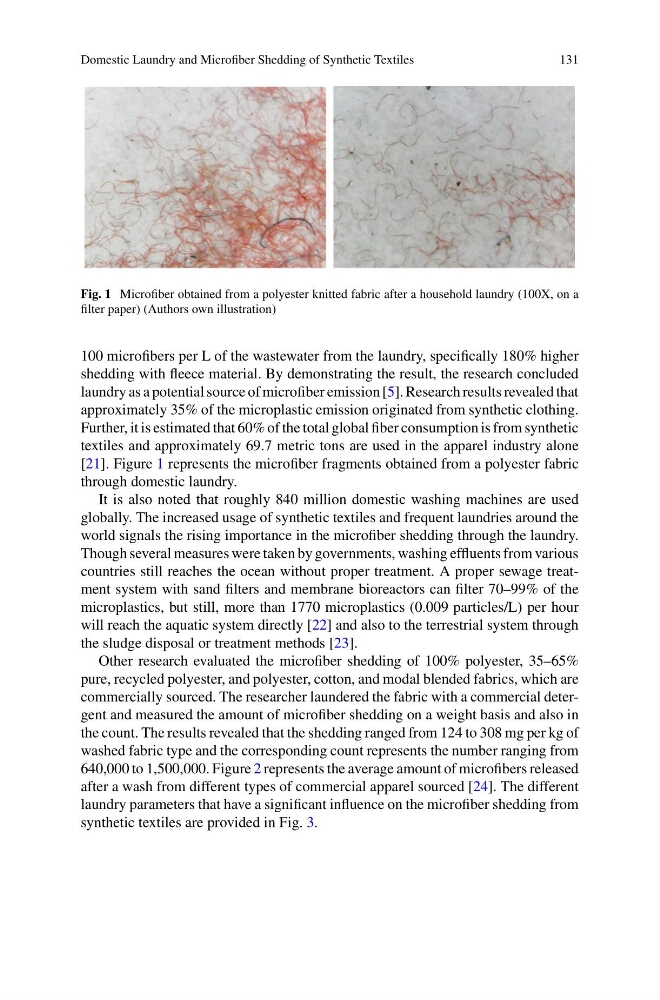
Fig. 1 Microfiber obtained from a polyester knitted fabric after a household laundry (100X, on a
filter paper) (Authors own illustration)
100 microfibers per L of the wastewater from the laundry, specifically 180% higher
shedding with fleece material. By demonstrating the result, the research concluded
laundry as a potential source of microfiber emission [5]. Research results revealed that
approximately 35% of the microplastic emission originated from synthetic clothing.
Further, it is estimated that 60% of the total global fiber consumption is from synthetic
textiles and approximately 69.7 metric tons are used in the apparel industry alone
[21]. Figure 1 represents the microfiber fragments obtained from a polyester fabric
through domestic laundry.
It is also noted that roughly 840 million domestic washing machines are used
globally. The increased usage of synthetic textiles and frequent laundries around the
world signals the rising importance in the microfiber shedding through the laundry.
Though several measures were taken by governments, washing effluents from various
countries still reaches the ocean without proper treatment. A proper sewage treatment system with sand filters and membrane bioreactors can filter 70–99% of the
microplastics, but still, more than 1770 microplastics (0.009 particles/L) per hour
will reach the aquatic system directly [22] and also to the terrestrial system through
the sludge disposal or treatment methods [23].
Other research evaluated the microfiber shedding of 100% polyester, 35–65%
pure, recycled polyester, and polyester, cotton, and modal blended fabrics, which are
commercially sourced. The researcher laundered the fabric with a commercial detergent and measured the amount of microfiber shedding on a weight basis and also in
the count. The results revealed that the shedding ranged from 124 to 308 mg per kg of
washed fabric type and the corresponding count represents the number ranging from
640,000 to 1,500,000. Figure 2 represents the average amount of microfibers released
after a wash from different types of commercial apparel sourced [24]. The different
laundry parameters that have a significant influence on the microfiber shedding from
synthetic textiles are provided in Fig. 3.
131
Fig. 1 Microfiber obtained from a polyester knitted fabric after a household laundry (100X, on a
filter paper) (Authors own illustration)
100 microfibers per L of the wastewater from the laundry, specifically 180% higher
shedding with fleece material. By demonstrating the result, the research concluded
laundry as a potential source of microfiber emission [5]. Research results revealed that
approximately 35% of the microplastic emission originated from synthetic clothing.
Further, it is estimated that 60% of the total global fiber consumption is from synthetic
textiles and approximately 69.7 metric tons are used in the apparel industry alone
[21]. Figure 1 represents the microfiber fragments obtained from a polyester fabric
through domestic laundry.
It is also noted that roughly 840 million domestic washing machines are used
globally. The increased usage of synthetic textiles and frequent laundries around the
world signals the rising importance in the microfiber shedding through the laundry.
Though several measures were taken by governments, washing effluents from various
countries still reaches the ocean without proper treatment. A proper sewage treatment system with sand filters and membrane bioreactors can filter 70–99% of the
microplastics, but still, more than 1770 microplastics (0.009 particles/L) per hour
will reach the aquatic system directly [22] and also to the terrestrial system through
the sludge disposal or treatment methods [23].
Other research evaluated the microfiber shedding of 100% polyester, 35–65%
pure, recycled polyester, and polyester, cotton, and modal blended fabrics, which are
commercially sourced. The researcher laundered the fabric with a commercial detergent and measured the amount of microfiber shedding on a weight basis and also in
the count. The results revealed that the shedding ranged from 124 to 308 mg per kg of
washed fabric type and the corresponding count represents the number ranging from
640,000 to 1,500,000. Figure 2 represents the average amount of microfibers released
after a wash from different types of commercial apparel sourced [24]. The different
laundry parameters that have a significant influence on the microfiber shedding from
synthetic textiles are provided in Fig. 3.