

Effect of Textile Parameters on Microfiber Shedding …
5
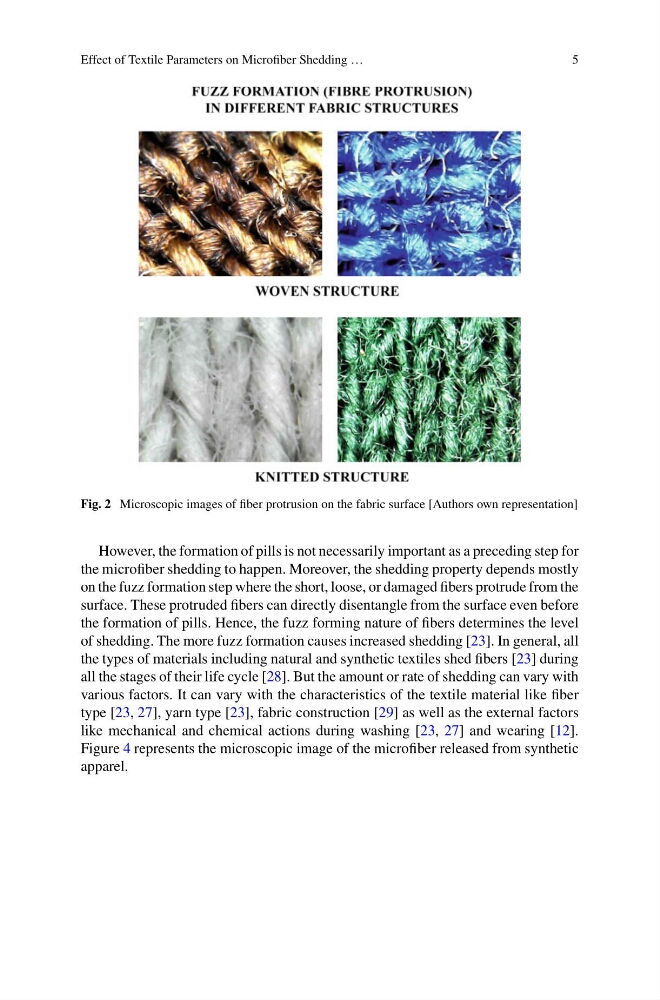
Fig. 2 Microscopic images of fiber protrusion on the fabric surface [Authors own representation]
However, the formation of pills is not necessarily important as a preceding step for
the microfiber shedding to happen. Moreover, the shedding property depends mostly
on the fuzz formation step where the short, loose, or damaged fibers protrude from the
surface. These protruded fibers can directly disentangle from the surface even before
the formation of pills. Hence, the fuzz forming nature of fibers determines the level
of shedding. The more fuzz formation causes increased shedding [23]. In general, all
the types of materials including natural and synthetic textiles shed fibers [23] during
all the stages of their life cycle [28]. But the amount or rate of shedding can vary with
various factors. It can vary with the characteristics of the textile material like fiber
type [23, 27], yarn type [23], fabric construction [29] as well as the external factors
like mechanical and chemical actions during washing [23, 27] and wearing [12].
Figure 4 represents the microscopic image of the microfiber released from synthetic
apparel.
5
Fig. 2 Microscopic images of fiber protrusion on the fabric surface [Authors own representation]
However, the formation of pills is not necessarily important as a preceding step for
the microfiber shedding to happen. Moreover, the shedding property depends mostly
on the fuzz formation step where the short, loose, or damaged fibers protrude from the
surface. These protruded fibers can directly disentangle from the surface even before
the formation of pills. Hence, the fuzz forming nature of fibers determines the level
of shedding. The more fuzz formation causes increased shedding [23]. In general, all
the types of materials including natural and synthetic textiles shed fibers [23] during
all the stages of their life cycle [28]. But the amount or rate of shedding can vary with
various factors. It can vary with the characteristics of the textile material like fiber
type [23, 27], yarn type [23], fabric construction [29] as well as the external factors
like mechanical and chemical actions during washing [23, 27] and wearing [12].
Figure 4 represents the microscopic image of the microfiber released from synthetic
apparel.