

geochemical processes, and hydrogeologic and land-use factors associated with
2470 groundwater samples was developed (Table 4.4) (Ayotte et al. 2006). Out of
50 variables considered, the authors found that specific rock types, and certain
geochemical, hydrologic, and landscape variables were found to be the most important predictors of arsenic in groundwater (Ayotte et al. 2006).
Winkel et al. (2008) developed a groundwater-arsenic prediction model for south
Asian countries using geological and surface soil parameters for 1756 aggregated
and geo-referenced groundwater data points collected from the Bengal, Red River,
and Mekong deltas (Winkel et al. 2008). The authors used a logistic regression
method to develop the prediction model. They found deltaic deposits, organic-rich
deposits, alluvial deposits, floodplain deposits, fine-textured soils, and silt in subsoil
to be the most critical predictors of arsenic in groundwater in these regions
(Table 4.4) (Winkel et al. 2008). Also in 2008, Amini et al. reported a stepwise
regression- and adaptive neuro-fuzzy inference system (ANFIS)-based statistical
prediction model for groundwater arsenic contamination in Southeast and Northwest
China, Central Australia, New Zealand, Northern Afghanistan, Northern Mali, and
Zambia (Amini et al. 2008a). The authors used details on the climate, geology,
hydrology, soil properties, land use, and elevation of 20,000 groundwater samples
across the studied regions and found that in those regions, evapotranspiration,
temperature, precipitation, distance from volcanoes, drainage code, subsoil silt
content, topsoil silt content, distance from volcanic rocks, subsoil carbon-to-nitrogen
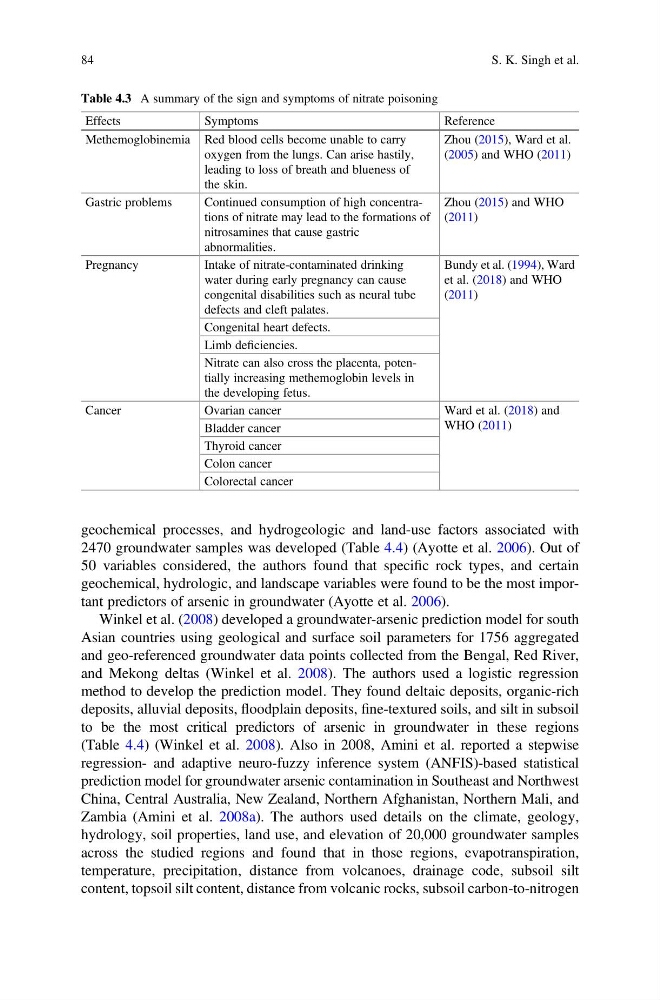
Table 4.3 A summary of the sign and symptoms of nitrate poisoning
Effects
Symptoms
Reference
Methemoglobinemia Red blood cells become unable to carry
oxygen from the lungs. Can arise hastily,
leading to loss of breath and blueness of
the skin.
Zhou (2015), Ward et al.
(2005) and WHO (2011)
Gastric problems
Continued consumption of high concentrations of nitrate may lead to the formations of
nitrosamines that cause gastric
abnormalities.
Zhou (2015) and WHO
(2011)
Pregnancy
Intake of nitrate-contaminated drinking
water during early pregnancy can cause
congenital disabilities such as neural tube
defects and cleft palates.
Bundy et al. (1994), Ward
et al. (2018) and WHO
(2011)
Congenital heart defects.
Limb deficiencies.
Nitrate can also cross the placenta, potentially increasing methemoglobin levels in
the developing fetus.
Cancer
Ovarian cancer
Ward et al. (2018) and
WHO (2011)
Bladder cancer
Thyroid cancer
Colon cancer
Colorectal cancer
84
S. K. Singh et al.
2470 groundwater samples was developed (Table 4.4) (Ayotte et al. 2006). Out of
50 variables considered, the authors found that specific rock types, and certain
geochemical, hydrologic, and landscape variables were found to be the most important predictors of arsenic in groundwater (Ayotte et al. 2006).
Winkel et al. (2008) developed a groundwater-arsenic prediction model for south
Asian countries using geological and surface soil parameters for 1756 aggregated
and geo-referenced groundwater data points collected from the Bengal, Red River,
and Mekong deltas (Winkel et al. 2008). The authors used a logistic regression
method to develop the prediction model. They found deltaic deposits, organic-rich
deposits, alluvial deposits, floodplain deposits, fine-textured soils, and silt in subsoil
to be the most critical predictors of arsenic in groundwater in these regions
(Table 4.4) (Winkel et al. 2008). Also in 2008, Amini et al. reported a stepwise
regression- and adaptive neuro-fuzzy inference system (ANFIS)-based statistical
prediction model for groundwater arsenic contamination in Southeast and Northwest
China, Central Australia, New Zealand, Northern Afghanistan, Northern Mali, and
Zambia (Amini et al. 2008a). The authors used details on the climate, geology,
hydrology, soil properties, land use, and elevation of 20,000 groundwater samples
across the studied regions and found that in those regions, evapotranspiration,
temperature, precipitation, distance from volcanoes, drainage code, subsoil silt
content, topsoil silt content, distance from volcanic rocks, subsoil carbon-to-nitrogen
Table 4.3 A summary of the sign and symptoms of nitrate poisoning
Effects
Symptoms
Reference
Methemoglobinemia Red blood cells become unable to carry
oxygen from the lungs. Can arise hastily,
leading to loss of breath and blueness of
the skin.
Zhou (2015), Ward et al.
(2005) and WHO (2011)
Gastric problems
Continued consumption of high concentrations of nitrate may lead to the formations of
nitrosamines that cause gastric
abnormalities.
Zhou (2015) and WHO
(2011)
Pregnancy
Intake of nitrate-contaminated drinking
water during early pregnancy can cause
congenital disabilities such as neural tube
defects and cleft palates.
Bundy et al. (1994), Ward
et al. (2018) and WHO
(2011)
Congenital heart defects.
Limb deficiencies.
Nitrate can also cross the placenta, potentially increasing methemoglobin levels in
the developing fetus.
Cancer
Ovarian cancer
Ward et al. (2018) and
WHO (2011)
Bladder cancer
Thyroid cancer
Colon cancer
Colorectal cancer
84
S. K. Singh et al.