

13.8 Factors Affecting Coagulation/Flocculation Practices
in Dye Wastewater
The following discussion covers about the factors that affect the process of coagulation/flocculation in dye wastewater.
13.8.1 Alkalinity
Alkalinity refers to the acid neutralization capacity of water. In other words, it
indicates the water buffering capacity. For agglomeration of colloidal particles, the
alkalinity must be present in the medium. When the metallic salts get hydrolysed in
water, the released hydrogen ions neutralize the alkalinity. If there is low alkalinity
initially, further reduction in alkalinity will destroy its buffering capacity and leads to
dropping down of pH (Wang et al. 2005). The latter may influence the floc formation
as for specific coagulant optimum pH is required. Low alkalinity waters must be
artificially buffered by addition of lime or soda ash (Sawyer et al. 2003).
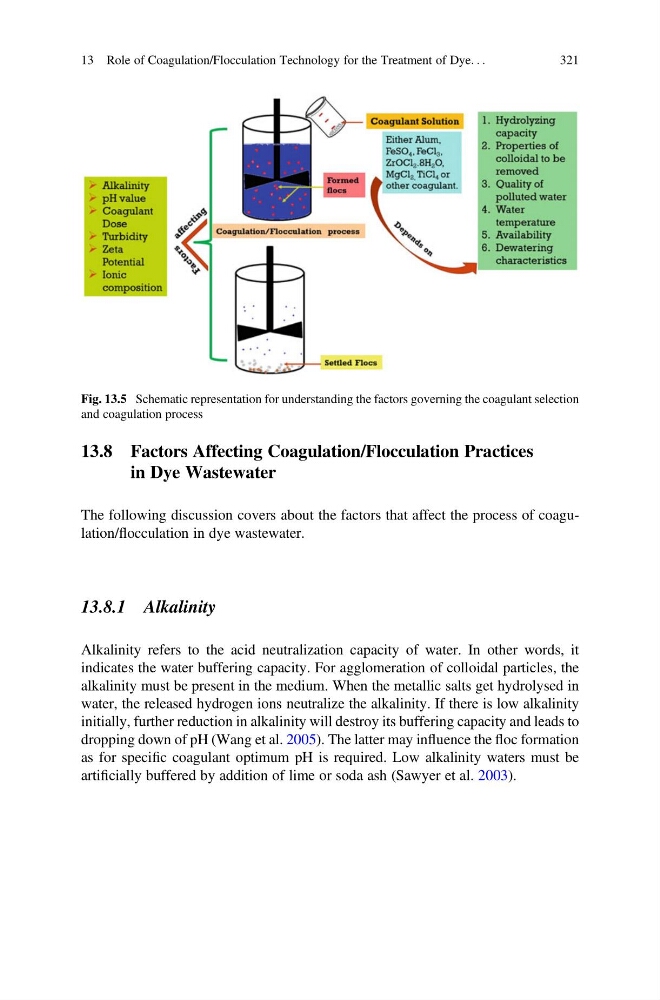
Fig. 13.5 Schematic representation for understanding the factors governing the coagulant selection
and coagulation process
13 Role of Coagulation/Flocculation Technology for the Treatment of Dye. . .
321
in Dye Wastewater
The following discussion covers about the factors that affect the process of coagulation/flocculation in dye wastewater.
13.8.1 Alkalinity
Alkalinity refers to the acid neutralization capacity of water. In other words, it
indicates the water buffering capacity. For agglomeration of colloidal particles, the
alkalinity must be present in the medium. When the metallic salts get hydrolysed in
water, the released hydrogen ions neutralize the alkalinity. If there is low alkalinity
initially, further reduction in alkalinity will destroy its buffering capacity and leads to
dropping down of pH (Wang et al. 2005). The latter may influence the floc formation
as for specific coagulant optimum pH is required. Low alkalinity waters must be
artificially buffered by addition of lime or soda ash (Sawyer et al. 2003).
Fig. 13.5 Schematic representation for understanding the factors governing the coagulant selection
and coagulation process
13 Role of Coagulation/Flocculation Technology for the Treatment of Dye. . .
321