

utilization of the dyes does not occur, and some of them release into the environment. Notably, about 10% of dyes used by textile industries are discharged into the
environment (Bazin et al. 2012).
Stringent environmental rules and regulation have grown up these days and
awaken the textile industries to treat their effluents efficiently before discharge.
For textile industries, aside from the degradation of dyes or its waste, the colour
removal from water is also essential. The presence of colour in water even in low
concentration will profoundly affect the aquatic ecosystem and bring aesthetically
unpleasing view (Yagub et al. 2014). Different treatment techniques have been used
to treat dye from wastewater such as coagulation/flocculation, adsorption, ion
exchange, chemical reduction, advanced chemical oxidation, incineration,
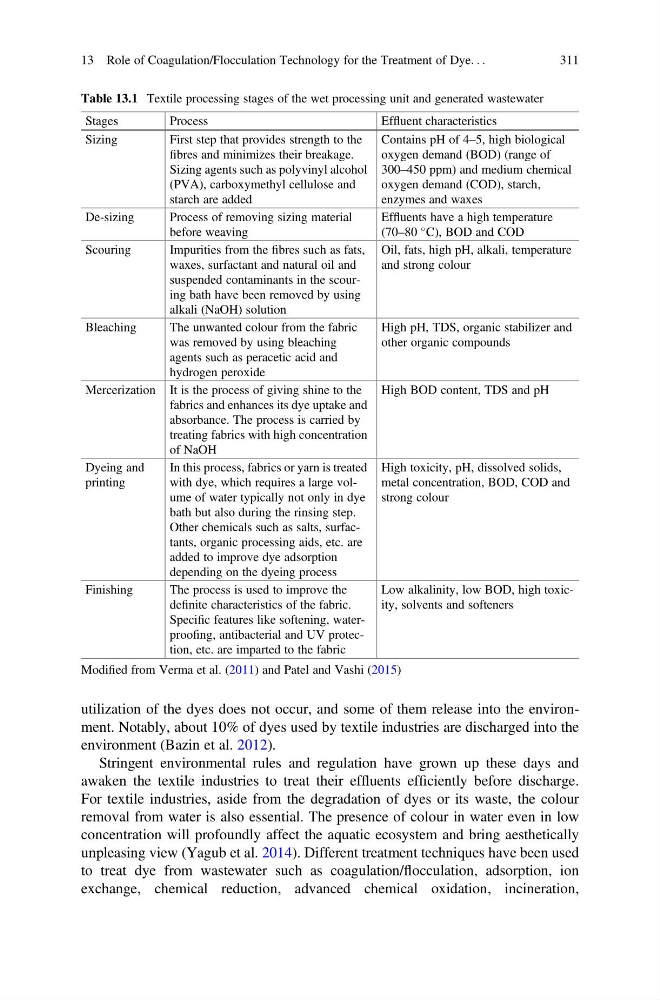
Table 13.1 Textile processing stages of the wet processing unit and generated wastewater
Stages
Process
Effluent characteristics
Sizing
First step that provides strength to the
fibres and minimizes their breakage.
Sizing agents such as polyvinyl alcohol
(PVA), carboxymethyl cellulose and
starch are added
Contains pH of 4–5, high biological
oxygen demand (BOD) (range of
300–450 ppm) and medium chemical
oxygen demand (COD), starch,
enzymes and waxes
De-sizing
Process of removing sizing material
before weaving
Effluents have a high temperature
(70–80
C), BOD and COD
Scouring
Impurities from the fibres such as fats,
waxes, surfactant and natural oil and
suspended contaminants in the scouring bath have been removed by using
alkali (NaOH) solution
Oil, fats, high pH, alkali, temperature
and strong colour
Bleaching
The unwanted colour from the fabric
was removed by using bleaching
agents such as peracetic acid and
hydrogen peroxide
High pH, TDS, organic stabilizer and
other organic compounds
Mercerization It is the process of giving shine to the
fabrics and enhances its dye uptake and
absorbance. The process is carried by
treating fabrics with high concentration
of NaOH
High BOD content, TDS and pH
Dyeing and
printing
In this process, fabrics or yarn is treated
with dye, which requires a large volume of water typically not only in dye
bath but also during the rinsing step.
Other chemicals such as salts, surfactants, organic processing aids, etc. are
added to improve dye adsorption
depending on the dyeing process
High toxicity, pH, dissolved solids,
metal concentration, BOD, COD and
strong colour
Finishing
The process is used to improve the
definite characteristics of the fabric.
Specific features like softening, waterproofing, antibacterial and UV protection, etc. are imparted to the fabric
Low alkalinity, low BOD, high toxicity, solvents and softeners
Modified from Verma et al. (2011) and Patel and Vashi (2015)
13 Role of Coagulation/Flocculation Technology for the Treatment of Dye. . .
311
environment (Bazin et al. 2012).
Stringent environmental rules and regulation have grown up these days and
awaken the textile industries to treat their effluents efficiently before discharge.
For textile industries, aside from the degradation of dyes or its waste, the colour
removal from water is also essential. The presence of colour in water even in low
concentration will profoundly affect the aquatic ecosystem and bring aesthetically
unpleasing view (Yagub et al. 2014). Different treatment techniques have been used
to treat dye from wastewater such as coagulation/flocculation, adsorption, ion
exchange, chemical reduction, advanced chemical oxidation, incineration,
Table 13.1 Textile processing stages of the wet processing unit and generated wastewater
Stages
Process
Effluent characteristics
Sizing
First step that provides strength to the
fibres and minimizes their breakage.
Sizing agents such as polyvinyl alcohol
(PVA), carboxymethyl cellulose and
starch are added
Contains pH of 4–5, high biological
oxygen demand (BOD) (range of
300–450 ppm) and medium chemical
oxygen demand (COD), starch,
enzymes and waxes
De-sizing
Process of removing sizing material
before weaving
Effluents have a high temperature
(70–80
C), BOD and COD
Scouring
Impurities from the fibres such as fats,
waxes, surfactant and natural oil and
suspended contaminants in the scouring bath have been removed by using
alkali (NaOH) solution
Oil, fats, high pH, alkali, temperature
and strong colour
Bleaching
The unwanted colour from the fabric
was removed by using bleaching
agents such as peracetic acid and
hydrogen peroxide
High pH, TDS, organic stabilizer and
other organic compounds
Mercerization It is the process of giving shine to the
fabrics and enhances its dye uptake and
absorbance. The process is carried by
treating fabrics with high concentration
of NaOH
High BOD content, TDS and pH
Dyeing and
printing
In this process, fabrics or yarn is treated
with dye, which requires a large volume of water typically not only in dye
bath but also during the rinsing step.
Other chemicals such as salts, surfactants, organic processing aids, etc. are
added to improve dye adsorption
depending on the dyeing process
High toxicity, pH, dissolved solids,
metal concentration, BOD, COD and
strong colour
Finishing
The process is used to improve the
definite characteristics of the fabric.
Specific features like softening, waterproofing, antibacterial and UV protection, etc. are imparted to the fabric
Low alkalinity, low BOD, high toxicity, solvents and softeners
Modified from Verma et al. (2011) and Patel and Vashi (2015)
13 Role of Coagulation/Flocculation Technology for the Treatment of Dye. . .
311