

vegetation near the river or in a watershed spreads and divides the upland flow, thus
reducing the velocity (Clinnick 1985) and consequently enhancing the infiltration
(Norris 1993). Osborne and Kovacic (1993) explained that major mechanisms
involved in the removal of pollutants in the riparian ecotones are physical retention,
plant uptake, dilution and chemical transformation.
The riparian vegetation both directly and indirectly improves the water quality
(Tabacchi et al. 2000). The shoots and plant litter (above ground biomass) have
direct interactions with precipitation and surface runoff in riparian zone (Dosskey
et al. 2010), whereas the root systems have indirect interactions with water seeping
inside the soil as groundwater (Dosskey et al. 2010). The plants also supplement
food in the form of organic matter to autotrophs, which play an important role in
transforming the substance dissolved in upland flow, thus contributing in enhancing
water quality of the region (Tabacchi et al. 2000).
The stems and litter in the vegetated strip provide resistance to flow of river water
via increasing hydraulic roughness (Parkyn 2004; Dosskey et al. 2010). This
hydraulic roughness lowers the flow velocity and sediment transport capacity of
surface runoff, thus increasing the contact time of water (Parkyn 2004) leading to
enhancement of deposition and infiltration of particulates (Gharabaghi et al. 2002).
The pollutants which are soluble infiltrate into the ground, and those insoluble
deposit above ground (Gharabaghi et al. 2002). Along with this, the root activity,
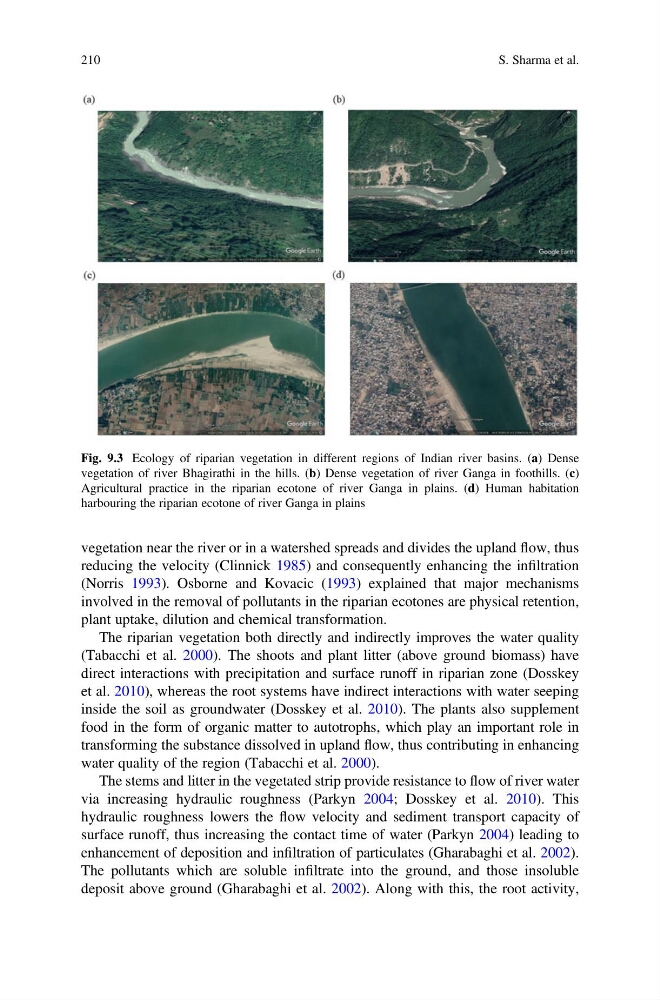
Fig. 9.3 Ecology of riparian vegetation in different regions of Indian river basins. (a) Dense
vegetation of river Bhagirathi in the hills. (b) Dense vegetation of river Ganga in foothills. (c)
Agricultural practice in the riparian ecotone of river Ganga in plains. (d) Human habitation
harbouring the riparian ecotone of river Ganga in plains
210
S. Sharma et al.
reducing the velocity (Clinnick 1985) and consequently enhancing the infiltration
(Norris 1993). Osborne and Kovacic (1993) explained that major mechanisms
involved in the removal of pollutants in the riparian ecotones are physical retention,
plant uptake, dilution and chemical transformation.
The riparian vegetation both directly and indirectly improves the water quality
(Tabacchi et al. 2000). The shoots and plant litter (above ground biomass) have
direct interactions with precipitation and surface runoff in riparian zone (Dosskey
et al. 2010), whereas the root systems have indirect interactions with water seeping
inside the soil as groundwater (Dosskey et al. 2010). The plants also supplement
food in the form of organic matter to autotrophs, which play an important role in
transforming the substance dissolved in upland flow, thus contributing in enhancing
water quality of the region (Tabacchi et al. 2000).
The stems and litter in the vegetated strip provide resistance to flow of river water
via increasing hydraulic roughness (Parkyn 2004; Dosskey et al. 2010). This
hydraulic roughness lowers the flow velocity and sediment transport capacity of
surface runoff, thus increasing the contact time of water (Parkyn 2004) leading to
enhancement of deposition and infiltration of particulates (Gharabaghi et al. 2002).
The pollutants which are soluble infiltrate into the ground, and those insoluble
deposit above ground (Gharabaghi et al. 2002). Along with this, the root activity,
Fig. 9.3 Ecology of riparian vegetation in different regions of Indian river basins. (a) Dense
vegetation of river Bhagirathi in the hills. (b) Dense vegetation of river Ganga in foothills. (c)
Agricultural practice in the riparian ecotone of river Ganga in plains. (d) Human habitation
harbouring the riparian ecotone of river Ganga in plains
210
S. Sharma et al.