

required for crop growth. A significant number of researchers investigated irrigating
plants with wastewater (Saravanamoorthy and Kumari 2007; Gassama et al. 2015).
Application of untreated municipal wastewater at different concentrations (0, 2.5,
5, 10, 25, 50, and 100%) on rice variety (MR220) showed that maximum germination percentage and seedling vigor were recorded at 25% concentration with 92%
germination rate. Lower concentration of wastewater could be able to improve the
seed germination, while higher wastewater concentrations showed reducing effect
on the rice variety (Gassama et al. 2015). Wastewater satisfies the need of NPK and
reduces the cost of chemical fertilizers. Moreover, those crops, grown in peri-urban
agriculture, require specific amounts of NPK for yield; it fulfills the need. Crop
productivity may be enhanced due to reducing of chemical fertilization requirement
with the supply of nutrient contents in the wastewater (Vergine et al. 2017).
Kiziloglu et al. (2008) compared the uptake/enrichment values of various nutrients
and trace elements in red cabbage and cauliflower plants irrigated by untreated
wastewater (UTWW), treated wastewater, and control. Results depicted that wastewater irrigation positively affected cauliflower and cabbage yields. The highest
yields of cauliflower (28,534 kg/ ha) and red cabbage (46,865 kg /ha) were obtained
with UTWW. But with numerous benefits, once the nutrient level of NPK exceeded
from standard recommended limits, crop growth and yield may negatively be
affected. Gassama et al. (2015) investigated the concentration of macronutrient
(N, P, K, Ca, Mg) increased at certain concentrations irrigated with untreated
wastewater. Untreated municipal wastewater applications might be influencing the
physiological process that leads to an increase in growth (Abbas et al. 2007).
Brunetti et al. 2007 investigated and found elevation in the yield of maize in olive
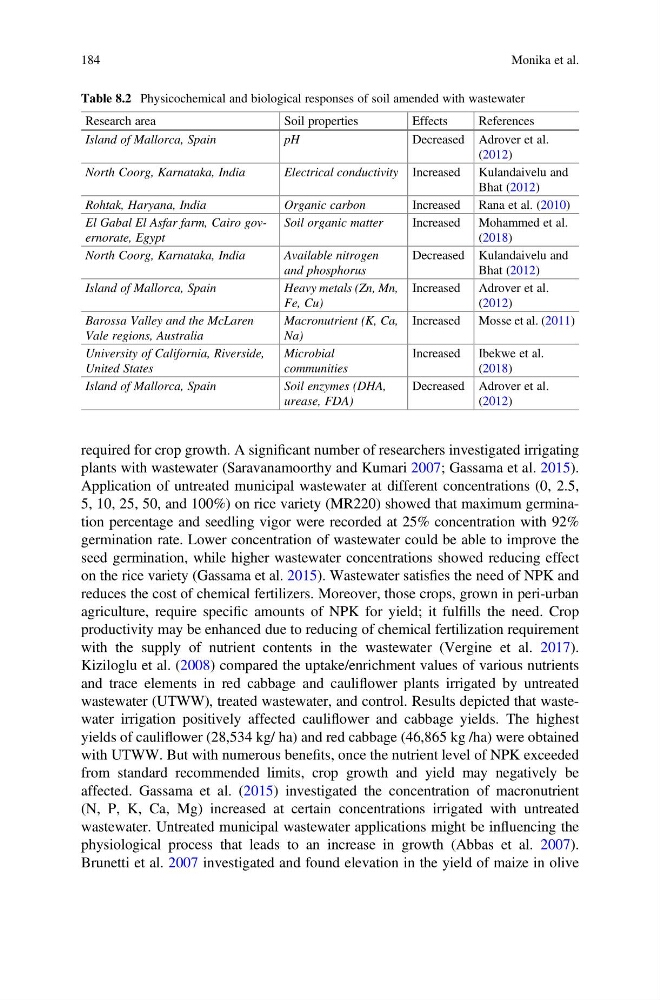
Table 8.2 Physicochemical and biological responses of soil amended with wastewater
Research area
Soil properties
Effects
References
Island of Mallorca, Spain
pH
Decreased Adrover et al.
(2012)
North Coorg, Karnataka, India
Electrical conductivity Increased Kulandaivelu and
Bhat (2012)
Rohtak, Haryana, India
Organic carbon
Increased Rana et al. (2010)
El Gabal El Asfar farm, Cairo governorate, Egypt
Soil organic matter
Increased Mohammed et al.
(2018)
North Coorg, Karnataka, India
Available nitrogen
and phosphorus
Decreased Kulandaivelu and
Bhat (2012)
Island of Mallorca, Spain
Heavy metals (Zn, Mn,
Fe, Cu)
Increased Adrover et al.
(2012)
Barossa Valley and the McLaren
Vale regions, Australia
Macronutrient (K, Ca,
Na)
Increased Mosse et al. (2011)
University of California, Riverside,
United States
Microbial
communities
Increased Ibekwe et al.
(2018)
Island of Mallorca, Spain
Soil enzymes (DHA,
urease, FDA)
Decreased Adrover et al.
(2012)
184
Monika et al.
plants with wastewater (Saravanamoorthy and Kumari 2007; Gassama et al. 2015).
Application of untreated municipal wastewater at different concentrations (0, 2.5,
5, 10, 25, 50, and 100%) on rice variety (MR220) showed that maximum germination percentage and seedling vigor were recorded at 25% concentration with 92%
germination rate. Lower concentration of wastewater could be able to improve the
seed germination, while higher wastewater concentrations showed reducing effect
on the rice variety (Gassama et al. 2015). Wastewater satisfies the need of NPK and
reduces the cost of chemical fertilizers. Moreover, those crops, grown in peri-urban
agriculture, require specific amounts of NPK for yield; it fulfills the need. Crop
productivity may be enhanced due to reducing of chemical fertilization requirement
with the supply of nutrient contents in the wastewater (Vergine et al. 2017).
Kiziloglu et al. (2008) compared the uptake/enrichment values of various nutrients
and trace elements in red cabbage and cauliflower plants irrigated by untreated
wastewater (UTWW), treated wastewater, and control. Results depicted that wastewater irrigation positively affected cauliflower and cabbage yields. The highest
yields of cauliflower (28,534 kg/ ha) and red cabbage (46,865 kg /ha) were obtained
with UTWW. But with numerous benefits, once the nutrient level of NPK exceeded
from standard recommended limits, crop growth and yield may negatively be
affected. Gassama et al. (2015) investigated the concentration of macronutrient
(N, P, K, Ca, Mg) increased at certain concentrations irrigated with untreated
wastewater. Untreated municipal wastewater applications might be influencing the
physiological process that leads to an increase in growth (Abbas et al. 2007).
Brunetti et al. 2007 investigated and found elevation in the yield of maize in olive
Table 8.2 Physicochemical and biological responses of soil amended with wastewater
Research area
Soil properties
Effects
References
Island of Mallorca, Spain
pH
Decreased Adrover et al.
(2012)
North Coorg, Karnataka, India
Electrical conductivity Increased Kulandaivelu and
Bhat (2012)
Rohtak, Haryana, India
Organic carbon
Increased Rana et al. (2010)
El Gabal El Asfar farm, Cairo governorate, Egypt
Soil organic matter
Increased Mohammed et al.
(2018)
North Coorg, Karnataka, India
Available nitrogen
and phosphorus
Decreased Kulandaivelu and
Bhat (2012)
Island of Mallorca, Spain
Heavy metals (Zn, Mn,
Fe, Cu)
Increased Adrover et al.
(2012)
Barossa Valley and the McLaren
Vale regions, Australia
Macronutrient (K, Ca,
Na)
Increased Mosse et al. (2011)
University of California, Riverside,
United States
Microbial
communities
Increased Ibekwe et al.
(2018)
Island of Mallorca, Spain
Soil enzymes (DHA,
urease, FDA)
Decreased Adrover et al.
(2012)
184
Monika et al.