

Nitrosomonas eutropha C91 was shown to degrade p-cresol (Kjeldal et al. 2014),
and N. europaea cells have been shown to transform a wide range of polycyclic
aromatic hydrocarbons such as naphthalene, 2-methylnaphthalene, acenaphthalene,
acenaphthene, fluorene, anthracene, and phenanthrene (Chang et al. 2002).
In WWT process, a mixed nitrifying culture was reported to remove p-cresol
along with ammonium oxidation (Beristain-Cardoso et al. 2011). Efficient consumption of toluene at concentration of 20 mg/L has been reported upon long-term
exposure to nitrifying sludge (Youssef et al. 2013). Biodegradation of
p-nonylphenol has been achieved through nitrifying sludge in a bioreactor which
showed that p-nonylphenol biodegradation is related to ammonium oxidation activity (Buitrón et al. 2015). Consumption of 2-chlorophenol by nitrifying consortium
was also reported in WWT process (Martínez-Jardines et al. 2018).
7.6.3 Production of Alternative Liquid Fuel
Apart from utility in wastewater treatment, AOB find application in the production
of alternative liquid fuel (methanol) by virtue of its bio-valorization potential. In
nature, two groups of bacteria are capable of producing methanol: (i) aerobic
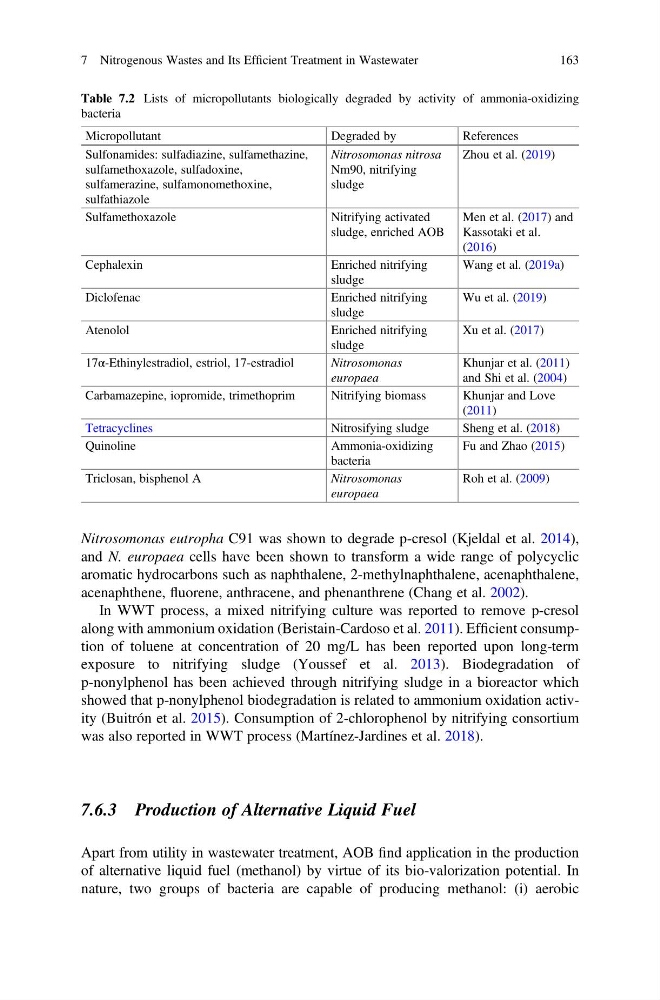
Table 7.2 Lists of micropollutants biologically degraded by activity of ammonia-oxidizing
bacteria
Micropollutant
Degraded by
References
Sulfonamides: sulfadiazine, sulfamethazine,
sulfamethoxazole, sulfadoxine,
sulfamerazine, sulfamonomethoxine,
sulfathiazole
Nitrosomonas nitrosa
Nm90, nitrifying
sludge
Zhou et al. (2019)
Sulfamethoxazole
Nitrifying activated
sludge, enriched AOB
Men et al. (2017) and
Kassotaki et al.
(2016)
Cephalexin
Enriched nitrifying
sludge
Wang et al. (2019a)
Diclofenac
Enriched nitrifying
sludge
Wu et al. (2019)
Atenolol
Enriched nitrifying
sludge
Xu et al. (2017)
17α-Ethinylestradiol, estriol, 17-estradiol
Nitrosomonas
europaea
Khunjar et al. (2011)
and Shi et al. (2004)
Carbamazepine, iopromide, trimethoprim
Nitrifying biomass
Khunjar and Love
(2011)
Tetracyclines
Nitrosifying sludge
Sheng et al. (2018)
Quinoline
Ammonia-oxidizing
bacteria
Fu and Zhao (2015)
Triclosan, bisphenol A
Nitrosomonas
europaea
Roh et al. (2009)
7 Nitrogenous Wastes and Its Efficient Treatment in Wastewater
163
and N. europaea cells have been shown to transform a wide range of polycyclic
aromatic hydrocarbons such as naphthalene, 2-methylnaphthalene, acenaphthalene,
acenaphthene, fluorene, anthracene, and phenanthrene (Chang et al. 2002).
In WWT process, a mixed nitrifying culture was reported to remove p-cresol
along with ammonium oxidation (Beristain-Cardoso et al. 2011). Efficient consumption of toluene at concentration of 20 mg/L has been reported upon long-term
exposure to nitrifying sludge (Youssef et al. 2013). Biodegradation of
p-nonylphenol has been achieved through nitrifying sludge in a bioreactor which
showed that p-nonylphenol biodegradation is related to ammonium oxidation activity (Buitrón et al. 2015). Consumption of 2-chlorophenol by nitrifying consortium
was also reported in WWT process (Martínez-Jardines et al. 2018).
7.6.3 Production of Alternative Liquid Fuel
Apart from utility in wastewater treatment, AOB find application in the production
of alternative liquid fuel (methanol) by virtue of its bio-valorization potential. In
nature, two groups of bacteria are capable of producing methanol: (i) aerobic
Table 7.2 Lists of micropollutants biologically degraded by activity of ammonia-oxidizing
bacteria
Micropollutant
Degraded by
References
Sulfonamides: sulfadiazine, sulfamethazine,
sulfamethoxazole, sulfadoxine,
sulfamerazine, sulfamonomethoxine,
sulfathiazole
Nitrosomonas nitrosa
Nm90, nitrifying
sludge
Zhou et al. (2019)
Sulfamethoxazole
Nitrifying activated
sludge, enriched AOB
Men et al. (2017) and
Kassotaki et al.
(2016)
Cephalexin
Enriched nitrifying
sludge
Wang et al. (2019a)
Diclofenac
Enriched nitrifying
sludge
Wu et al. (2019)
Atenolol
Enriched nitrifying
sludge
Xu et al. (2017)
17α-Ethinylestradiol, estriol, 17-estradiol
Nitrosomonas
europaea
Khunjar et al. (2011)
and Shi et al. (2004)
Carbamazepine, iopromide, trimethoprim
Nitrifying biomass
Khunjar and Love
(2011)
Tetracyclines
Nitrosifying sludge
Sheng et al. (2018)
Quinoline
Ammonia-oxidizing
bacteria
Fu and Zhao (2015)
Triclosan, bisphenol A
Nitrosomonas
europaea
Roh et al. (2009)
7 Nitrogenous Wastes and Its Efficient Treatment in Wastewater
163