

exists in >200 mineral forms, including arsenites, arsenates, arsenides, sulfides,
sulfosalts, metal alloys, and native elements. Among these, arsenate minerals are
scorodite, beudantite, yukonite, and sulfide viz., arsenopyrite, pyrite, loellingite, and
realgar (Srivastava et al. 2015). Arsenite (AsIII) and arsenate (AsV) are the most
prevalent and more toxic inorganic forms, while monomethylarsine (MMA),
dimethylarsine (DMA), and trimethylarsine (TMA) are less toxic organic forms of
As (Srivastava et al. 2015; Awasthi et al. 2017). Other organic forms of As include
arsenosugars, arsenobetaine, and arsenocholine, which are less toxic or non-toxic
and also found in seafood (Srivastava et al. 2015). Drinking of As-polluted water and
its utilization for cooking and irrigation of crops poses severe threat to public health.
Long-term human exposure of As from food and drinking water resulted in several
skin diseases, diabetes, increased blood pressure, and cancer of lung, skin, bladder,
and kidney (WHO 2011; USEPA 2013; Santra et al. 2013). To avoid the human
exposure of As contamination, the hand pumps polluted with >50 mg/L of As were
colored red in India and Bangladesh and the hand pumps with less contamination
>50 μg/L were colored blue in India and with green color in Bangladesh (Nickson
et al. 2007; Milton et al. 2007). Besides this precaution, several people still have to
depend on As-contaminated drinking water (red-painted hand pumps) because of the
water scarcity (Singh and Vedwan 2015; Singh and Stern 2017). The concentration
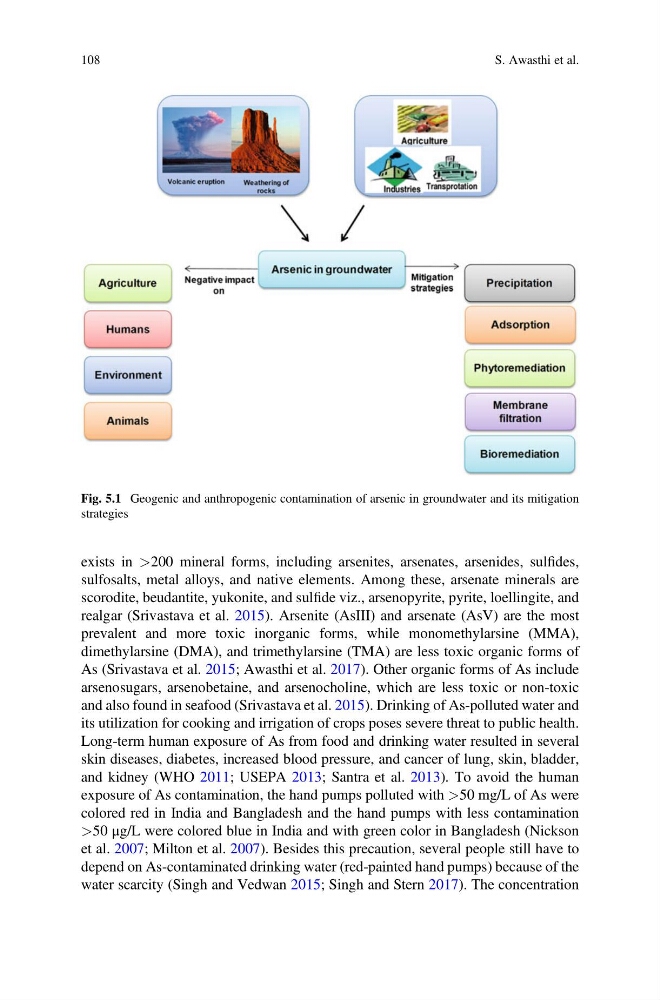
Fig. 5.1 Geogenic and anthropogenic contamination of arsenic in groundwater and its mitigation
strategies
108
S. Awasthi et al.
sulfosalts, metal alloys, and native elements. Among these, arsenate minerals are
scorodite, beudantite, yukonite, and sulfide viz., arsenopyrite, pyrite, loellingite, and
realgar (Srivastava et al. 2015). Arsenite (AsIII) and arsenate (AsV) are the most
prevalent and more toxic inorganic forms, while monomethylarsine (MMA),
dimethylarsine (DMA), and trimethylarsine (TMA) are less toxic organic forms of
As (Srivastava et al. 2015; Awasthi et al. 2017). Other organic forms of As include
arsenosugars, arsenobetaine, and arsenocholine, which are less toxic or non-toxic
and also found in seafood (Srivastava et al. 2015). Drinking of As-polluted water and
its utilization for cooking and irrigation of crops poses severe threat to public health.
Long-term human exposure of As from food and drinking water resulted in several
skin diseases, diabetes, increased blood pressure, and cancer of lung, skin, bladder,
and kidney (WHO 2011; USEPA 2013; Santra et al. 2013). To avoid the human
exposure of As contamination, the hand pumps polluted with >50 mg/L of As were
colored red in India and Bangladesh and the hand pumps with less contamination
>50 μg/L were colored blue in India and with green color in Bangladesh (Nickson
et al. 2007; Milton et al. 2007). Besides this precaution, several people still have to
depend on As-contaminated drinking water (red-painted hand pumps) because of the
water scarcity (Singh and Vedwan 2015; Singh and Stern 2017). The concentration
Fig. 5.1 Geogenic and anthropogenic contamination of arsenic in groundwater and its mitigation
strategies
108
S. Awasthi et al.