

58
Birds accomplish several ecosystem services, like seed dispersal, pollination, controlling pests and bugs (playing a key role as biocontrolling agent), cleaning up
carrion, and fertilizing plants, and reclamation of fragmented ecosystems
(Sekercioglu et al. 2004; Alanna 2014, Gill and Garg 2014), therefore synchronizing ecosystem function. As they are sensitive and are also prone to contamination
due to their food habits (Parker and Goldstein 2000), they are good indicators to
assess the quality of the environment and management practices of any ecosystem,
agricultural fields, wildlife, water bodies, etc. providing an early warning for
environmental problems (Alanna 2014). Researchers stated that declining avian
population is a sign of collapsing ecosystem (US FWS 2002; Kendall 2016).
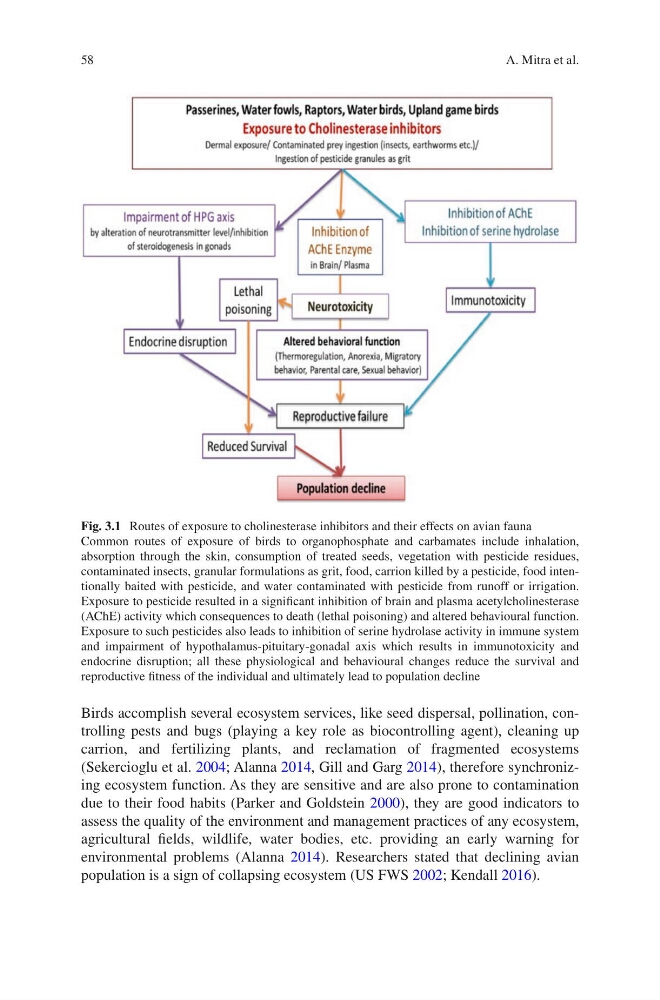
Fig. 3.1 Routes of exposure to cholinesterase inhibitors and their effects on avian fauna
Common routes of exposure of birds to organophosphate and carbamates include inhalation,
absorption through the skin, consumption of treated seeds, vegetation with pesticide residues,
contaminated insects, granular formulations as grit, food, carrion killed by a pesticide, food intentionally baited with pesticide, and water contaminated with pesticide from runoff or irrigation.
Exposure to pesticide resulted in a significant inhibition of brain and plasma acetylcholinesterase
(AChE) activity which consequences to death (lethal poisoning) and altered behavioural function.
Exposure to such pesticides also leads to inhibition of serine hydrolase activity in immune system
and impairment of hypothalamus-pituitary-gonadal axis which results in immunotoxicity and
endocrine disruption; all these physiological and behavioural changes reduce the survival and
reproductive fitness of the individual and ultimately lead to population decline
A. Mitra et al.
Birds accomplish several ecosystem services, like seed dispersal, pollination, controlling pests and bugs (playing a key role as biocontrolling agent), cleaning up
carrion, and fertilizing plants, and reclamation of fragmented ecosystems
(Sekercioglu et al. 2004; Alanna 2014, Gill and Garg 2014), therefore synchronizing ecosystem function. As they are sensitive and are also prone to contamination
due to their food habits (Parker and Goldstein 2000), they are good indicators to
assess the quality of the environment and management practices of any ecosystem,
agricultural fields, wildlife, water bodies, etc. providing an early warning for
environmental problems (Alanna 2014). Researchers stated that declining avian
population is a sign of collapsing ecosystem (US FWS 2002; Kendall 2016).
Fig. 3.1 Routes of exposure to cholinesterase inhibitors and their effects on avian fauna
Common routes of exposure of birds to organophosphate and carbamates include inhalation,
absorption through the skin, consumption of treated seeds, vegetation with pesticide residues,
contaminated insects, granular formulations as grit, food, carrion killed by a pesticide, food intentionally baited with pesticide, and water contaminated with pesticide from runoff or irrigation.
Exposure to pesticide resulted in a significant inhibition of brain and plasma acetylcholinesterase
(AChE) activity which consequences to death (lethal poisoning) and altered behavioural function.
Exposure to such pesticides also leads to inhibition of serine hydrolase activity in immune system
and impairment of hypothalamus-pituitary-gonadal axis which results in immunotoxicity and
endocrine disruption; all these physiological and behavioural changes reduce the survival and
reproductive fitness of the individual and ultimately lead to population decline
A. Mitra et al.