

240
growth with health (Liu et al. 2019). It was also stated that applying biochar in dry
lands mitigates global warming and enhances crop production compared to the
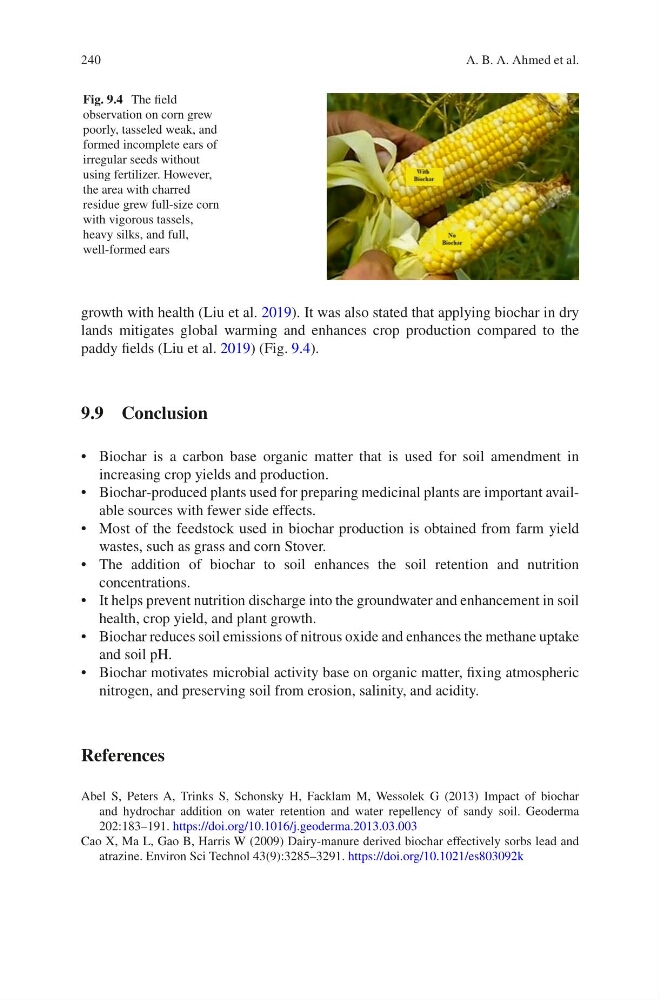
paddy fields (Liu et al. 2019) (Fig. 9.4).
9.9 Conclusion
• Biochar is a carbon base organic matter that is used for soil amendment in
increasing crop yields and production.
• Biochar-produced plants used for preparing medicinal plants are important available sources with fewer side effects.
• Most of the feedstock used in biochar production is obtained from farm yield
wastes, such as grass and corn Stover.
• The addition of biochar to soil enhances the soil retention and nutrition
concentrations.
• It helps prevent nutrition discharge into the groundwater and enhancement in soil
health, crop yield, and plant growth.
• Biochar reduces soil emissions of nitrous oxide and enhances the methane uptake
and soil pH.
• Biochar motivates microbial activity base on organic matter, fixing atmospheric
nitrogen, and preserving soil from erosion, salinity, and acidity.
References
Abel S, Peters A, Trinks S, Schonsky H, Facklam M, Wessolek G (2013) Impact of biochar
and hydrochar addition on water retention and water repellency of sandy soil. Geoderma
202:183–191. https://doi.org/10.1016/j.geoderma.2013.03.003
Cao X, Ma L, Gao B, Harris W (2009) Dairy-manure derived biochar effectively sorbs lead and
atrazine. Environ Sci Technol 43(9):3285–3291. https://doi.org/10.1021/es803092k
Fig. 9.4 The field
observation on corn grew
poorly, tasseled weak, and
formed incomplete ears of
irregular seeds without
using fertilizer. However,
the area with charred
residue grew full-size corn
with vigorous tassels,
heavy silks, and full,
well-formed ears
A. B. A. Ahmed et al.
growth with health (Liu et al. 2019). It was also stated that applying biochar in dry
lands mitigates global warming and enhances crop production compared to the
paddy fields (Liu et al. 2019) (Fig. 9.4).
9.9 Conclusion
• Biochar is a carbon base organic matter that is used for soil amendment in
increasing crop yields and production.
• Biochar-produced plants used for preparing medicinal plants are important available sources with fewer side effects.
• Most of the feedstock used in biochar production is obtained from farm yield
wastes, such as grass and corn Stover.
• The addition of biochar to soil enhances the soil retention and nutrition
concentrations.
• It helps prevent nutrition discharge into the groundwater and enhancement in soil
health, crop yield, and plant growth.
• Biochar reduces soil emissions of nitrous oxide and enhances the methane uptake
and soil pH.
• Biochar motivates microbial activity base on organic matter, fixing atmospheric
nitrogen, and preserving soil from erosion, salinity, and acidity.
References
Abel S, Peters A, Trinks S, Schonsky H, Facklam M, Wessolek G (2013) Impact of biochar
and hydrochar addition on water retention and water repellency of sandy soil. Geoderma
202:183–191. https://doi.org/10.1016/j.geoderma.2013.03.003
Cao X, Ma L, Gao B, Harris W (2009) Dairy-manure derived biochar effectively sorbs lead and
atrazine. Environ Sci Technol 43(9):3285–3291. https://doi.org/10.1021/es803092k
Fig. 9.4 The field
observation on corn grew
poorly, tasseled weak, and
formed incomplete ears of
irregular seeds without
using fertilizer. However,
the area with charred
residue grew full-size corn
with vigorous tassels,
heavy silks, and full,
well-formed ears
A. B. A. Ahmed et al.