

5
starting material should be of high purity in the presence of a metal oxide or chloride catalyst under high pressure and temperature (Goodship 2007). Polyethylene is
classified based on its density and branching pattern (Andrady and Neal 2009).
Polyethylene and polyethylene terephthalate are the most common forms of plastics, primarily used for packaging water bottles and short consumption cycle products, made up of ethylene monomers chains. Degradation of these polymers is more
challenging than others because of their easy dispersal in the environment due to
their large application. Polyethylene terephthalate is commercially produced by
reacting ethylene glycol with terephthalic acid to produce bis-hydroxyethyl terephthalate followed by the polymerization of bis-hydroxyethyl terephthalate under
high temperature and pressure (Park and Kim 2014).
Polyurethane lays between thermosetting polymers, and thermoplastic is a highly
durable polymer composed of urethane units joined by carbamate links. The urethane units were synthesized by reacting polyol with diisocyanate. The range of
polyurethane can be produced by using different polyol with diisocyanate in the
presence of suitable catalysts and additives (Szycher 1999). Polyurethane is a rigid
or flexible polymer resulting from the substitution and monomer arrangement pattern. Polyurethane has SPI (Society of the Plastics Industry) code 7 showing a nonrecyclable nature (Engels et al. 2013; Rahimi and García 2017).
Polyvinyl chloride, the third largest plastic product, needs to get extra attention
because of its carcinogenic monomer and often constituted of hazardous additives.
Polyvinyl chloride is also known as “poison plastic” because of the toxic additives
and vinyl chloride leaching throughout its entire lifecycle. Also, polyvinyl chloride
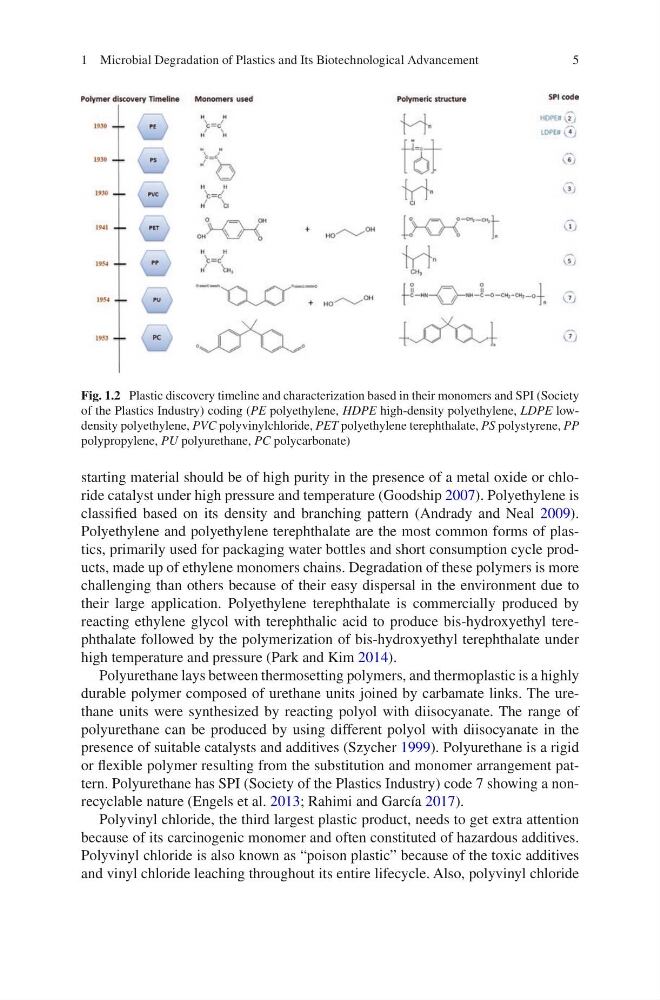
Fig. 1.2 Plastic discovery timeline and characterization based in their monomers and SPI (Society
of the Plastics Industry) coding (PE polyethylene, HDPE high-density polyethylene, LDPE lowdensity polyethylene, PVC polyvinylchloride, PET polyethylene terephthalate, PS polystyrene, PP
polypropylene, PU polyurethane, PC polycarbonate)
1 Microbial Degradation of Plastics and Its Biotechnological Advancement
starting material should be of high purity in the presence of a metal oxide or chloride catalyst under high pressure and temperature (Goodship 2007). Polyethylene is
classified based on its density and branching pattern (Andrady and Neal 2009).
Polyethylene and polyethylene terephthalate are the most common forms of plastics, primarily used for packaging water bottles and short consumption cycle products, made up of ethylene monomers chains. Degradation of these polymers is more
challenging than others because of their easy dispersal in the environment due to
their large application. Polyethylene terephthalate is commercially produced by
reacting ethylene glycol with terephthalic acid to produce bis-hydroxyethyl terephthalate followed by the polymerization of bis-hydroxyethyl terephthalate under
high temperature and pressure (Park and Kim 2014).
Polyurethane lays between thermosetting polymers, and thermoplastic is a highly
durable polymer composed of urethane units joined by carbamate links. The urethane units were synthesized by reacting polyol with diisocyanate. The range of
polyurethane can be produced by using different polyol with diisocyanate in the
presence of suitable catalysts and additives (Szycher 1999). Polyurethane is a rigid
or flexible polymer resulting from the substitution and monomer arrangement pattern. Polyurethane has SPI (Society of the Plastics Industry) code 7 showing a nonrecyclable nature (Engels et al. 2013; Rahimi and García 2017).
Polyvinyl chloride, the third largest plastic product, needs to get extra attention
because of its carcinogenic monomer and often constituted of hazardous additives.
Polyvinyl chloride is also known as “poison plastic” because of the toxic additives
and vinyl chloride leaching throughout its entire lifecycle. Also, polyvinyl chloride
Fig. 1.2 Plastic discovery timeline and characterization based in their monomers and SPI (Society
of the Plastics Industry) coding (PE polyethylene, HDPE high-density polyethylene, LDPE lowdensity polyethylene, PVC polyvinylchloride, PET polyethylene terephthalate, PS polystyrene, PP
polypropylene, PU polyurethane, PC polycarbonate)
1 Microbial Degradation of Plastics and Its Biotechnological Advancement