

90
used for the development of biosensors with improved performance (Dorst et al.
2010; Perumal and Hashim 2014; Justino et al. 2015).
4.4 Bacterial Biosensor
Microorganism, specifically bacteria, shows potential strategy for developing bacterial biosensor that has various advantages. Since bacteria can be cultured in liquid
media and have faster growh rate, E. coli, Bacillus and Pseudomonas are used for
the construction of bacterial biosensors. Divies developed the first microbial
(Acetobacter xylinum) biosensor in 1975 for detection of ethanol (Divies 1975).
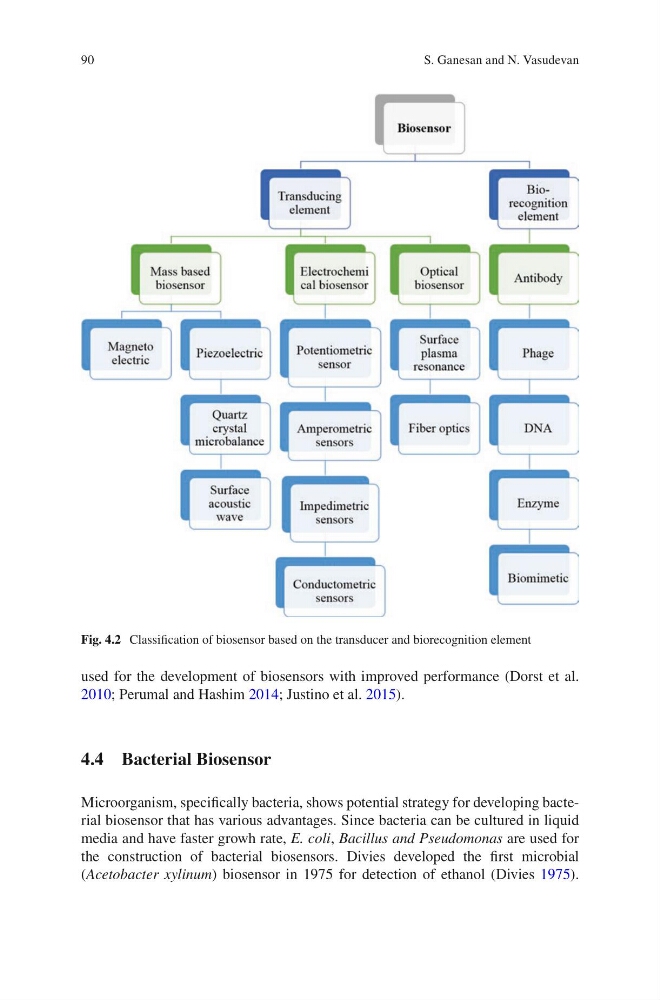
Fig. 4.2 Classification of biosensor based on the transducer and biorecognition element
S. Ganesan and N. Vasudevan
used for the development of biosensors with improved performance (Dorst et al.
2010; Perumal and Hashim 2014; Justino et al. 2015).
4.4 Bacterial Biosensor
Microorganism, specifically bacteria, shows potential strategy for developing bacterial biosensor that has various advantages. Since bacteria can be cultured in liquid
media and have faster growh rate, E. coli, Bacillus and Pseudomonas are used for
the construction of bacterial biosensors. Divies developed the first microbial
(Acetobacter xylinum) biosensor in 1975 for detection of ethanol (Divies 1975).
Fig. 4.2 Classification of biosensor based on the transducer and biorecognition element
S. Ganesan and N. Vasudevan