

2.3.2 Enzyme Conversion Technology
Cellulose degrading enzymes, i.e. cellulase are involved in the breakdown of
cellulose to monosaccharide units, i.e. glucose. The first step is the degradation of
the cellulose by breaking of glycosidic bonds by the action of the enzyme
endoglucanase (1,4-ß-D-glucan-4-glucano-hydrolases; EC no. 3.2.1.74). The
enzymes act on cellulose in a random manner. In the second step exoglucanase
enzyme (EC 3.2.1.91 and EC 3.2.1.74) acts on both the ends of the cellulose
(i.e. reducing end having free anomeric hydroxyl group as well as non-reducing
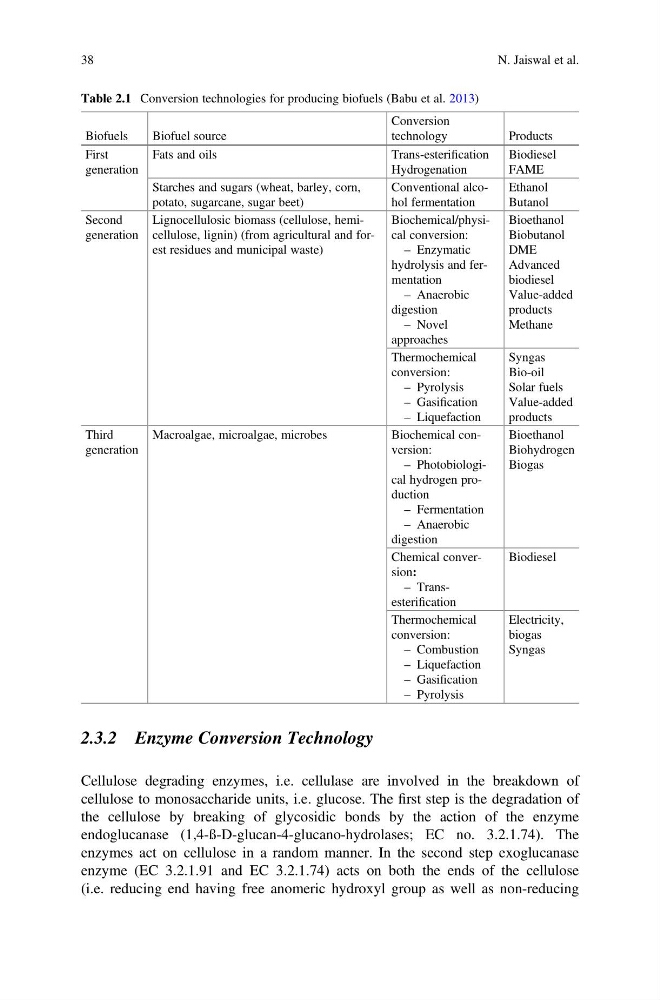
Table 2.1 Conversion technologies for producing biofuels (Babu et al. 2013)
Biofuels
Biofuel source
Conversion
technology
Products
First
generation
Fats and oils
Trans-esterification
Hydrogenation
Biodiesel
FAME
Starches and sugars (wheat, barley, corn,
potato, sugarcane, sugar beet)
Conventional alcohol fermentation
Ethanol
Butanol
Second
generation
Lignocellulosic biomass (cellulose, hemicellulose, lignin) (from agricultural and forest residues and municipal waste)
Biochemical/physical conversion:
– Enzymatic
hydrolysis and fermentation
– Anaerobic
digestion
– Novel
approaches
Bioethanol
Biobutanol
DME
Advanced
biodiesel
Value-added
products
Methane
Thermochemical
conversion:
– Pyrolysis
– Gasification
– Liquefaction
Syngas
Bio-oil
Solar fuels
Value-added
products
Third
generation
Macroalgae, microalgae, microbes
Biochemical conversion:
– Photobiological hydrogen production
– Fermentation
– Anaerobic
digestion
Bioethanol
Biohydrogen
Biogas
Chemical conversion:
– Transesterification
Biodiesel
Thermochemical
conversion:
– Combustion
– Liquefaction
– Gasification
– Pyrolysis
Electricity,
biogas
Syngas
38
N. Jaiswal et al.
Cellulose degrading enzymes, i.e. cellulase are involved in the breakdown of
cellulose to monosaccharide units, i.e. glucose. The first step is the degradation of
the cellulose by breaking of glycosidic bonds by the action of the enzyme
endoglucanase (1,4-ß-D-glucan-4-glucano-hydrolases; EC no. 3.2.1.74). The
enzymes act on cellulose in a random manner. In the second step exoglucanase
enzyme (EC 3.2.1.91 and EC 3.2.1.74) acts on both the ends of the cellulose
(i.e. reducing end having free anomeric hydroxyl group as well as non-reducing
Table 2.1 Conversion technologies for producing biofuels (Babu et al. 2013)
Biofuels
Biofuel source
Conversion
technology
Products
First
generation
Fats and oils
Trans-esterification
Hydrogenation
Biodiesel
FAME
Starches and sugars (wheat, barley, corn,
potato, sugarcane, sugar beet)
Conventional alcohol fermentation
Ethanol
Butanol
Second
generation
Lignocellulosic biomass (cellulose, hemicellulose, lignin) (from agricultural and forest residues and municipal waste)
Biochemical/physical conversion:
– Enzymatic
hydrolysis and fermentation
– Anaerobic
digestion
– Novel
approaches
Bioethanol
Biobutanol
DME
Advanced
biodiesel
Value-added
products
Methane
Thermochemical
conversion:
– Pyrolysis
– Gasification
– Liquefaction
Syngas
Bio-oil
Solar fuels
Value-added
products
Third
generation
Macroalgae, microalgae, microbes
Biochemical conversion:
– Photobiological hydrogen production
– Fermentation
– Anaerobic
digestion
Bioethanol
Biohydrogen
Biogas
Chemical conversion:
– Transesterification
Biodiesel
Thermochemical
conversion:
– Combustion
– Liquefaction
– Gasification
– Pyrolysis
Electricity,
biogas
Syngas
38
N. Jaiswal et al.