

Table 1.5 Review of biofuel removal by vacuum fermentation (C concentration of substrate,
P pressure in vacuum, T temperature)
Parameters
Aim of the study
Findings
References
Glucose
C ¼ 60 g/L
P ¼ 711–737
mHg
T ¼ 35
C
Synchronized acetone butanol
and ethanol fermentation
employing Clostridium
beijerinckii 8052 and vacuum
extraction of in situ butanol
In the recovered stream, the
concentration of ABE was
higher than in the fermentation
broth (from 15.7 to 33 g/L).
The inclusion of the vacuum
with the bioreactor led to an
increase in a 100 percent
increase in acetone, butanol,
and ethanol productivity
Mariano
et al.
(2012)
Agricultural
wastes
C ¼ 600 g/L
P ¼ 175 M bar
T ¼ 60–80
C
Alcoholic fermentations were
performed, on substrates apple,
kiwifruit, and peaches wastes;
and corn threshing residue
(CTR). Saccharomyces
bayanus was chosen as starter
yeast
Greatest production of ethanol
was achieved with CTR
(10.22% (v/v) and apple
(8.71% (v/v)) among fruits.
Distillations to harness warm
water from a cogeneration
plant is checked at low temperatures and under vacuum
Cutzu and
Bardi
(2017)
Rice bran
C ¼ 2.5–7.5 g/
L
P¼N.A
T ¼ 30 Æ 2
C
The research proposed further
use of rice bran as energy
source with the ability to affect
the production of bioethanol
with Saccharomyces
cerevisiae (1–5 g/L) and rice
bran (2.5–7.5 g/L) at various
concentrations
The average yield/s was
(0.577 g and 0.375 g, correspondingly for rice bran) at the
point of highest rice bran concentration and least cell concentration was detected for
time 12 h and 72 h.
Moreira
et al.
(2019)
1.4
1.2
1
0.8
0.6
0.4
0.2
Distillation
Pervaporation
Vacuum
fermentation
USD/liiter
0
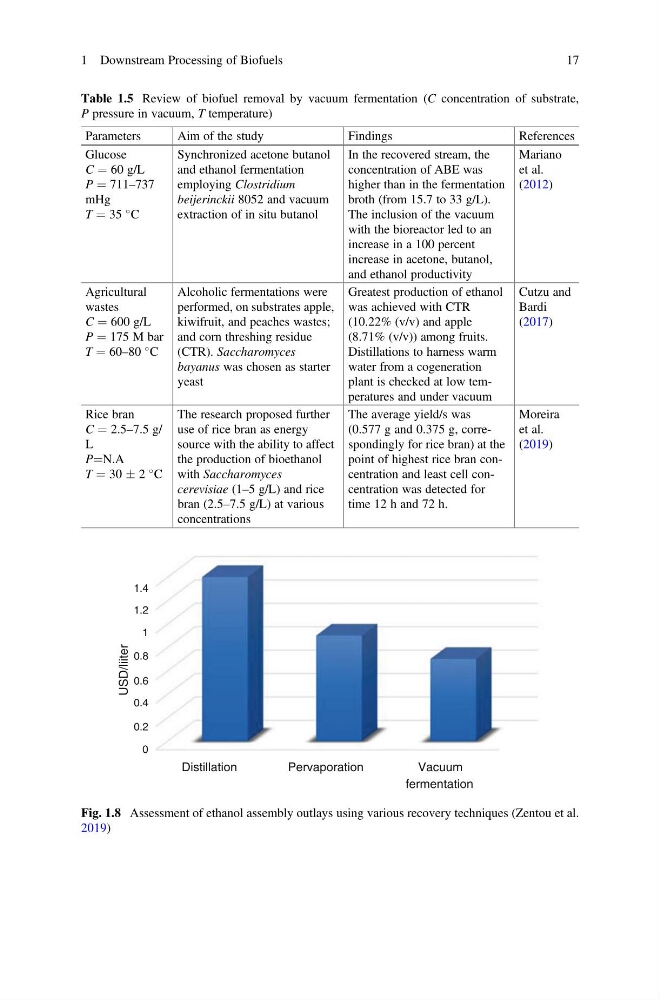
Fig. 1.8 Assessment of ethanol assembly outlays using various recovery techniques (Zentou et al.
2019)
1 Downstream Processing of Biofuels
17
P pressure in vacuum, T temperature)
Parameters
Aim of the study
Findings
References
Glucose
C ¼ 60 g/L
P ¼ 711–737
mHg
T ¼ 35
C
Synchronized acetone butanol
and ethanol fermentation
employing Clostridium
beijerinckii 8052 and vacuum
extraction of in situ butanol
In the recovered stream, the
concentration of ABE was
higher than in the fermentation
broth (from 15.7 to 33 g/L).
The inclusion of the vacuum
with the bioreactor led to an
increase in a 100 percent
increase in acetone, butanol,
and ethanol productivity
Mariano
et al.
(2012)
Agricultural
wastes
C ¼ 600 g/L
P ¼ 175 M bar
T ¼ 60–80
C
Alcoholic fermentations were
performed, on substrates apple,
kiwifruit, and peaches wastes;
and corn threshing residue
(CTR). Saccharomyces
bayanus was chosen as starter
yeast
Greatest production of ethanol
was achieved with CTR
(10.22% (v/v) and apple
(8.71% (v/v)) among fruits.
Distillations to harness warm
water from a cogeneration
plant is checked at low temperatures and under vacuum
Cutzu and
Bardi
(2017)
Rice bran
C ¼ 2.5–7.5 g/
L
P¼N.A
T ¼ 30 Æ 2
C
The research proposed further
use of rice bran as energy
source with the ability to affect
the production of bioethanol
with Saccharomyces
cerevisiae (1–5 g/L) and rice
bran (2.5–7.5 g/L) at various
concentrations
The average yield/s was
(0.577 g and 0.375 g, correspondingly for rice bran) at the
point of highest rice bran concentration and least cell concentration was detected for
time 12 h and 72 h.
Moreira
et al.
(2019)
1.4
1.2
1
0.8
0.6
0.4
0.2
Distillation
Pervaporation
Vacuum
fermentation
USD/liiter
0
Fig. 1.8 Assessment of ethanol assembly outlays using various recovery techniques (Zentou et al.
2019)
1 Downstream Processing of Biofuels
17