

(d) Nutrients and Electrical Conductivity
Weiland (2001) reported that the carbon, nitrogen, phosphorus, and potassium are essential for the process of anaerobic digestion as bacterial growth
depends on the various nutrients supplied. These nutrients are required at
different ratios 500/15/5/3 (C/N/P/S) for hydrolysis and acidogenesis and
while 600/15/5/3(C/N/P/S) for methanogenesis. Minimal amounts are required
for sulfur and phosphorous compared to other macronutrients. The limiting
nutrient was found to be nitrogen, and the carbon/nitrogen (C/N) ratio of 20 to
30 is required (Deublein and Steinhauser 2008; Polprasert 2007). Apart from
this, cobalt, nickel, iron, and zinc are required for stimulating methanogenesis.
Keratin-rich wastes are produced worldwide by several industries. Angelidaki
and Sanders (2004) have observed that if all the insoluble protein (keratin) is
converted into soluble protein, the methane potential of keratin wastes is as high
as 0.496 Nm3/kgVS. Wu et al. (2020) have investigated the effect of copper
salts, cupric sulfate, and cupric glycinate on anaerobic digestion of swine
manure. They observed that addition of these salts improved the production of
methane by 28.78%. The presence of Clostridia and Methanobacterium were
observed in higher amounts. Lackner et al. (2020) have studied the influence of
sulfur addition on microbial community when cellulose was used as substrate in
thermophilic digestion. Sulfate addition of 0.5 to 3 g/L caused a decrease in
methane generation by 73–92%, while higher sulfate concentrations had no
additional inhibitory effect. Upon addition of sulfate, dominance of Firmicutes
and decreased concentrations of Bacteroidetes and Euryarchaeota were seen.
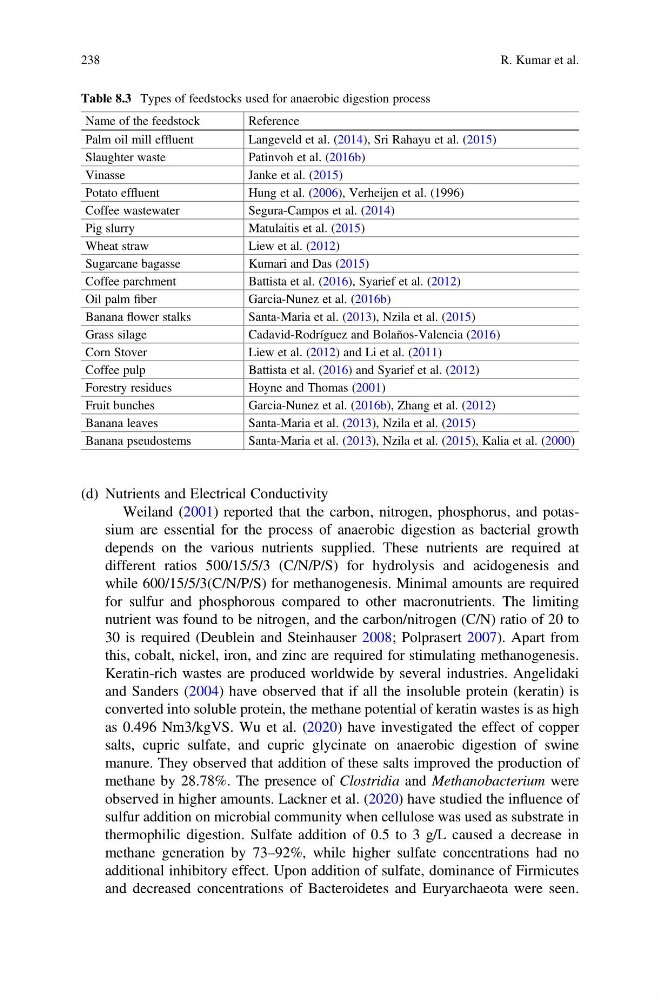
Table 8.3 Types of feedstocks used for anaerobic digestion process
Name of the feedstock
Reference
Palm oil mill effluent
Langeveld et al. (2014), Sri Rahayu et al. (2015)
Slaughter waste
Patinvoh et al. (2016b)
Vinasse
Janke et al. (2015)
Potato effluent
Hung et al. (2006), Verheijen et al. (1996)
Coffee wastewater
Segura-Campos et al. (2014)
Pig slurry
Matulaitis et al. (2015)
Wheat straw
Liew et al. (2012)
Sugarcane bagasse
Kumari and Das (2015)
Coffee parchment
Battista et al. (2016), Syarief et al. (2012)
Oil palm fiber
Garcia-Nunez et al. (2016b)
Banana flower stalks
Santa-Maria et al. (2013), Nzila et al. (2015)
Grass silage
Cadavid-Rodríguez and Bolaños-Valencia (2016)
Corn Stover
Liew et al. (2012) and Li et al. (2011)
Coffee pulp
Battista et al. (2016) and Syarief et al. (2012)
Forestry residues
Hoyne and Thomas (2001)
Fruit bunches
Garcia-Nunez et al. (2016b), Zhang et al. (2012)
Banana leaves
Santa-Maria et al. (2013), Nzila et al. (2015)
Banana pseudostems
Santa-Maria et al. (2013), Nzila et al. (2015), Kalia et al. (2000)
238
R. Kumar et al.
Weiland (2001) reported that the carbon, nitrogen, phosphorus, and potassium are essential for the process of anaerobic digestion as bacterial growth
depends on the various nutrients supplied. These nutrients are required at
different ratios 500/15/5/3 (C/N/P/S) for hydrolysis and acidogenesis and
while 600/15/5/3(C/N/P/S) for methanogenesis. Minimal amounts are required
for sulfur and phosphorous compared to other macronutrients. The limiting
nutrient was found to be nitrogen, and the carbon/nitrogen (C/N) ratio of 20 to
30 is required (Deublein and Steinhauser 2008; Polprasert 2007). Apart from
this, cobalt, nickel, iron, and zinc are required for stimulating methanogenesis.
Keratin-rich wastes are produced worldwide by several industries. Angelidaki
and Sanders (2004) have observed that if all the insoluble protein (keratin) is
converted into soluble protein, the methane potential of keratin wastes is as high
as 0.496 Nm3/kgVS. Wu et al. (2020) have investigated the effect of copper
salts, cupric sulfate, and cupric glycinate on anaerobic digestion of swine
manure. They observed that addition of these salts improved the production of
methane by 28.78%. The presence of Clostridia and Methanobacterium were
observed in higher amounts. Lackner et al. (2020) have studied the influence of
sulfur addition on microbial community when cellulose was used as substrate in
thermophilic digestion. Sulfate addition of 0.5 to 3 g/L caused a decrease in
methane generation by 73–92%, while higher sulfate concentrations had no
additional inhibitory effect. Upon addition of sulfate, dominance of Firmicutes
and decreased concentrations of Bacteroidetes and Euryarchaeota were seen.
Table 8.3 Types of feedstocks used for anaerobic digestion process
Name of the feedstock
Reference
Palm oil mill effluent
Langeveld et al. (2014), Sri Rahayu et al. (2015)
Slaughter waste
Patinvoh et al. (2016b)
Vinasse
Janke et al. (2015)
Potato effluent
Hung et al. (2006), Verheijen et al. (1996)
Coffee wastewater
Segura-Campos et al. (2014)
Pig slurry
Matulaitis et al. (2015)
Wheat straw
Liew et al. (2012)
Sugarcane bagasse
Kumari and Das (2015)
Coffee parchment
Battista et al. (2016), Syarief et al. (2012)
Oil palm fiber
Garcia-Nunez et al. (2016b)
Banana flower stalks
Santa-Maria et al. (2013), Nzila et al. (2015)
Grass silage
Cadavid-Rodríguez and Bolaños-Valencia (2016)
Corn Stover
Liew et al. (2012) and Li et al. (2011)
Coffee pulp
Battista et al. (2016) and Syarief et al. (2012)
Forestry residues
Hoyne and Thomas (2001)
Fruit bunches
Garcia-Nunez et al. (2016b), Zhang et al. (2012)
Banana leaves
Santa-Maria et al. (2013), Nzila et al. (2015)
Banana pseudostems
Santa-Maria et al. (2013), Nzila et al. (2015), Kalia et al. (2000)
238
R. Kumar et al.