

process to industrial scale. In case of upflow anaerobic sludge blanket (UASB), the
disadvantages of operation are that performance is based on the granule formation
which in turn depends on the type of wastewater being used and phase separation
does not take place. The process of start-up will be delayed if suitable innoculum is
not selected. In anaerobic baffled reactor (ABR), variable system hydraulics difficulties and biomass growth are seen. Expanded granular sludge blanket (EGSB) is
energy intensive, has poor process stability, is the absence of phase separation, and is
not appropriate for wastewaters containing more solid contents. In anaerobic filters,
the major disadvantages are no phase separation takes place, problems with mixing,
not appropriate for wastewaters with solid contents, and high energy requirement
(Akunna 2018). Wet fermentation systems are those in which only 15–25% solids
are present. System in which more than 30% high solids are present is called dry
fermentation. The slurry is digested in wet fermentation. Many digesters comprise a
single reactor vessel but can be divided into two stages with more than one reactor
vessel. Hayes et al. (1979) observed that plug-drift digesters use slurries. Bruins
(1984) has reported that at low concentration of total solids, problems with floating
and settling layers are seen and suggested that this can be overcome by vertical
mixing inside the pipe. During this process, the phenomenon of hydrolysis and that
of methanogenesis is separated in the pipe. Hydrolysis occurs first followed by
methanogenesis. In this type of system, the SRT is the same as that of HRT.
ENERGY
Farms
Products
Slaughter
House,
Food factory
Home
Waste
Biogas Plant
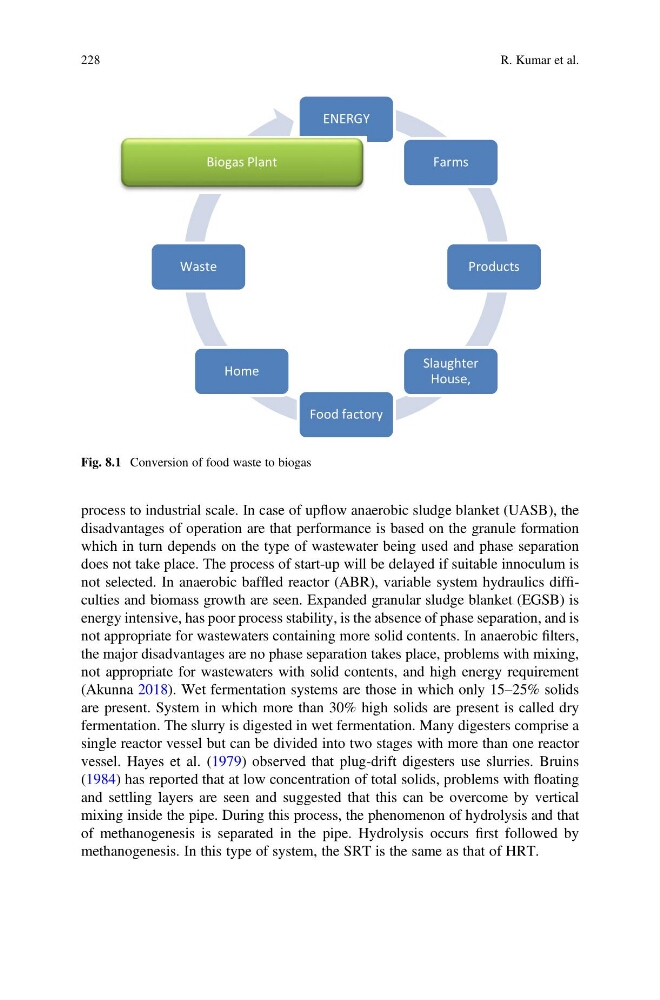
Fig. 8.1 Conversion of food waste to biogas
228
R. Kumar et al.
disadvantages of operation are that performance is based on the granule formation
which in turn depends on the type of wastewater being used and phase separation
does not take place. The process of start-up will be delayed if suitable innoculum is
not selected. In anaerobic baffled reactor (ABR), variable system hydraulics difficulties and biomass growth are seen. Expanded granular sludge blanket (EGSB) is
energy intensive, has poor process stability, is the absence of phase separation, and is
not appropriate for wastewaters containing more solid contents. In anaerobic filters,
the major disadvantages are no phase separation takes place, problems with mixing,
not appropriate for wastewaters with solid contents, and high energy requirement
(Akunna 2018). Wet fermentation systems are those in which only 15–25% solids
are present. System in which more than 30% high solids are present is called dry
fermentation. The slurry is digested in wet fermentation. Many digesters comprise a
single reactor vessel but can be divided into two stages with more than one reactor
vessel. Hayes et al. (1979) observed that plug-drift digesters use slurries. Bruins
(1984) has reported that at low concentration of total solids, problems with floating
and settling layers are seen and suggested that this can be overcome by vertical
mixing inside the pipe. During this process, the phenomenon of hydrolysis and that
of methanogenesis is separated in the pipe. Hydrolysis occurs first followed by
methanogenesis. In this type of system, the SRT is the same as that of HRT.
ENERGY
Farms
Products
Slaughter
House,
Food factory
Home
Waste
Biogas Plant
Fig. 8.1 Conversion of food waste to biogas
228
R. Kumar et al.