

broth can increase ethanol yield. The increase of ethanol production by biochar
addition is only for fermentation by Zymomonas mobilis strain ZM4. This solution to
inhibition of fermentation proves to be effective as it showed much higher increase
in the biochar treated fermentation than in non-treated broth (Wang et al. 2020).
In another case, 78 terrestrial yeast species were compared with 166 marine yeast
strains, to analyze their tolerance to inhibitors produced from lignocellulosic biomass (e.g., acetic acid, furfural, formic acid, salts, and vanillin). Terrestrial yeast
species were having less tolerance to inhibitors, while marine strains were more
tolerant to ethanol inhibition (Greetham et al. 2019).
The chemical methods employed for detoxification may involve the use of polymers, reducing agents, and alkali (Jönsson and Martín 2016). To remove 5-HMF and
furfurals from the hydrolysis mixture of lignocelluloses, some other methods that are
used include ion-exchange, over-liming, adsorption using active charcoal, and
conversions by using enzymes (Zhang et al. 2010).
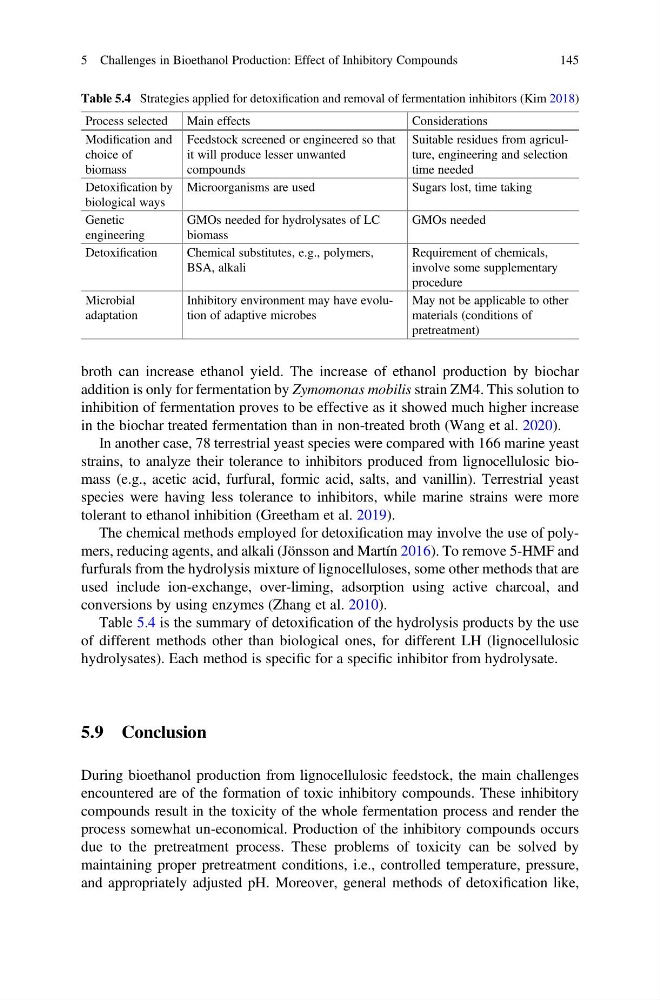
Table 5.4 is the summary of detoxification of the hydrolysis products by the use
of different methods other than biological ones, for different LH (lignocellulosic
hydrolysates). Each method is specific for a specific inhibitor from hydrolysate.
5.9 Conclusion
During bioethanol production from lignocellulosic feedstock, the main challenges
encountered are of the formation of toxic inhibitory compounds. These inhibitory
compounds result in the toxicity of the whole fermentation process and render the
process somewhat un-economical. Production of the inhibitory compounds occurs
due to the pretreatment process. These problems of toxicity can be solved by
maintaining proper pretreatment conditions, i.e., controlled temperature, pressure,
and appropriately adjusted pH. Moreover, general methods of detoxification like,
Table 5.4 Strategies applied for detoxification and removal of fermentation inhibitors (Kim 2018)
Process selected
Main effects
Considerations
Modification and
choice of
biomass
Feedstock screened or engineered so that
it will produce lesser unwanted
compounds
Suitable residues from agriculture, engineering and selection
time needed
Detoxification by
biological ways
Microorganisms are used
Sugars lost, time taking
Genetic
engineering
GMOs needed for hydrolysates of LC
biomass
GMOs needed
Detoxification
Chemical substitutes, e.g., polymers,
BSA, alkali
Requirement of chemicals,
involve some supplementary
procedure
Microbial
adaptation
Inhibitory environment may have evolution of adaptive microbes
May not be applicable to other
materials (conditions of
pretreatment)
5 Challenges in Bioethanol Production: Effect of Inhibitory Compounds
145
addition is only for fermentation by Zymomonas mobilis strain ZM4. This solution to
inhibition of fermentation proves to be effective as it showed much higher increase
in the biochar treated fermentation than in non-treated broth (Wang et al. 2020).
In another case, 78 terrestrial yeast species were compared with 166 marine yeast
strains, to analyze their tolerance to inhibitors produced from lignocellulosic biomass (e.g., acetic acid, furfural, formic acid, salts, and vanillin). Terrestrial yeast
species were having less tolerance to inhibitors, while marine strains were more
tolerant to ethanol inhibition (Greetham et al. 2019).
The chemical methods employed for detoxification may involve the use of polymers, reducing agents, and alkali (Jönsson and Martín 2016). To remove 5-HMF and
furfurals from the hydrolysis mixture of lignocelluloses, some other methods that are
used include ion-exchange, over-liming, adsorption using active charcoal, and
conversions by using enzymes (Zhang et al. 2010).
Table 5.4 is the summary of detoxification of the hydrolysis products by the use
of different methods other than biological ones, for different LH (lignocellulosic
hydrolysates). Each method is specific for a specific inhibitor from hydrolysate.
5.9 Conclusion
During bioethanol production from lignocellulosic feedstock, the main challenges
encountered are of the formation of toxic inhibitory compounds. These inhibitory
compounds result in the toxicity of the whole fermentation process and render the
process somewhat un-economical. Production of the inhibitory compounds occurs
due to the pretreatment process. These problems of toxicity can be solved by
maintaining proper pretreatment conditions, i.e., controlled temperature, pressure,
and appropriately adjusted pH. Moreover, general methods of detoxification like,
Table 5.4 Strategies applied for detoxification and removal of fermentation inhibitors (Kim 2018)
Process selected
Main effects
Considerations
Modification and
choice of
biomass
Feedstock screened or engineered so that
it will produce lesser unwanted
compounds
Suitable residues from agriculture, engineering and selection
time needed
Detoxification by
biological ways
Microorganisms are used
Sugars lost, time taking
Genetic
engineering
GMOs needed for hydrolysates of LC
biomass
GMOs needed
Detoxification
Chemical substitutes, e.g., polymers,
BSA, alkali
Requirement of chemicals,
involve some supplementary
procedure
Microbial
adaptation
Inhibitory environment may have evolution of adaptive microbes
May not be applicable to other
materials (conditions of
pretreatment)
5 Challenges in Bioethanol Production: Effect of Inhibitory Compounds
145