

5.7 How to Minimize Inhibitory Compound Formation
For the minimization of the toxic effects of inhibitors from lignocellulosic biomasses, different methods like physical, biological, and chemical detoxification are
in use. But the use of any detoxification method may be responsible for the increase
of the cost of production of the entire process and the time involved too shall increase
this way.
5.7.1 Removal of Inhibitory Compounds
To resolve the inhibition issue most used method is conditioning or detoxification in
which inhibitors are removed in hydrolysate and solid fractions (Jönsson et al. 2013).
Many conditioning methods have come out in this era, which consist of treatment
with chemical additives (Alriksson et al. 2011), addition of sulfite, activated carbon
treatment, liquid-liquid extraction, and lignin-blocking agents (Eriksson et al. 2002).
In chemical additives method, the main purpose is to aggregate, precipitate, or
absorb the unwanted compounds from hydrolysates. By this method, inhibitors get
maintained at low effective concentrations by which inhibitory effect on enzymes
and microbes get minimal (Ciesielski et al. 2014). However, the effectiveness of this
method depends on many factors, e.g., dosage of additive, concentrations of inhibitors, properties of feedstock, and conditions before treatment. Bovine serum albumin when used as a lignin-blocking additive was highly efficient in decreasing
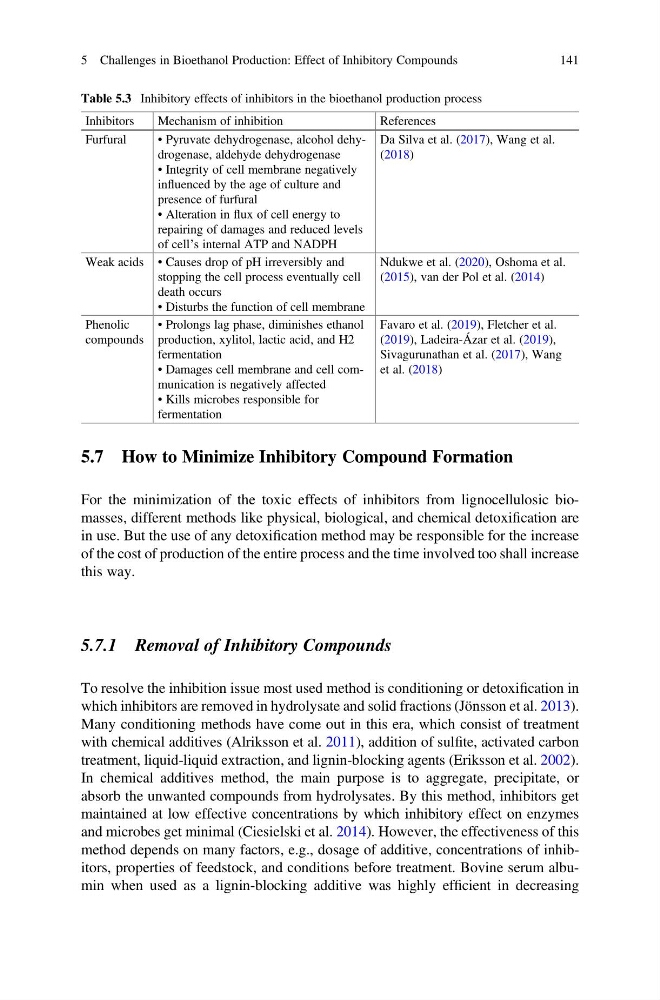
Table 5.3 Inhibitory effects of inhibitors in the bioethanol production process
Inhibitors
Mechanism of inhibition
References
Furfural
• Pyruvate dehydrogenase, alcohol dehydrogenase, aldehyde dehydrogenase
• Integrity of cell membrane negatively
influenced by the age of culture and
presence of furfural
• Alteration in flux of cell energy to
repairing of damages and reduced levels
of cell’s internal ATP and NADPH
Da Silva et al. (2017), Wang et al.
(2018)
Weak acids • Causes drop of pH irreversibly and
stopping the cell process eventually cell
death occurs
• Disturbs the function of cell membrane
Ndukwe et al. (2020), Oshoma et al.
(2015), van der Pol et al. (2014)
Phenolic
compounds
• Prolongs lag phase, diminishes ethanol
production, xylitol, lactic acid, and H2
fermentation
• Damages cell membrane and cell communication is negatively affected
• Kills microbes responsible for
fermentation
Favaro et al. (2019), Fletcher et al.
(2019), Ladeira-Ázar et al. (2019),
Sivagurunathan et al. (2017), Wang
et al. (2018)
5 Challenges in Bioethanol Production: Effect of Inhibitory Compounds
141
For the minimization of the toxic effects of inhibitors from lignocellulosic biomasses, different methods like physical, biological, and chemical detoxification are
in use. But the use of any detoxification method may be responsible for the increase
of the cost of production of the entire process and the time involved too shall increase
this way.
5.7.1 Removal of Inhibitory Compounds
To resolve the inhibition issue most used method is conditioning or detoxification in
which inhibitors are removed in hydrolysate and solid fractions (Jönsson et al. 2013).
Many conditioning methods have come out in this era, which consist of treatment
with chemical additives (Alriksson et al. 2011), addition of sulfite, activated carbon
treatment, liquid-liquid extraction, and lignin-blocking agents (Eriksson et al. 2002).
In chemical additives method, the main purpose is to aggregate, precipitate, or
absorb the unwanted compounds from hydrolysates. By this method, inhibitors get
maintained at low effective concentrations by which inhibitory effect on enzymes
and microbes get minimal (Ciesielski et al. 2014). However, the effectiveness of this
method depends on many factors, e.g., dosage of additive, concentrations of inhibitors, properties of feedstock, and conditions before treatment. Bovine serum albumin when used as a lignin-blocking additive was highly efficient in decreasing
Table 5.3 Inhibitory effects of inhibitors in the bioethanol production process
Inhibitors
Mechanism of inhibition
References
Furfural
• Pyruvate dehydrogenase, alcohol dehydrogenase, aldehyde dehydrogenase
• Integrity of cell membrane negatively
influenced by the age of culture and
presence of furfural
• Alteration in flux of cell energy to
repairing of damages and reduced levels
of cell’s internal ATP and NADPH
Da Silva et al. (2017), Wang et al.
(2018)
Weak acids • Causes drop of pH irreversibly and
stopping the cell process eventually cell
death occurs
• Disturbs the function of cell membrane
Ndukwe et al. (2020), Oshoma et al.
(2015), van der Pol et al. (2014)
Phenolic
compounds
• Prolongs lag phase, diminishes ethanol
production, xylitol, lactic acid, and H2
fermentation
• Damages cell membrane and cell communication is negatively affected
• Kills microbes responsible for
fermentation
Favaro et al. (2019), Fletcher et al.
(2019), Ladeira-Ázar et al. (2019),
Sivagurunathan et al. (2017), Wang
et al. (2018)
5 Challenges in Bioethanol Production: Effect of Inhibitory Compounds
141