

13 Influence of Spiritual Beliefs on Autonomous Climate-Change …
249
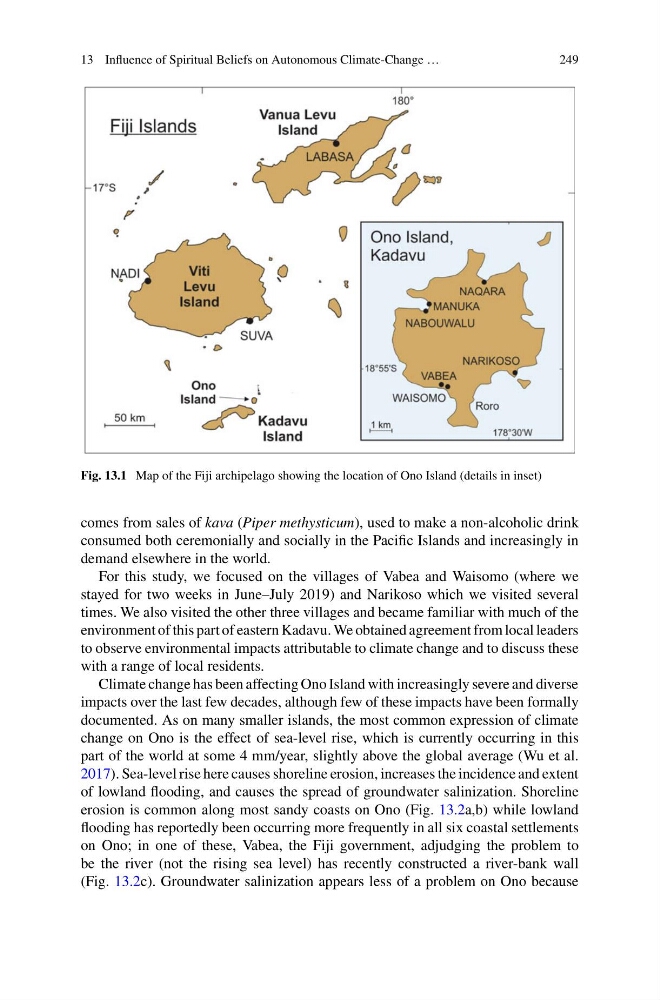
Fig. 13.1 Map of the Fiji archipelago showing the location of Ono Island (details in inset)
comes from sales of kava (Piper methysticum), used to make a non-alcoholic drink
consumed both ceremonially and socially in the Pacific Islands and increasingly in
demand elsewhere in the world.
For this study, we focused on the villages of Vabea and Waisomo (where we
stayed for two weeks in June–July 2019) and Narikoso which we visited several
times. We also visited the other three villages and became familiar with much of the
environment of this part of eastern Kadavu. We obtained agreement from local leaders
to observe environmental impacts attributable to climate change and to discuss these
with a range of local residents.
Climate change has been affecting Ono Island with increasingly severe and diverse
impacts over the last few decades, although few of these impacts have been formally
documented. As on many smaller islands, the most common expression of climate
change on Ono is the effect of sea-level rise, which is currently occurring in this
part of the world at some 4 mm/year, slightly above the global average (Wu et al.
2017). Sea-level rise here causes shoreline erosion, increases the incidence and extent
of lowland flooding, and causes the spread of groundwater salinization. Shoreline
erosion is common along most sandy coasts on Ono (Fig. 13.2a,b) while lowland
flooding has reportedly been occurring more frequently in all six coastal settlements
on Ono; in one of these, Vabea, the Fiji government, adjudging the problem to
be the river (not the rising sea level) has recently constructed a river-bank wall
(Fig. 13.2c). Groundwater salinization appears less of a problem on Ono because
249
Fig. 13.1 Map of the Fiji archipelago showing the location of Ono Island (details in inset)
comes from sales of kava (Piper methysticum), used to make a non-alcoholic drink
consumed both ceremonially and socially in the Pacific Islands and increasingly in
demand elsewhere in the world.
For this study, we focused on the villages of Vabea and Waisomo (where we
stayed for two weeks in June–July 2019) and Narikoso which we visited several
times. We also visited the other three villages and became familiar with much of the
environment of this part of eastern Kadavu. We obtained agreement from local leaders
to observe environmental impacts attributable to climate change and to discuss these
with a range of local residents.
Climate change has been affecting Ono Island with increasingly severe and diverse
impacts over the last few decades, although few of these impacts have been formally
documented. As on many smaller islands, the most common expression of climate
change on Ono is the effect of sea-level rise, which is currently occurring in this
part of the world at some 4 mm/year, slightly above the global average (Wu et al.
2017). Sea-level rise here causes shoreline erosion, increases the incidence and extent
of lowland flooding, and causes the spread of groundwater salinization. Shoreline
erosion is common along most sandy coasts on Ono (Fig. 13.2a,b) while lowland
flooding has reportedly been occurring more frequently in all six coastal settlements
on Ono; in one of these, Vabea, the Fiji government, adjudging the problem to
be the river (not the rising sea level) has recently constructed a river-bank wall
(Fig. 13.2c). Groundwater salinization appears less of a problem on Ono because