

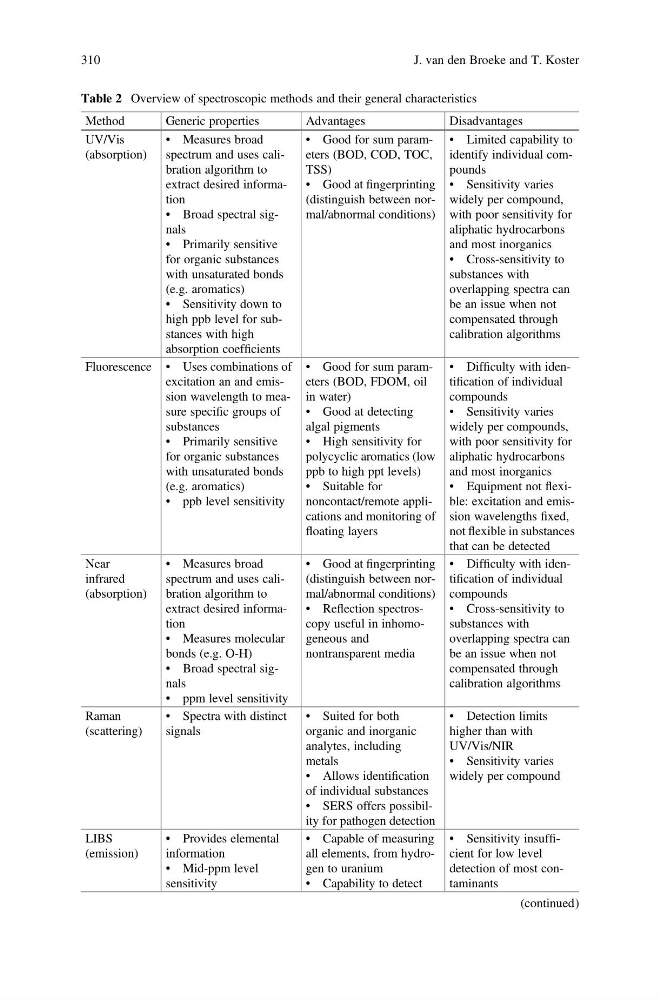
Table 2 Overview of spectroscopic methods and their general characteristics
Method
Generic properties
Advantages
Disadvantages
UV/Vis
(absorption)
• Measures broad
spectrum and uses calibration algorithm to
extract desired information
• Broad spectral signals
• Primarily sensitive
for organic substances
with unsaturated bonds
(e.g. aromatics)
• Sensitivity down to
high ppb level for substances with high
absorption coefficients
• Good for sum parameters (BOD, COD, TOC,
TSS)
• Good at fingerprinting
(distinguish between normal/abnormal conditions)
• Limited capability to
identify individual compounds
• Sensitivity varies
widely per compound,
with poor sensitivity for
aliphatic hydrocarbons
and most inorganics
• Cross-sensitivity to
substances with
overlapping spectra can
be an issue when not
compensated through
calibration algorithms
Fluorescence • Uses combinations of
excitation an and emission wavelength to measure specific groups of
substances
• Primarily sensitive
for organic substances
with unsaturated bonds
(e.g. aromatics)
• ppb level sensitivity
• Good for sum parameters (BOD, FDOM, oil
in water)
• Good at detecting
algal pigments
• High sensitivity for
polycyclic aromatics (low
ppb to high ppt levels)
• Suitable for
noncontact/remote applications and monitoring of
floating layers
• Difficulty with identification of individual
compounds
• Sensitivity varies
widely per compounds,
with poor sensitivity for
aliphatic hydrocarbons
and most inorganics
• Equipment not flexible: excitation and emission wavelengths fixed,
not flexible in substances
that can be detected
Near
infrared
(absorption)
• Measures broad
spectrum and uses calibration algorithm to
extract desired information
• Measures molecular
bonds (e.g. O-H)
• Broad spectral signals
• ppm level sensitivity
• Good at fingerprinting
(distinguish between normal/abnormal conditions)
• Reflection spectroscopy useful in inhomogeneous and
nontransparent media
• Difficulty with identification of individual
compounds
• Cross-sensitivity to
substances with
overlapping spectra can
be an issue when not
compensated through
calibration algorithms
Raman
(scattering)
• Spectra with distinct
signals
• Suited for both
organic and inorganic
analytes, including
metals
• Allows identification
of individual substances
• SERS offers possibility for pathogen detection
• Detection limits
higher than with
UV/Vis/NIR
• Sensitivity varies
widely per compound
LIBS
(emission)
• Provides elemental
information
• Mid-ppm level
sensitivity
• Capable of measuring
all elements, from hydrogen to uranium
• Capability to detect
• Sensitivity insufficient for low level
detection of most contaminants
(continued)
310
J. van den Broeke and T. Koster
Method
Generic properties
Advantages
Disadvantages
UV/Vis
(absorption)
• Measures broad
spectrum and uses calibration algorithm to
extract desired information
• Broad spectral signals
• Primarily sensitive
for organic substances
with unsaturated bonds
(e.g. aromatics)
• Sensitivity down to
high ppb level for substances with high
absorption coefficients
• Good for sum parameters (BOD, COD, TOC,
TSS)
• Good at fingerprinting
(distinguish between normal/abnormal conditions)
• Limited capability to
identify individual compounds
• Sensitivity varies
widely per compound,
with poor sensitivity for
aliphatic hydrocarbons
and most inorganics
• Cross-sensitivity to
substances with
overlapping spectra can
be an issue when not
compensated through
calibration algorithms
Fluorescence • Uses combinations of
excitation an and emission wavelength to measure specific groups of
substances
• Primarily sensitive
for organic substances
with unsaturated bonds
(e.g. aromatics)
• ppb level sensitivity
• Good for sum parameters (BOD, FDOM, oil
in water)
• Good at detecting
algal pigments
• High sensitivity for
polycyclic aromatics (low
ppb to high ppt levels)
• Suitable for
noncontact/remote applications and monitoring of
floating layers
• Difficulty with identification of individual
compounds
• Sensitivity varies
widely per compounds,
with poor sensitivity for
aliphatic hydrocarbons
and most inorganics
• Equipment not flexible: excitation and emission wavelengths fixed,
not flexible in substances
that can be detected
Near
infrared
(absorption)
• Measures broad
spectrum and uses calibration algorithm to
extract desired information
• Measures molecular
bonds (e.g. O-H)
• Broad spectral signals
• ppm level sensitivity
• Good at fingerprinting
(distinguish between normal/abnormal conditions)
• Reflection spectroscopy useful in inhomogeneous and
nontransparent media
• Difficulty with identification of individual
compounds
• Cross-sensitivity to
substances with
overlapping spectra can
be an issue when not
compensated through
calibration algorithms
Raman
(scattering)
• Spectra with distinct
signals
• Suited for both
organic and inorganic
analytes, including
metals
• Allows identification
of individual substances
• SERS offers possibility for pathogen detection
• Detection limits
higher than with
UV/Vis/NIR
• Sensitivity varies
widely per compound
LIBS
(emission)
• Provides elemental
information
• Mid-ppm level
sensitivity
• Capable of measuring
all elements, from hydrogen to uranium
• Capability to detect
• Sensitivity insufficient for low level
detection of most contaminants
(continued)
310
J. van den Broeke and T. Koster