

5.1.7 Spectral Fingerprint and Contamination Alarm
Whereas differential spectroscopy for process control evaluates the changes in the
water due to a particular (intentional) effect on the water, contamination alarm
systems focus on detecting unexpected and often unpredictable changes (Fig. 8).
The method used relies on automatic monitoring of the shape of the spectrum
(“fingerprint”) and comparing this shape to known conditions. When the fingerprint
corresponds to a known undesirable state, or in case it does not correspond with a
previously seen shape, the spectrometer reports an alarm. Alarm systems are available in many forms; the simplest versions monitor the absorption values at specific
wavelengths. More advanced systems treat each spectrum as a vector (the number of
dimensions being equal to the number of wavelengths) and perform a nearest
neighbour analysis in the vector space [20]. With increasing computing power and
storage capacity, more powerful statistical methods capable of handling bigger
historical datasets are becoming available embedded in the sensors themselves,
increasing real-time event detection capabilities.
The most typical applications for event detection are the monitoring of source
waters for drinking water production (detection of harmful contaminations before
the intake) and monitoring finished drinking water to safeguard its quality during
storage and distribution (provide early warning in case of accidental or intentional
contamination). The primary driver in these drinking water applications is protection
of the public health. In wastewater early warning systems are used to monitor the
influent of the WWTP. Here they can detect peak loads and warn for the presence of
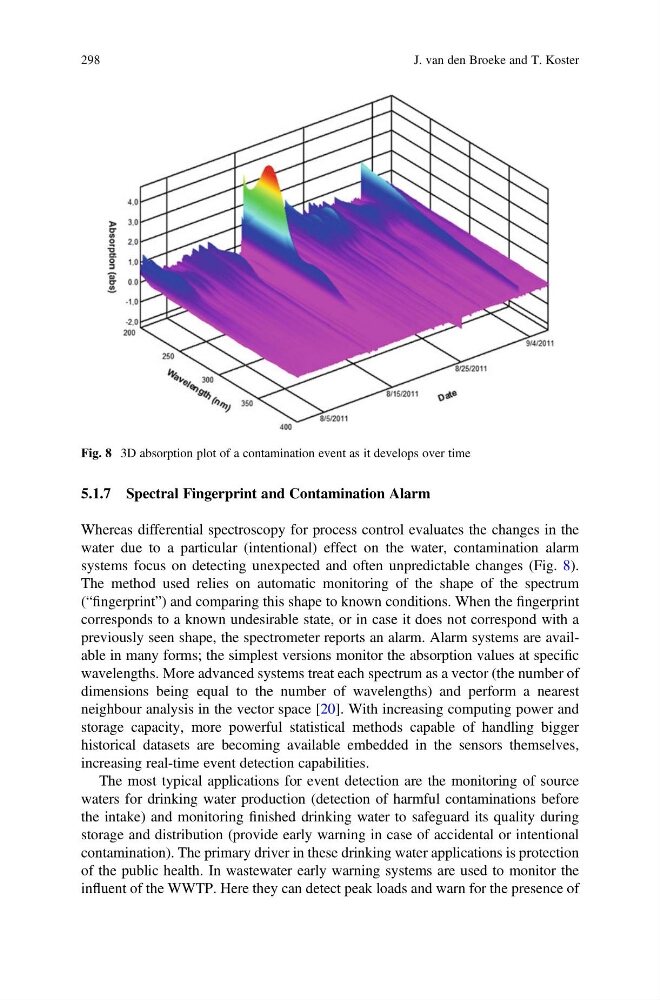
Fig. 8 3D absorption plot of a contamination event as it develops over time
298
J. van den Broeke and T. Koster
Whereas differential spectroscopy for process control evaluates the changes in the
water due to a particular (intentional) effect on the water, contamination alarm
systems focus on detecting unexpected and often unpredictable changes (Fig. 8).
The method used relies on automatic monitoring of the shape of the spectrum
(“fingerprint”) and comparing this shape to known conditions. When the fingerprint
corresponds to a known undesirable state, or in case it does not correspond with a
previously seen shape, the spectrometer reports an alarm. Alarm systems are available in many forms; the simplest versions monitor the absorption values at specific
wavelengths. More advanced systems treat each spectrum as a vector (the number of
dimensions being equal to the number of wavelengths) and perform a nearest
neighbour analysis in the vector space [20]. With increasing computing power and
storage capacity, more powerful statistical methods capable of handling bigger
historical datasets are becoming available embedded in the sensors themselves,
increasing real-time event detection capabilities.
The most typical applications for event detection are the monitoring of source
waters for drinking water production (detection of harmful contaminations before
the intake) and monitoring finished drinking water to safeguard its quality during
storage and distribution (provide early warning in case of accidental or intentional
contamination). The primary driver in these drinking water applications is protection
of the public health. In wastewater early warning systems are used to monitor the
influent of the WWTP. Here they can detect peak loads and warn for the presence of
Fig. 8 3D absorption plot of a contamination event as it develops over time
298
J. van den Broeke and T. Koster