

3 Theoretical Context and Focus of the Study
This analysis conducted in this chapter draws on three theoretical perspectives. The
innovation systems and open innovation perspectives help to explain the rationale
behind innovation partnerships in fostering smart water systems in developing countries (and beyond) and what these partnerships entail for ICT-focused water innovation processes. The governance perspective provides insights into the mechanisms
through which these innovation partnerships can best be managed to maximise
their benefits and mitigate possible problems associated with their implementation.
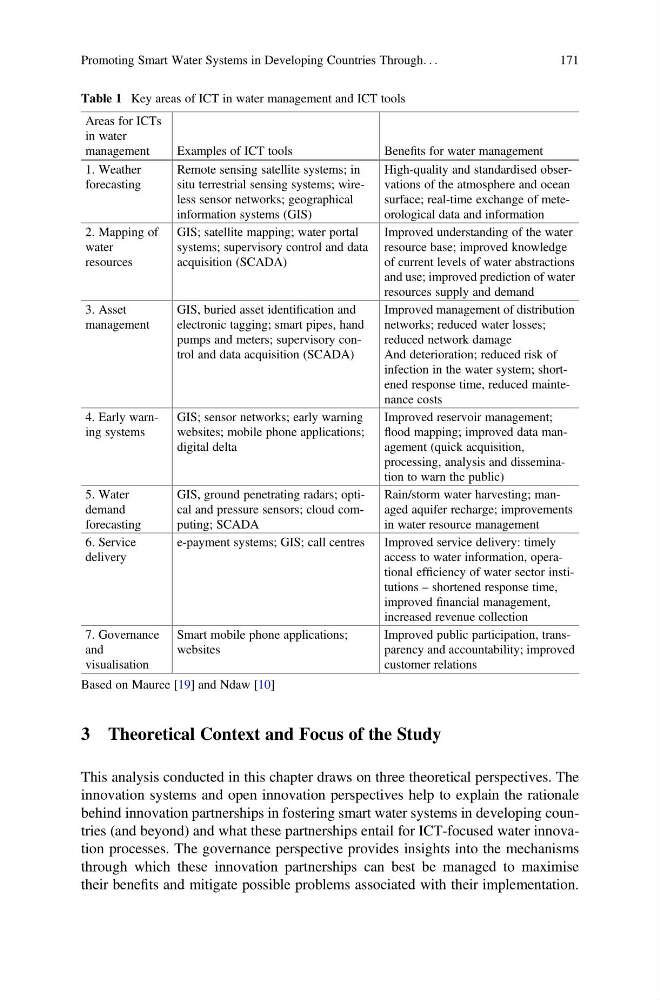
Table 1 Key areas of ICT in water management and ICT tools
Areas for ICTs
in water
management
Examples of ICT tools
Benefits for water management
1. Weather
forecasting
Remote sensing satellite systems; in
situ terrestrial sensing systems; wireless sensor networks; geographical
information systems (GIS)
High-quality and standardised observations of the atmosphere and ocean
surface; real-time exchange of meteorological data and information
2. Mapping of
water
resources
GIS; satellite mapping; water portal
systems; supervisory control and data
acquisition (SCADA)
Improved understanding of the water
resource base; improved knowledge
of current levels of water abstractions
and use; improved prediction of water
resources supply and demand
3. Asset
management
GIS, buried asset identification and
electronic tagging; smart pipes, hand
pumps and meters; supervisory control and data acquisition (SCADA)
Improved management of distribution
networks; reduced water losses;
reduced network damage
And deterioration; reduced risk of
infection in the water system; shortened response time, reduced maintenance costs
4. Early warning systems
GIS; sensor networks; early warning
websites; mobile phone applications;
digital delta
Improved reservoir management;
flood mapping; improved data management (quick acquisition,
processing, analysis and dissemination to warn the public)
5. Water
demand
forecasting
GIS, ground penetrating radars; optical and pressure sensors; cloud computing; SCADA
Rain/storm water harvesting; managed aquifer recharge; improvements
in water resource management
6. Service
delivery
e-payment systems; GIS; call centres
Improved service delivery: timely
access to water information, operational efficiency of water sector institutions – shortened response time,
improved financial management,
increased revenue collection
7. Governance
and
visualisation
Smart mobile phone applications;
websites
Improved public participation, transparency and accountability; improved
customer relations
Based on Mauree [19] and Ndaw [10]
Promoting Smart Water Systems in Developing Countries Through. . .
171
This analysis conducted in this chapter draws on three theoretical perspectives. The
innovation systems and open innovation perspectives help to explain the rationale
behind innovation partnerships in fostering smart water systems in developing countries (and beyond) and what these partnerships entail for ICT-focused water innovation processes. The governance perspective provides insights into the mechanisms
through which these innovation partnerships can best be managed to maximise
their benefits and mitigate possible problems associated with their implementation.
Table 1 Key areas of ICT in water management and ICT tools
Areas for ICTs
in water
management
Examples of ICT tools
Benefits for water management
1. Weather
forecasting
Remote sensing satellite systems; in
situ terrestrial sensing systems; wireless sensor networks; geographical
information systems (GIS)
High-quality and standardised observations of the atmosphere and ocean
surface; real-time exchange of meteorological data and information
2. Mapping of
water
resources
GIS; satellite mapping; water portal
systems; supervisory control and data
acquisition (SCADA)
Improved understanding of the water
resource base; improved knowledge
of current levels of water abstractions
and use; improved prediction of water
resources supply and demand
3. Asset
management
GIS, buried asset identification and
electronic tagging; smart pipes, hand
pumps and meters; supervisory control and data acquisition (SCADA)
Improved management of distribution
networks; reduced water losses;
reduced network damage
And deterioration; reduced risk of
infection in the water system; shortened response time, reduced maintenance costs
4. Early warning systems
GIS; sensor networks; early warning
websites; mobile phone applications;
digital delta
Improved reservoir management;
flood mapping; improved data management (quick acquisition,
processing, analysis and dissemination to warn the public)
5. Water
demand
forecasting
GIS, ground penetrating radars; optical and pressure sensors; cloud computing; SCADA
Rain/storm water harvesting; managed aquifer recharge; improvements
in water resource management
6. Service
delivery
e-payment systems; GIS; call centres
Improved service delivery: timely
access to water information, operational efficiency of water sector institutions – shortened response time,
improved financial management,
increased revenue collection
7. Governance
and
visualisation
Smart mobile phone applications;
websites
Improved public participation, transparency and accountability; improved
customer relations
Based on Mauree [19] and Ndaw [10]
Promoting Smart Water Systems in Developing Countries Through. . .
171