

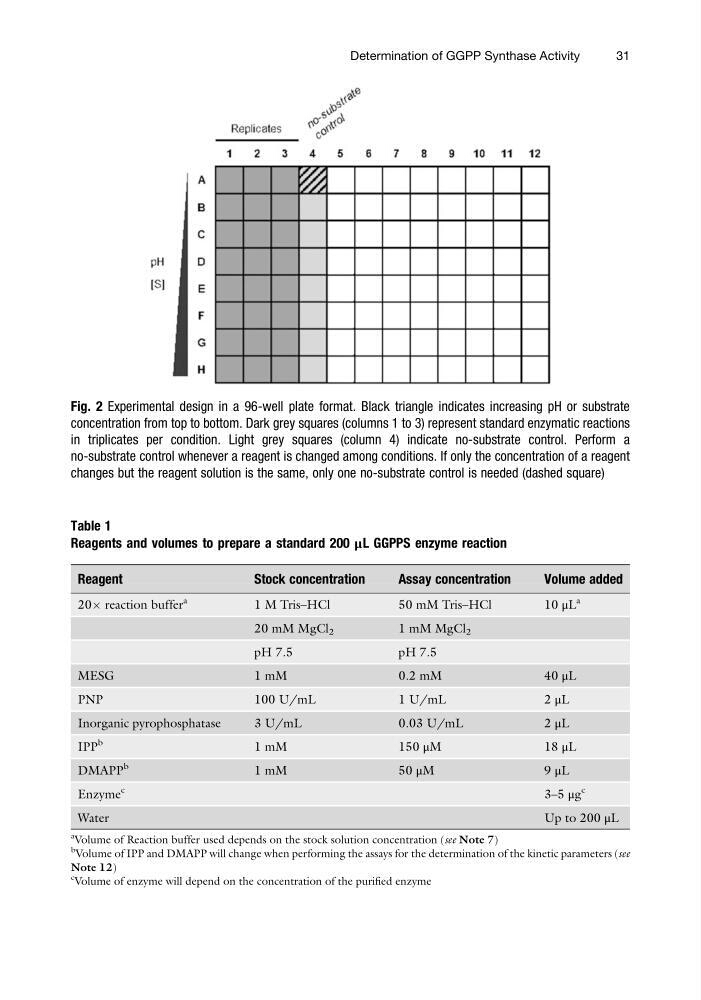
Fig. 2 Experimental design in a 96-well plate format. Black triangle indicates increasing pH or substrate
concentration from top to bottom. Dark grey squares (columns 1 to 3) represent standard enzymatic reactions
in triplicates per condition. Light grey squares (column 4) indicate no-substrate control. Perform a
no-substrate control whenever a reagent is changed among conditions. If only the concentration of a reagent
changes but the reagent solution is the same, only one no-substrate control is needed (dashed square)
Table 1
Reagents and volumes to prepare a standard 200 μL GGPPS enzyme reaction
Reagent
Stock concentration
Assay concentration
Volume added
20Â reaction buffer
a
1 M Tris–HCl
50 mM Tris–HCl
10 μL
a
20 mM MgCl 2
1 mM MgCl 2
pH 7.5
pH 7.5
MESG
1 mM
0.2 mM
40 μL
PNP
100 U/mL
1 U/mL
2 μL
Inorganic pyrophosphatase
3 U/mL
0.03 U/mL
2 μL
IPP
b
1 mM
150 μM
1 8 μL
DMAPP
b
1 mM
50 μM
9 μL
Enzyme
c
3–5 μg
c
Water
Up to 200 μL
a
Volume of Reaction buffer used depends on the stock solution concentration (see Note 7)
b
Volume of IPP and DMAPP will change when performing the assays for the determination of the kinetic parameters (see
Note 12)
c
Volume of enzyme will depend on the concentration of the purified enzyme
Determination of GGPP Synthase Activity
31
concentration from top to bottom. Dark grey squares (columns 1 to 3) represent standard enzymatic reactions
in triplicates per condition. Light grey squares (column 4) indicate no-substrate control. Perform a
no-substrate control whenever a reagent is changed among conditions. If only the concentration of a reagent
changes but the reagent solution is the same, only one no-substrate control is needed (dashed square)
Table 1
Reagents and volumes to prepare a standard 200 μL GGPPS enzyme reaction
Reagent
Stock concentration
Assay concentration
Volume added
20Â reaction buffer
a
1 M Tris–HCl
50 mM Tris–HCl
10 μL
a
20 mM MgCl 2
1 mM MgCl 2
pH 7.5
pH 7.5
MESG
1 mM
0.2 mM
40 μL
PNP
100 U/mL
1 U/mL
2 μL
Inorganic pyrophosphatase
3 U/mL
0.03 U/mL
2 μL
IPP
b
1 mM
150 μM
1 8 μL
DMAPP
b
1 mM
50 μM
9 μL
Enzyme
c
3–5 μg
c
Water
Up to 200 μL
a
Volume of Reaction buffer used depends on the stock solution concentration (see Note 7)
b
Volume of IPP and DMAPP will change when performing the assays for the determination of the kinetic parameters (see
Note 12)
c
Volume of enzyme will depend on the concentration of the purified enzyme
Determination of GGPP Synthase Activity
31