

3. Filter the homogenate through two layers of Miracloth (see
Note 6).
4. Transfer the flow-through to centrifuge bottles (250 or
500 mL) and centrifuge at 5000 Â g for 10 min, using rotors
JA-10, JA-14, JLA 16.250 or equivalents.
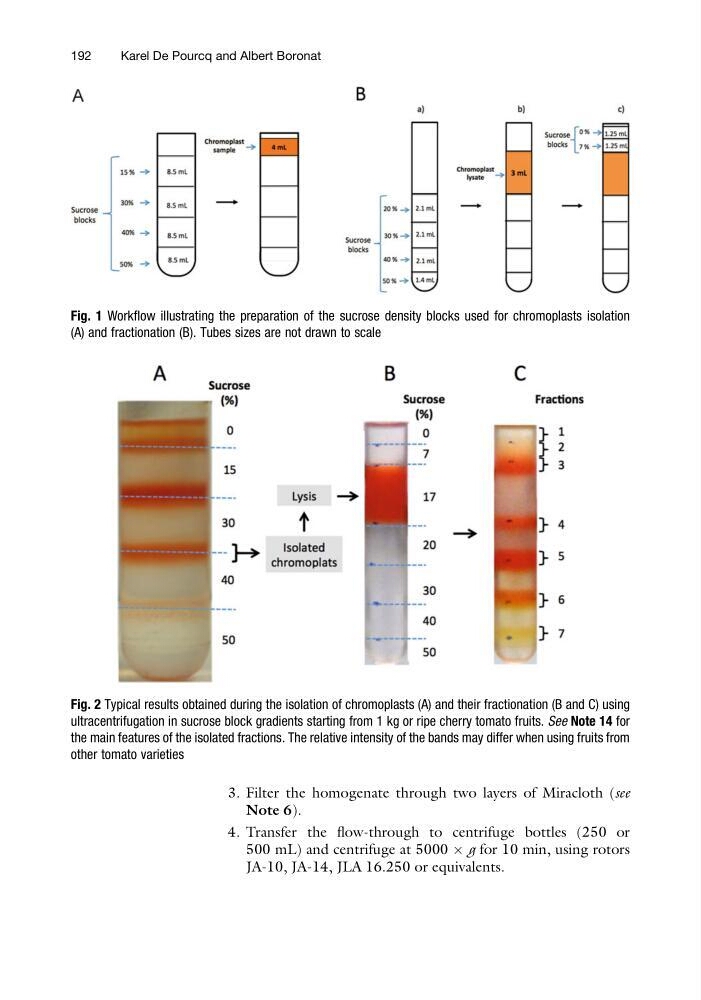
Fig. 1 Workflow illustrating the preparation of the sucrose density blocks used for chromoplasts isolation
(A) and fractionation (B). Tubes sizes are not drawn to scale
Fig. 2 Typical results obtained during the isolation of chromoplasts (A) and their fractionation (B and C) using
ultracentrifugation in sucrose block gradients starting from 1 kg or ripe cherry tomato fruits. See Note 14 for
the main features of the isolated fractions. The relative intensity of the bands may differ when using fruits from
other tomato varieties
192
Karel De Pourcq and Albert Boronat
Note 6).
4. Transfer the flow-through to centrifuge bottles (250 or
500 mL) and centrifuge at 5000 Â g for 10 min, using rotors
JA-10, JA-14, JLA 16.250 or equivalents.
Fig. 1 Workflow illustrating the preparation of the sucrose density blocks used for chromoplasts isolation
(A) and fractionation (B). Tubes sizes are not drawn to scale
Fig. 2 Typical results obtained during the isolation of chromoplasts (A) and their fractionation (B and C) using
ultracentrifugation in sucrose block gradients starting from 1 kg or ripe cherry tomato fruits. See Note 14 for
the main features of the isolated fractions. The relative intensity of the bands may differ when using fruits from
other tomato varieties
192
Karel De Pourcq and Albert Boronat