

3. Prepare LC-MS sample solution: The DIAL derivatization
solution is filtered to 1.5 mL amber glass vial with micro glass
insert using 1 mL syringe with 0.22 μm syringe filter.
4. Optimize the instrument parameters for detecting DIALs by
infusing a DIAL10 standard derivatization solution into the
mass spectrometer using the optimization procedure under
positive ionization mode. The optimized parameters will be
different depending on the used LC-MS instrument, the optimized parameters of an HESI-Q-Orbitrap MS were full MS
scan, scan range of 150–900 m/z, resolution of 280,000, AGC
target of 3e
6 , and maximum inject time of 150 ms.
5. Liquid chromatographic separation of DIAL derivatives is
achieved with a BEH C 18 column (Acquity UPLC BEH C 18
column) using the following LC parameters: column temperature ¼ 35
C, injection volume ¼ 15 μL, flow
rate ¼ 0.2 mL min
À1 , total run time ¼ 22 min. Use a solvent
gradient program starting with a linear gradient from 20 to
100% solvent B over 15 min, isocratic separation at 100% B
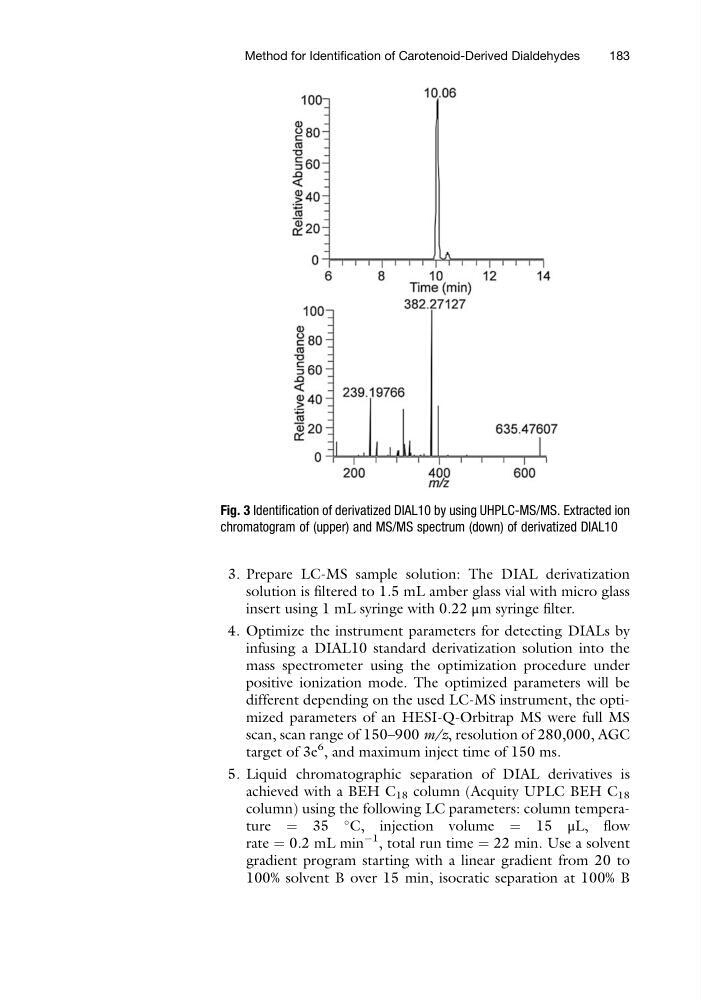
Fig. 3 Identification of derivatized DIAL10 by using UHPLC-MS/MS. Extracted ion
chromatogram of (upper) and MS/MS spectrum (down) of derivatized DIAL10
Method for Identification of Carotenoid-Derived Dialdehydes
183
solution is filtered to 1.5 mL amber glass vial with micro glass
insert using 1 mL syringe with 0.22 μm syringe filter.
4. Optimize the instrument parameters for detecting DIALs by
infusing a DIAL10 standard derivatization solution into the
mass spectrometer using the optimization procedure under
positive ionization mode. The optimized parameters will be
different depending on the used LC-MS instrument, the optimized parameters of an HESI-Q-Orbitrap MS were full MS
scan, scan range of 150–900 m/z, resolution of 280,000, AGC
target of 3e
6 , and maximum inject time of 150 ms.
5. Liquid chromatographic separation of DIAL derivatives is
achieved with a BEH C 18 column (Acquity UPLC BEH C 18
column) using the following LC parameters: column temperature ¼ 35
C, injection volume ¼ 15 μL, flow
rate ¼ 0.2 mL min
À1 , total run time ¼ 22 min. Use a solvent
gradient program starting with a linear gradient from 20 to
100% solvent B over 15 min, isocratic separation at 100% B
Fig. 3 Identification of derivatized DIAL10 by using UHPLC-MS/MS. Extracted ion
chromatogram of (upper) and MS/MS spectrum (down) of derivatized DIAL10
Method for Identification of Carotenoid-Derived Dialdehydes
183