

all-trans-4,9,13-trimethyl-2,4,6,8,10,12,14-sedecaheptaenedial,
all-trans-2,6,11,15-tetramethyl-2,4,6,8,10,12,14-sedecaheptaenedial, all-trans-2,6,11,15-tetramethyl-2,4,6,8,10,12,14,16-octodecaoctaenedial) [50]. Moreover, studies on the biosynthesis of
bixin (also known as annatto, one of the oldest pigment widely
used in foods and cosmetics) [51, 52] and crocin (the major saffron
pigment) [53], demonstrate the role of DIALs as pigments
[41, 54]. To our knowledge, all carotenoid-derived DIALs
reported so far were identified from enzymatic in vitro assays that
usually produce them in relatively high amounts, which allow their
detection by HPLC or LC-MS. However, endogenous DIALs
occur at very low levels and are unstable in plants, making their
direct detection using present methods very difficult.
Understanding the biological function of DIALs and determining their role in plant carotenoid metabolism require an analytical
method that enables sensitive and reliable determination of these
compounds. In this work, we developed a chemical derivatization
based UHPLC-Q-Orbitrap MS method for the analysis of
carotenoid-derived DIALs from Arabidopsis. A crude plant
DIALs extract is prepared, which is added to a chemical derivatization regent consisting of 10 mg/mL N
2 ,N
2 ,N
4 ,N
4 -tetraethyl-6hydrazineyl-1,3,5-triazine-2,4-diamine (T3) methanol solution
with 1% formic acid. Following derivatization, DIALs are detected
using UHPLC-Q-Orbitrap MS.
2 Materials
Use HPLC grade reagents for the extraction. All reagents and water
used for UHPLC-Q-Orbitrap MS analyses should be LC-MS
grade. All LC-MS solvent additives used must be LC-MS grade.
All reagents should be kept on ice during extraction. Waste disposal
regulations must be meticulously followed.
2.1 Plant Material
Preparation
1. Arabidopsis seedlings.
2. Liquid nitrogen.
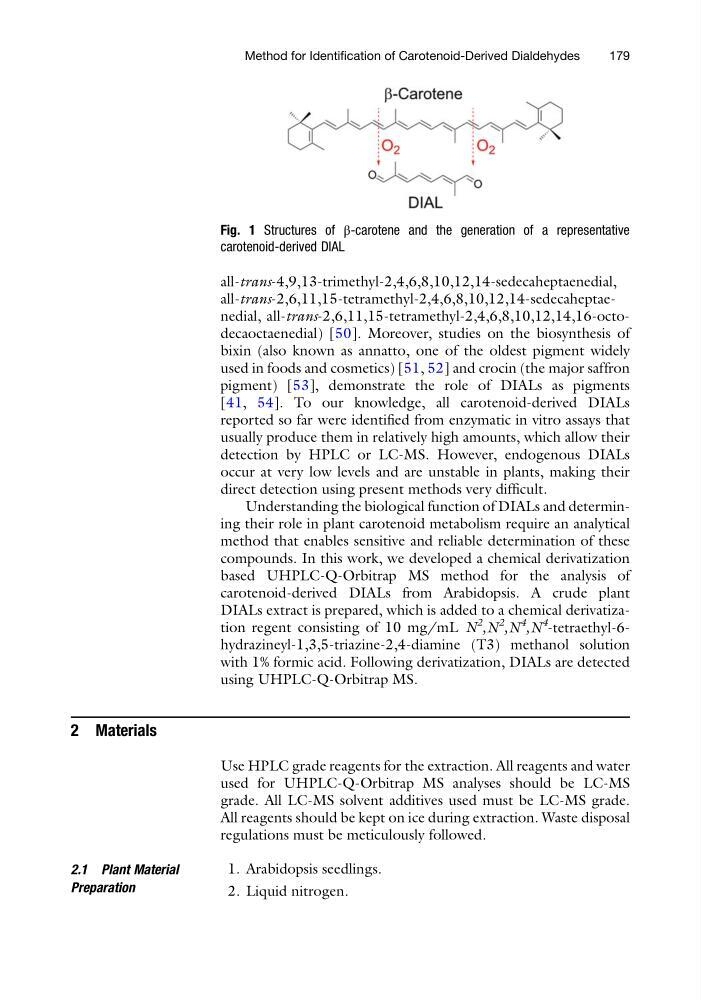
Fig. 1 Structures of β-carotene and the generation of a representative
carotenoid-derived DIAL
Method for Identification of Carotenoid-Derived Dialdehydes
179
all-trans-2,6,11,15-tetramethyl-2,4,6,8,10,12,14-sedecaheptaenedial, all-trans-2,6,11,15-tetramethyl-2,4,6,8,10,12,14,16-octodecaoctaenedial) [50]. Moreover, studies on the biosynthesis of
bixin (also known as annatto, one of the oldest pigment widely
used in foods and cosmetics) [51, 52] and crocin (the major saffron
pigment) [53], demonstrate the role of DIALs as pigments
[41, 54]. To our knowledge, all carotenoid-derived DIALs
reported so far were identified from enzymatic in vitro assays that
usually produce them in relatively high amounts, which allow their
detection by HPLC or LC-MS. However, endogenous DIALs
occur at very low levels and are unstable in plants, making their
direct detection using present methods very difficult.
Understanding the biological function of DIALs and determining their role in plant carotenoid metabolism require an analytical
method that enables sensitive and reliable determination of these
compounds. In this work, we developed a chemical derivatization
based UHPLC-Q-Orbitrap MS method for the analysis of
carotenoid-derived DIALs from Arabidopsis. A crude plant
DIALs extract is prepared, which is added to a chemical derivatization regent consisting of 10 mg/mL N
2 ,N
2 ,N
4 ,N
4 -tetraethyl-6hydrazineyl-1,3,5-triazine-2,4-diamine (T3) methanol solution
with 1% formic acid. Following derivatization, DIALs are detected
using UHPLC-Q-Orbitrap MS.
2 Materials
Use HPLC grade reagents for the extraction. All reagents and water
used for UHPLC-Q-Orbitrap MS analyses should be LC-MS
grade. All LC-MS solvent additives used must be LC-MS grade.
All reagents should be kept on ice during extraction. Waste disposal
regulations must be meticulously followed.
2.1 Plant Material
Preparation
1. Arabidopsis seedlings.
2. Liquid nitrogen.
Fig. 1 Structures of β-carotene and the generation of a representative
carotenoid-derived DIAL
Method for Identification of Carotenoid-Derived Dialdehydes
179