

54
T. B. Asafa et al.
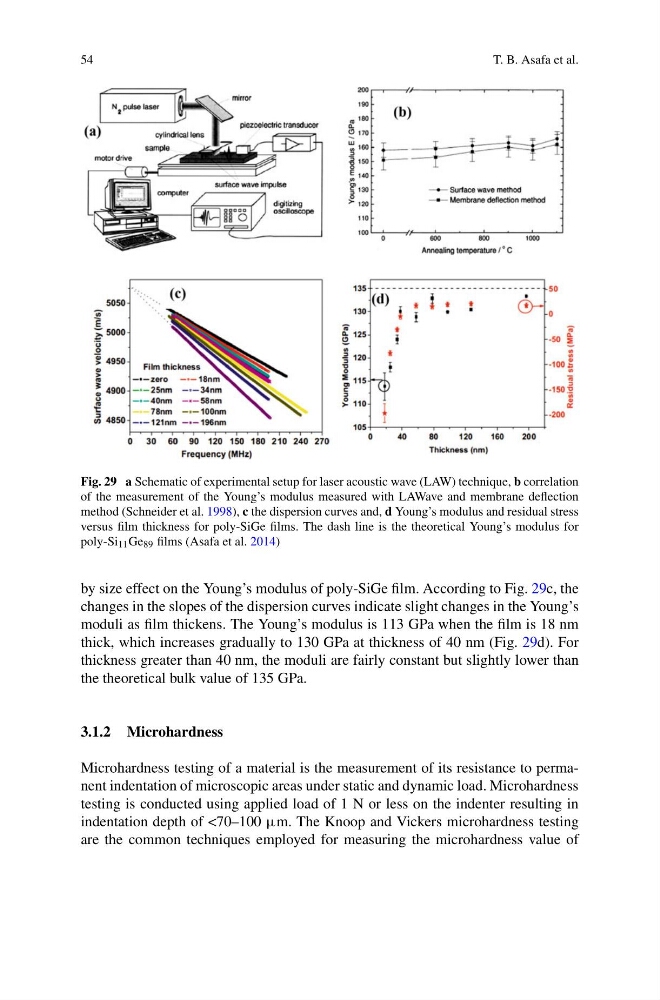
Fig. 29 a Schematic of experimental setup for laser acoustic wave (LAW) technique, b correlation
of the measurement of the Young’s modulus measured with LAWave and membrane deflection
method (Schneider et al. 1998), c the dispersion curves and, d Young’s modulus and residual stress
versus film thickness for poly-SiGe films. The dash line is the theoretical Young’s modulus for
poly-Si 11 Ge 89 films (Asafa et al. 2014)
by size effect on the Young’s modulus of poly-SiGe film. According to Fig. 29c, the
changes in the slopes of the dispersion curves indicate slight changes in the Young’s
moduli as film thickens. The Young’s modulus is 113 GPa when the film is 18 nm
thick, which increases gradually to 130 GPa at thickness of 40 nm (Fig. 29d). For
thickness greater than 40 nm, the moduli are fairly constant but slightly lower than
the theoretical bulk value of 135 GPa.
3.1.2 Microhardness
Microhardness testing of a material is the measurement of its resistance to permanent indentation of microscopic areas under static and dynamic load. Microhardness
testing is conducted using applied load of 1 N or less on the indenter resulting in
indentation depth of <70–100 μm. The Knoop and Vickers microhardness testing
are the common techniques employed for measuring the microhardness value of
T. B. Asafa et al.
Fig. 29 a Schematic of experimental setup for laser acoustic wave (LAW) technique, b correlation
of the measurement of the Young’s modulus measured with LAWave and membrane deflection
method (Schneider et al. 1998), c the dispersion curves and, d Young’s modulus and residual stress
versus film thickness for poly-SiGe films. The dash line is the theoretical Young’s modulus for
poly-Si 11 Ge 89 films (Asafa et al. 2014)
by size effect on the Young’s modulus of poly-SiGe film. According to Fig. 29c, the
changes in the slopes of the dispersion curves indicate slight changes in the Young’s
moduli as film thickens. The Young’s modulus is 113 GPa when the film is 18 nm
thick, which increases gradually to 130 GPa at thickness of 40 nm (Fig. 29d). For
thickness greater than 40 nm, the moduli are fairly constant but slightly lower than
the theoretical bulk value of 135 GPa.
3.1.2 Microhardness
Microhardness testing of a material is the measurement of its resistance to permanent indentation of microscopic areas under static and dynamic load. Microhardness
testing is conducted using applied load of 1 N or less on the indenter resulting in
indentation depth of <70–100 μm. The Knoop and Vickers microhardness testing
are the common techniques employed for measuring the microhardness value of